




Summary:
- Storm response compresses the safety controls that tree pruning and removal crews depend on during routine work
- When something goes wrong under those conditions, standard business policies often are not built to handle the fallout
- In this blog, we cover what makes storm response a different risk category, which hazards increase after a major weather event, and what your coverage needs to reflect.
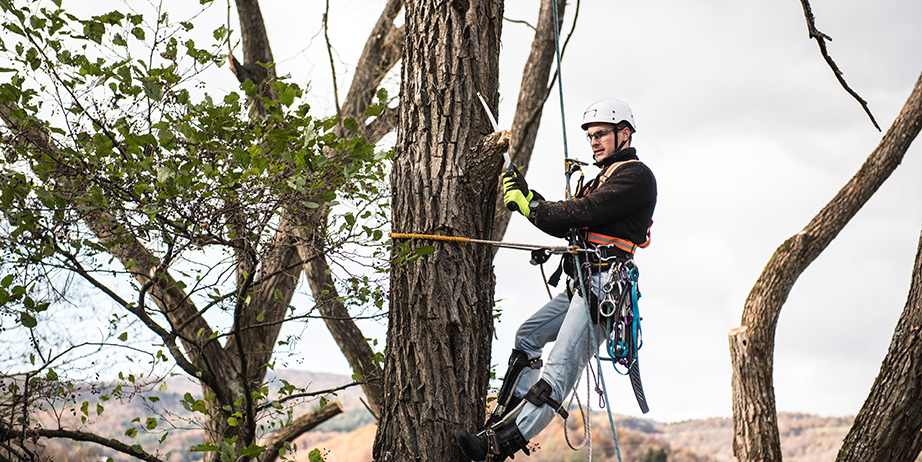
Tree care is already one of the most dangerous trades in the country. Tree workers make up less than 0.05% of the U.S. workforce but account for roughly 1.4% of all workplace fatalities. Those numbers reflect controlled, scheduled jobs.
Storm response changes the equation entirely.
When a major weather event hits, tree pruning and removal services get called in fast. The site conditions are unpredictable, the pressure is high, and the usual safety controls are compressed or skipped. That combination drives claims up and can leave serious coverage gaps.
In this blog, we cover why emergency tree pruning and removal carries a different risk profile, what hazards increase after a storm, and what your coverage needs to actually reflect the work you do.
How Storm Response Changes the Job for Tree Crews
On a normal job, your crew has time to assess the site, plan the cuts, and set up a proper work zone. Emergency storm response does not offer that.
When a major storm hits, calls start coming in fast. Tree pruning and removal services get deployed within hours, often to areas they have never worked before, running back-to-back shifts on properties they know nothing about going in.
OSHA still requires a hazard assessment before work begins, even during disaster conditions. In practice, that step gets rushed. When it does, liability exposure increases alongside it.
Standard business insurance policies are written around routine operations. They are not always structured for multi-state deployment, 24-hour shifts, or the chaotic conditions that follow a major storm. That gap matters when a claim comes in.
Why Post-Storm Sites Are Harder to Work Safely
A post-storm site is not a worse version of a normal job. It is a fundamentally different environment. The hazards your crew manages on every tree pruning and removal job are still there, but the conditions that normally keep them in check are gone.
Tree care already accounts for a disproportionate share of workplace fatalities relative to its workforce size. Storm response makes that worse, because roughly 43% of tree care fatalities involve struck-by incidents, and post-storm trees are the most unpredictable version of that hazard your crew will encounter.
Here is what changes on a storm site:
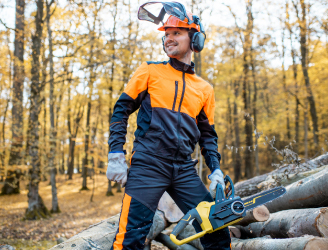
- Widowmakers: Broken limbs lodged overhead that look stable until they are not. These are a leading cause of fatal incidents during chainsaw work
- Tension-loaded trees: A storm-twisted tree stores energy in ways that are not always visible. One wrong cut and that energy releases fast
- Compromised root systems: Saturated soil weakens root anchoring. A tree that looks planted can shift or fall during tree pruning and removal
- Downed power lines: They are not always easy to spot, and they are not always de-energized. Crews have died from lines that looked inactive during storm recovery work
- Unstable ground: Waterlogged soil and scattered debris shift how your crew moves, where equipment can be positioned, and where a tree can safely fall
Tree care workers already experience injuries at nearly three times the national average under normal conditions. Storm sites raise that exposure across every single one of these categories.
Multi-Contractor Sites and the Accountability Problem
After a major storm, your crew is rarely the only one working the street. Roofers, restoration crews, utility workers, and municipal teams are all moving through the same area at the same time.
Whether the job is residential tree pruning and removal or clearing a commercial property, nobody has a clear lane, and nobody has formally agreed on who controls what. When something goes wrong in that environment, the question of who is responsible does not have an obvious answer.
- Who controlled the work zone?
- Who authorized the removal?
- Who was responsible for keeping bystanders clear?
OSHA expects daily site safety briefings on any job with multiple crews. In the chaos of storm response, that coordination often does not happen. When it does not, and a property damage or injury claim follows, your business may be named regardless of who actually caused the incident.
Documentation is your primary defense here. Before you leave the site, make sure you have:
- Photos of the site before and after the work
- A clear record of what your crew was authorized to do
- Notes on weather conditions at the time of the job
- Any written or recorded communication with other contractors on site
Without that paper trail, disputes are harder to resolve and claims take longer to close.
Where Standard Policies Fall Short in Storm Response Work
Most general business policies were written for a single-trade operation on a controlled job site. Commercial tree pruning and removal during storm response touches several risk categories at once, and standard policies are often not structured to cover all of them.
Here is where the gaps typically show up:
- Workers’ compensation: Extended shifts and unfamiliar terrain push injury rates up. If your workers’ comp was sized for normal operations, it may not reflect what emergency deployments actually look like
- Commercial auto: Hauling equipment across state lines on short notice creates a different risk profile than local route work. Not all policies are set up for it
- Arborist professional liability: Decisions made under pressure carry their own exposure. If your crew misjudges a site and causes further structural damage, standard GL may not cover the professional judgment behind that call
- Crane and aerial work: These operations are excluded from many off-the-shelf business policies, even though they are standard in storm removal work
- Pollution liability: Fuel and hydraulic fluid leaks during cutting are a real exposure. Coverage for this often requires a specific endorsement
A program built for arborist contractors addresses these gaps directly. That means underwriting that reflects what your crews actually do, not a standard policy that approximates it. Coverage should include general liability up to $1M per occurrence, umbrella capacity up to $25M, workers’ compensation, commercial auto, arborist errors and omissions, and contractors’ pollution liability. It should also be backed by A+ rated carriers, meaning carriers assessed as having superior financial strength to pay claims when you need them to.
Steps to Take Before the Next Storm Call Comes In
Storm season does not announce itself with much lead time. The time to review your coverage is before a deployment, not after a claim.
A few things worth confirming now:
- Does your policy cover out-of-state operations?
- Are crane and aerial lift operations included?
- Does your workers’ comp reflect emergency shift conditions?
- Is arborist professional liability part of your package?
- Do you have a documentation protocol your crew actually follows in the field?
These are questions your insurance program should be able to answer clearly.
The Right Coverage for Emergency Tree Pruning and Removal Work
Storm response work will keep increasing. The tree care market is forecast to expand steadily through 2033, driven by urban density, aging trees, and more frequent weather events. More contractors will be mobilizing for emergency jobs, and a generic policy will not hold up under the conditions this article describes.
TreePro is one of the largest specialty insurance programs built exclusively for tree care contractors, with underwriting developed around what tree crews actually do. Coverage includes:
- General liability up to $1M per occurrence
- Umbrella capacity up to $25M for high-risk deployments
- Workers’ compensation for high-hazard tree work
- Commercial auto for fleet and long-haul transport
- Arborist errors and omissions
- Crane and aerial operations coverage
- Contractors’ pollution liability
It is backed by A+ rated carriers, meaning carriers with the superior financial strength to pay claims when it counts. Beyond coverage, TreePro includes dedicated claims specialists who already understand arborist work, supported by over 35 years of specialty contractor experience at NIP Group.
Contact us and we will walk you through your options or ask your broker about it.
FAQs
Does a tree removal company’s insurance cover storm-related property damage?
Your general liability policy is what pays out when your crew accidentally damages someone’s property during a removal. That covers structures, vehicles, fences, whatever ends up in the way. Where most contractors run into trouble is limits. Storm jobs are bigger, faster, and messier than routine work, and a policy sized for a scheduled pruning job may not stretch far enough when storm claims come in. Worth reviewing before the season, not mid-claim.
What are the main safety hazard categories in commercial tree pruning and removal?
Tree work carries serious risk even on a clean, scheduled job:
- Falls during climbing or aerial lift work
- Getting struck by falling limbs, tops, or whole trees
- Electrocution near power lines
- Equipment injuries from chainsaws, chippers, and stump grinders
Storm work layers additional risk onto all of the above. Saturated soil, tension-loaded trees, and debris lodged overhead change what every cut does, and none of that is visible until your crew is already on site.
Which OSHA violations are most commonly cited in tree care operations?
Fall protection tops the list, followed by hazard communication and ladder safety. For tree care specifically, fall protection and electrical hazard violations are what come up most. Storm response is where these citations are easiest to pick up because the job moves fast and hazard assessments get skipped. Keeping a short written record of the pre-job walkthrough goes a long way in those situations.
What is the difference between tree trimming and tree pruning, and does it affect your insurance?
They are related but not the same:
- Trimming is mostly cosmetic, shaping the canopy for appearance or clearance
- Pruning involves removing growth that is diseased, damaged, or structurally compromised, and that requires your crew to assess the tree’s condition and make a call
That assessment is where liability shifts. If a pruning decision leads to tree failure or further damage down the line, a standard GL policy may not cover it. That is the gap arborist errors and omissions coverage is designed to fill.