






Summary
- Growers weighing hydroponics vs soil growing often overlook the real business risk.
- The right method depends on your crops, along with your budget and market
- This blog lays out the differences between hydroponics vs soil and flags the coverage gaps most operations miss.
Most growers don’t just sit down one day and compare hydroponics vs soil growing: which is better. Maybe a lease ends, or a buyer asks for year-round supply instead of seasonal. Whatever the trigger, you end up choosing between two different ways of running your business.
The numbers show why more growers are asking this question now. The U.S. hydroponics market was worth an estimated $506.25 million in 2023 and is projected to reach $995.61 million by 2030. A compound annual growth rate of 10.7 percent, according to Grand View Research. USDA’s National Agricultural Statistics Service backs that up with harder numbers. Its 2024 Census of Horticultural Specialties, found that food crops grown under protection hit $1.01 billion in sales. The category covered hydroponic and greenhouse production.
Some of that shift is coming from outside pressure. Field-grown produce is competing with a rising volume of imports. It pushes prices down for growers selling into the same market. That’s also part of why more small operations are weighing hydroponics vs soil growing: which is better for what they grow.
Does Hydroponics Use Soil?
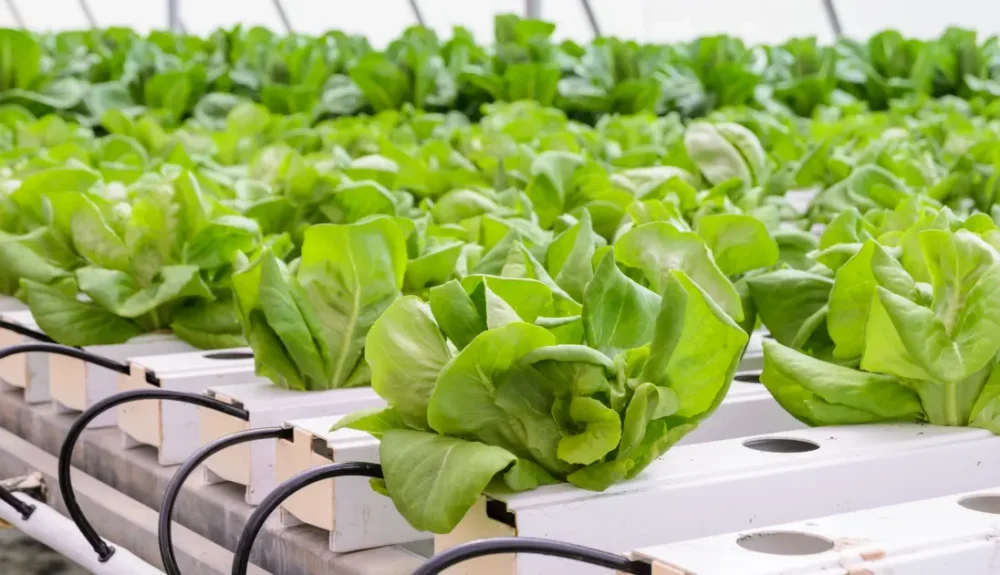
No, hydroponics does not use soil. Plants grow in water mixed with nutrients. They’re held in place by something like rock wool, perlite, or coconut coir. That material gives roots something to grip. It doesn’t feed them the way soil does.
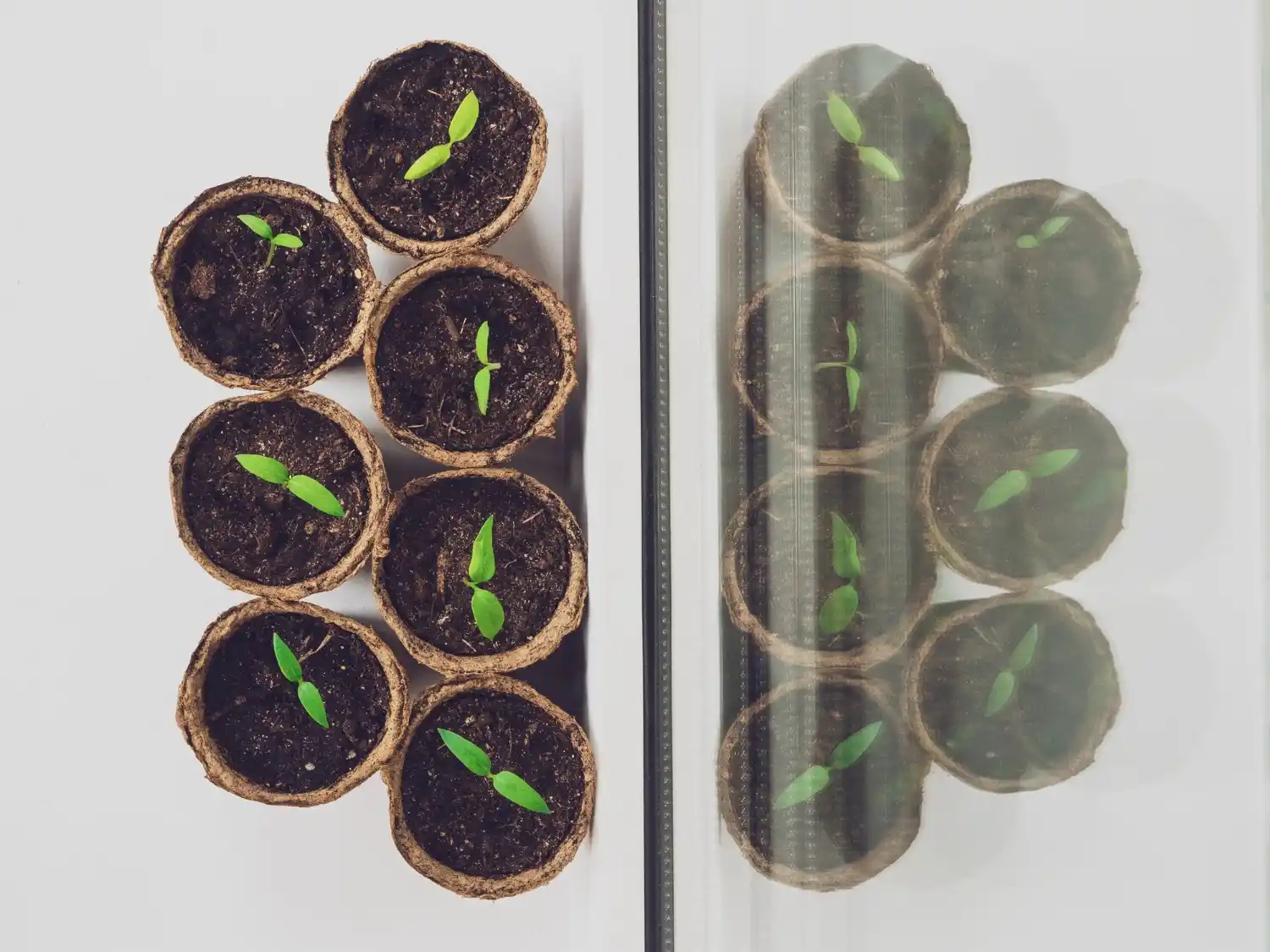
However, soil growing works the way it always has. Roots pull nutrients from the ground, and you add water and fertilizer as required.
That difference changes more than people expect. It shapes your water use, labor, what equipment can fail on you, and where your risk sits. Once you understand this, the comparison for hydroponics vs soil growing: which is better, gets easier.
Hydroponic vs Soil Pros and Cons
Neither method wins across the board for hydroponics vs soil growing: which is better. Each one plays to different strengths. Knowing which strengths matter to your operation is the work here.
Where hydroponics tends to pull ahead:
A few advantages come up repeatedly with hydroponic growers. They’re worth weighing before you commit to the cost of building a system.
- Faster growth cycles, since roots pull nutrients straight from the solution instead of working through soil
- Higher yields per square foot, which matters most for leafy greens, herbs, and tomatoes
- Tight control over pH along with temperature and nutrient levels, so a bad batch of soil never tanks your crop
- Lower water use, since closed systems recycle what they don’t consume
Must Read: How Hydroponic Systems Are Changing the Future of Food Production
Where soil growing tends to pull ahead:
Soil has its own set of advantages. For a lot of small operations, these are the reasons why it still holds up.
- Lower startup costs, since you’re not building an entire controlled system from the ground up
- Simpler troubleshooting, which matters if you’re newer to the business and still learning
- Natural buffering against nutrient swings, because soil holds reserves a water-only system doesn’t have
- Fewer mechanical points of failure, since there’s no pump or sensor standing between your plant and its next feeding
Of everything on both lists, the water number is the one worth sitting with. USDA’s Economic Research Service reports that some hydroponic and vertical growing systems use 80 to 99 percent less water than traditional field agriculture, largely through recycled water and precision irrigation. If you’re growing at a place where water costs keep climbing, this changes your margins every month. That kind of savings comes with a trade-off, though. A system built to run that efficiently also depends on equipment that can’t afford to fail. This is precisely the kind of exposure a standard policy tends to miss. So, check that your greenhouse business insurance accounts for what your setup runs on besides the structure around it.
Is Hydroponics Better Than Soil? It Depends on This
A few things tend to settle hydroponics vs soil growing: which is better comparison. It mostly comes down to more than just preference.
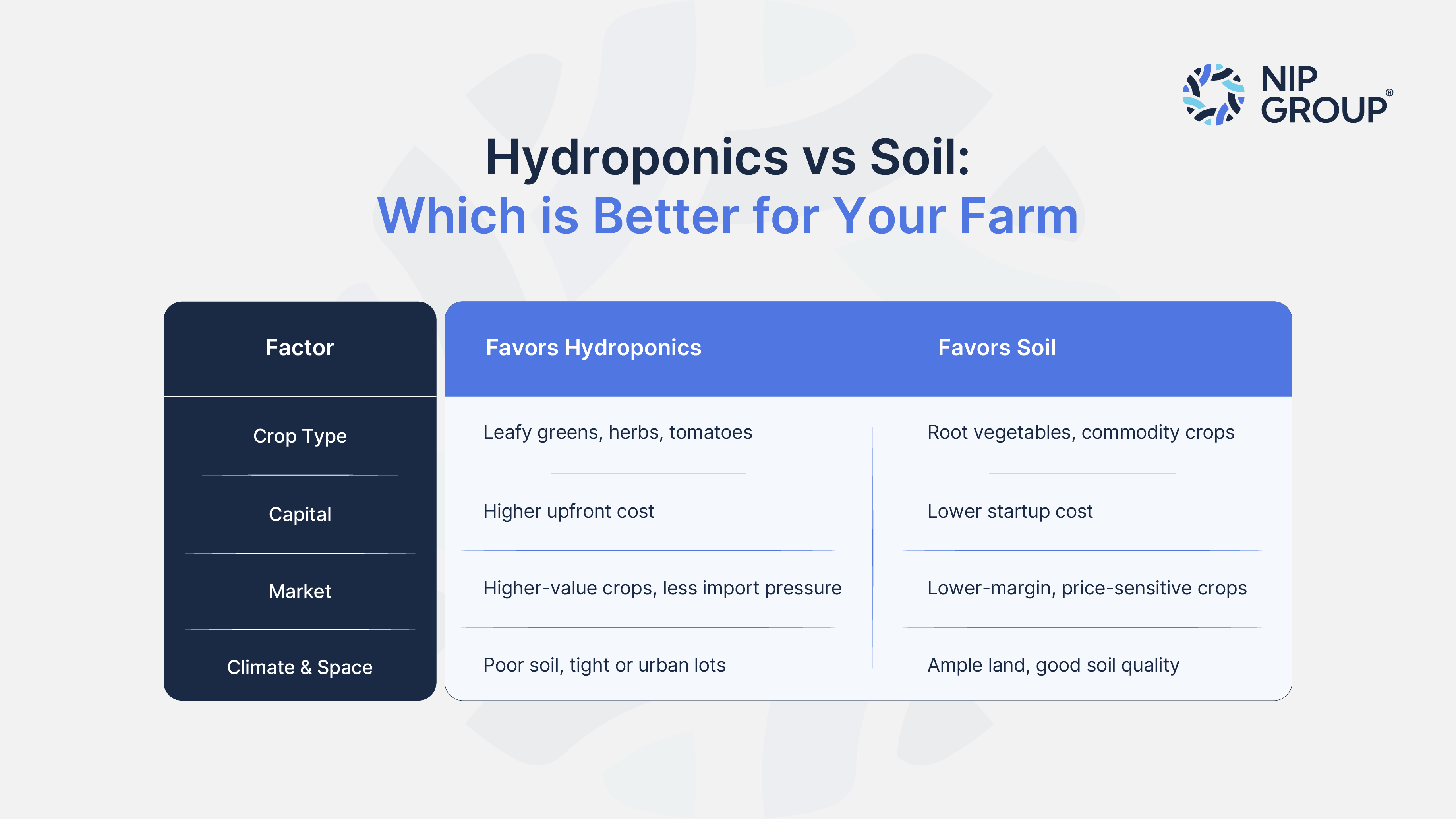
Crop type matters more than almost anything else
Leafy greens, herbs, and tomatoes take to hydroponic systems well, thriving in controlled, nutrient-rich water. Root vegetables and most commodity crops do better in soil. Their growth depends on the structure soil provides underground. Pick the wrong method, and you’ll be fighting your own setup all season.
Capital changes what’s realistic
Hydroponic setups cost more upfront, between the equipment, lighting, and climate control systems they need to run. If you’re bootstrapping a new operation on a tight budget, that gap can settle things.
Your market matters too
Import competition is squeezing prices on field-grown produce. So, some growers are shifting part of their operation toward higher-value hydroponic crops to protect their margins. This is a pricing strategy. Imported produce often comes from regions with lower labor and land costs. Domestic growers need every efficiency edge they can get to compete on price.
Climate and space play their own role
Poor soil quality can rule out growing entirely. A tight lot does the same thing. In those cases, hydroponics becomes the only real path to production. Options for a quarter-acre suburban lot look nothing like someone sitting on forty acres of good farmland.
When growers ask hydroponics vs soil growing: which is better, the honest answer depends on your setup. It comes down to what you’re growing. The ones who come ahead match the method to their crop mix and their market.
Must Read: Setting Up Hydroponic Systems: A Contractor’s Practical Guide
Hydroponics vs Soil: Which is Better for Your Farm
The Risk Side Nobody Budgets For
Every growing method carries risk. The difference is where that risk shows up. Hydroponic operations lean hard on equipment running correctly. Soil-based operations face a slower kind of exposure. Here are a few risks that show up on both sides. They’re also the ones that growers tend to underestimate most:
- Equipment breakdown, from pumps and grow lights to full climate control systems
- Structural damage to greenhouses from storms, flooding, or heavy snow load
- Crop loss from mechanical failure, contamination, or extreme weather
- Liability claims tied to product quality or a third-party injury on site
A standard business policy rarely accounts for any of this, which catches growers off guard. So, whichever method your operation runs, that’s precisely where greenhouse business insurance earns its place in the conversation.
Coverage Built for This Decision
Growers spend months weighing hydroponics vs soil growing: which is better for their operation. Few spend that same time on the coverage question, where the real financial exposure sits.
GrowPro is built specifically for greenhouse and controlled environment growers. It covers equipment breakdown, property, crop loss, and liability under one program. Moreover, it’s designed around how these operations run day to day. GrowPro is backed by carriers with an A or A+ rating, meaning they carry a superior financial ability to pay claims when a real loss happens. So, contact us or ask your broker to sign you up for GrowPro today.
FAQs
1. What are the 5 disadvantages of hydroponics?
The upfront cost is the big one. Beyond that, growers usually run into:
- Heavy reliance on power, so an outage can threaten a whole crop cycle
- A steeper learning curve for managing pH and nutrient balance
- Limited crop variety, since not every plant adapts well to water-based growing
- More points of mechanical failure than a soil-based setup carries
2. What are three plants that are not recommended for hydroponics?
Root vegetables tend to struggle the most. Carrots, potatoes, and onions all need soil structure to develop properly. A water-based system can’t replicate that. They’re not impossible to grow hydroponically. But the results rarely justify the effort for a commercial operation.
3. Why is soil not used in hydroponics?
Hydroponics skips soil on purpose. The whole idea is feeding roots a nutrient solution directly, without soil acting as the middleman. That gives growers tighter control over what a plant receives and when. Soil would actually slow that process down.
4. Can I transfer a hydroponic plant to soil?
Yes, though it takes some care to pull off. Roots grown in water are more fragile. So, rinse them gently and ease the plant into soil instead of rushing to switch. Give it extra water for the first week or two while it adjusts.