







Fire safety is inextricably linked with tree maintenance. After all, wildfires often use trees to spread. As a result, it makes sense to think about the way your installation and pruning services will influence a hypothetical fire.
In this blog, we’ll look at simple rules that tree-care professionals and arborists can follow to prevent wildfires at properties.
5 simple wildfire prevention steps for tree-care companies
1. Keep Trees Away from Rooflines
One of the most impactful ways to reduce the risk of wildfires spreading from trees to homes (or commercial buildings) is to prune all nearby branches. As a rule of thumb, maintain a minimum 10-foot distance between branches and rooflines. In especially fire-prone regions, you might even want to push the minimum distance up to 20 feet.
Don’t overlook small, ornamental trees planted right alongside homes or buildings, either. These crepe myrtles, Japanese maples, and arborvitae deserve just as much attention as the nearby oaks and pines when it comes to avoiding wildfires.
2. Consider Fire Safety During Installation
It’s easy to overlook fire safety during installation. You’re typically dealing with young, healthy trees. But these young trees are also fuel for a wildfire.
It’s also worth noting that those trees will grow, mature, and – potentially — struggle with any number of health problems. Some years from now, these now-healthy trees may be dead and dry. You need to envision how the trees you plant today might add fuel to the fire in the future. You don’t want to be installing a hazard in the making. That’s why it is crucial to consider fire safety while you’re making installation recommendations in the first place.
3. Attend to Vegetation Beneath the Canopy
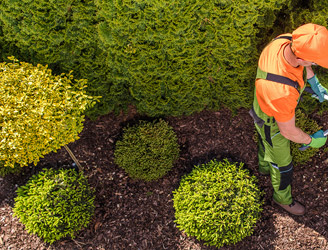
Shrubs planted in the shade of trees on a property also influence the path wildfires may take. Consequently, these plants must remain healthy and full of water. Ensure that they are tended regularly, so dead leaves and branches are cleared from the area. This is a small but critical wildfire prevention step.
Don’t forget to consider the mulch used in these areas, either. Many mulches, such as pine needles, are fairly flammable and best avoided in high-risk areas.
4. Be Vigilant About Dead Wood
You’re probably already recommending the removal of dead trees to clients as part of tree care 101 and a non-negotiable wildfire prevention step. And indeed, dead wood presents an incredible fire hazard – it is the best fuel a wildfire can dream of. As a result, you must remove dead-standing trees from the vicinity of occupied buildings or high-traffic areas. Go the extra mile and also keep an eye on trees that seem stressed. You know the signs: flaky bark, distorted or missing growth, secretions, pests, foliage issues
5. Account For Varying Risk Levels
Always bear the identity of the trees you’re examining in mind when your goal is to avoid wildfires. Some trees present far greater fire risks than others. There are specific fire prevention steps to follow during various stages of a tree’s lifecycle. For example, we talked about how it is critical to consider wildfire risks during tree installation earlier in this blog. An extension of this is to consider the species of trees – for example, you don’t want to plant sap-rich species in high-risk areas.
Similarly, it is crucial to keep the species you’re dealing with during pruning. For instance, you would definitely prune a high-risk species when it is growing close to homes or businesses, but you may use your experience and discretion, and allow a low-risk species to persist.
Conclusion
Tree-care businesses in western states often consider preventing wildfires at properties as part of their business, and it is equally critical for tree-care professionals in the eastern half of the country. After all, there are ecosystems in the east, too, that experience periodic wildfires.
So, be sure to consider the way that a wildfire would interact with the trees you maintain on behalf of their clients. Your actions could have far-reaching consequences down the line.
But while you’re safeguarding other people’s homes and businesses, what are you doing to protect your own? Tree care involves working at great heights, and you and your team also utilize risky equipment. Injury and accidents could result in loss of limbs and even life, putting your business at risk of hefty compensation claims. Bad luck can get past even the best of safety measures. Things can still go wrong. That’s why you need TreePro, a specialized insurance solution designed for the unique risks and situations that your business encounters.