










Summary
- Poinsettias are sensitive to heat and timing, and mistakes get costly fast.
- Knowing how to care for poinsettias means managing propagation and feeding along with shipping them together.
- This blog walks through poinsettia care from cutting to shipping, and where risk sits.
If you grow poinsettias, you know the stakes already. According to the University of Kentucky’s Center for Crop Diversification, poinsettias are the best-selling potted flowering plant in the United States. Nearly all of that volume sells within a six-week window starting in early November. That short runway sets this crop apart from anything else in your greenhouse.
Learning how to care for poinsettias means learning a plant that reacts fast to light, feeding, or to almost any shift in its routine. Get the timing right, and the crop practically sells itself once the holidays hit. Get it wrong, and a finishing run can lose color or shape days before the sale window opens. Most growers who work with this crop for a few seasons develop a feel for it. But the margin for error stays thin every single year.
This blog walks through poinsettia care from propagation to shipping. It also covers where that sensitivity turns into financial risk, and how coverages like GrowPro are built for greenhouse operations like yours.
Must Read: Insurance for Commercial Greenhouses: What’s Driving 2025 Premiums

Why Poinsettia Care Pays Off for Greenhouse Growers
From garden centers to grocery chains and florists, all need reliable poinsettia stock before Thanksgiving.
They need it from a grower who shows up on schedule every year. The USDA’s National Agricultural Statistics Service reported that potted flowering plants, the category poinsettias fall under, generated $1.4 billion in sales in 2025. That is a large, steady market for a crop many growers still treat as a side project.
Few operators get the timing right every season. That sensitivity works in your favor too. It keeps casual growers out of the market. Growers who master how to care for poinsettias deliver consistent color and shape on schedule every season. That consistency turns a single order into a standing contract.
The opportunity extends beyond the season itself. If you already run a greenhouse for spring bedding plants, poinsettias round out fall revenue before that cycle starts again. Rather than seasonal filler, it becomes a second income stream built on a market that rewards reliability more than volume.
How to Care for Poinsettias: From Cutting to Bract Color
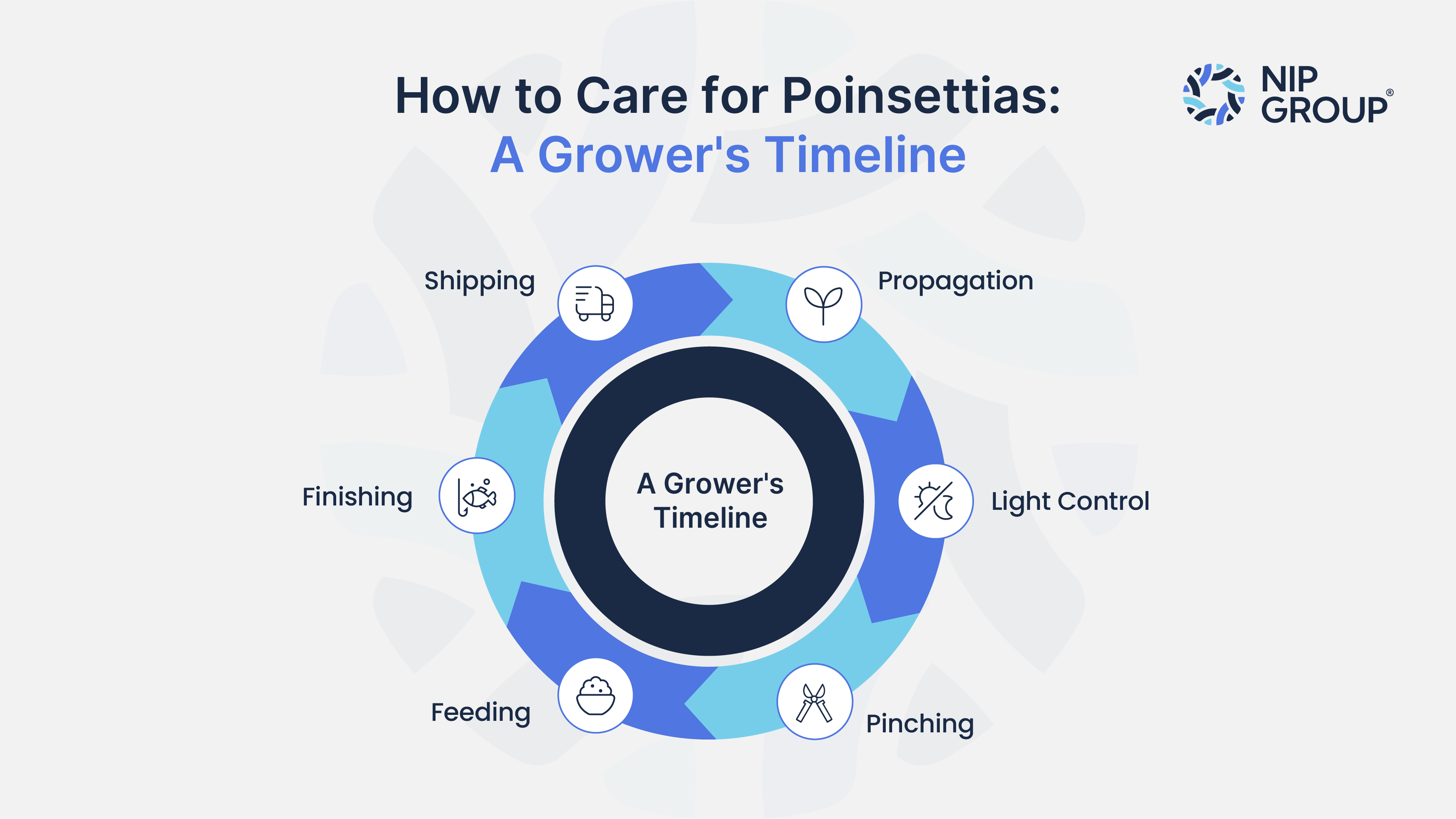
How to Care for Poinsettias: A Grower’s Timeline
Knowing how to care for poinsettias means following each stage in order, since one missed step affects the next.
Propagation and Light Control
Poinsettia care starts with propagation. Growers root cuttings under mist with steady bottom heat and supplemental lighting. Once rooted, cuttings move straight into their final container, where the real work begins.
From there, the plant depends on day length. Poinsettias need a dark period of at least 11.75 hours to begin forming bracts. Even a stray streetlight can delay that process. That’s why many growers use blackout cloth to control the light cycle.
Pinching comes next, usually two to three weeks after transplant, to build a fuller shape. Most cultivars then take eight to eleven weeks to reach a sellable stage. So every week of delay pushes the crop closer to missing its window. This stretch is where how to care for poinsettias becomes a balancing act between the steps. Miss one of them, and the whole schedule shifts.
Substrate, Feeding, and Watering
Good poinsettia care depends on what happens below the surface. Substrate pH should sit between 5.5 and 6.5, and the plant will tell you fast if it drifts. Leaves start yellowing, and growth stalls. The crop stops filling out on schedule too. Nitrogen needs run high too, typically 150 to 300 parts per million, depending on how vigorous the cultivar runs..
Watering deserves the same discipline as feeding. Overhead irrigation bruises the bracts and pushes humidity up enough to invite disease. Most growers switch to drip or subirrigation instead since both keep the foliage dry and send water straight to the roots. This part of care for poinsettia plants rarely gets much credit. But it is often the difference between a crop that ships uniform and one that does not.
Reaching Full Bract Color
You’ll know a poinsettia is ready once the bracts show full color and the small central flowers reveal visible pollen. That stage marks the true finish line for the crop. From there, the plant should leave your greenhouse within one to two weeks. Holding it longer invites fading and pest pressure that can undo a season’s work right before the sale.
Shipping and Handling
Learning how to care for poinsettias does not end when the plant leaves your greenhouse. Sleeve it for transport, but pull that sleeve off within 24 hours. Otherwise, the bracts underneath start to suffer.
Temperature is the bigger threat here. Anywhere below 45°F starts to damage the bracts, and freezing conditions can kill the plant fast. That one threshold explains why so many claims trace back to transport rather than the greenhouse floor.
Where Poinsettia Care Turns Into a Business Risk
Everything that makes poinsettias hard to grow can also turn into a claim.
Chemical use adds its own exposure. Growth regulators and fungicides help you hit deadlines. But any drift or mislabeling can bring a liability claim from a buyer downstream.
Seasonal hands make a difference too. Pinching and shipping all need extra labor, and your workers’ comp should scale with that surge. The same goes for your trucks. Delivery runs to garden centers and grocery chains need auto coverage that matches your routes and drivers.

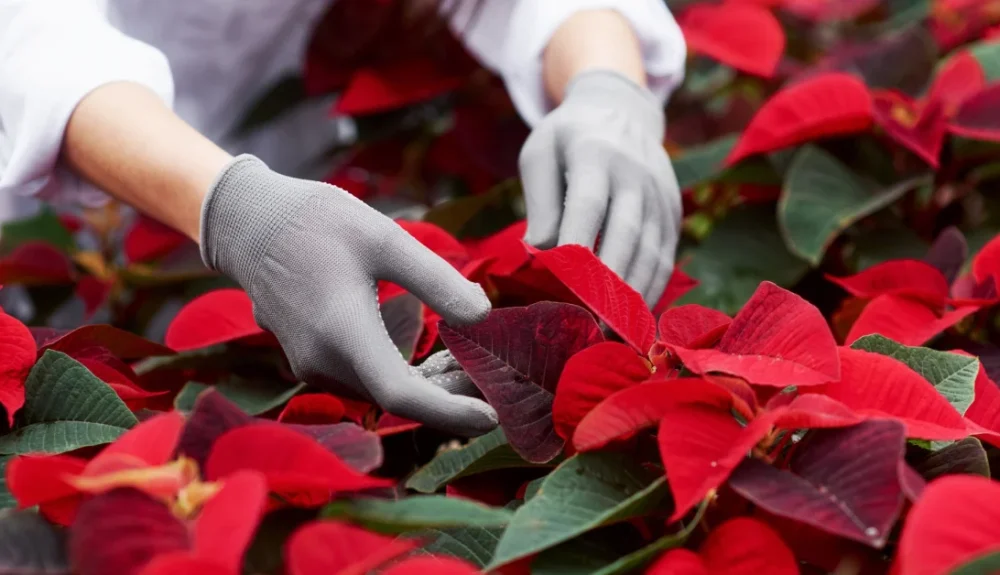
Alt text: Rows of red poinsettia plants growing in a commercial greenhouse
Must Read: 3 Essential Tips For Choosing Greenhouse Business Insurance
Coverage Built To Care For Poinsettia Plants
Generic business insurance was not written for a crop this sensitive to heat and timing. GrowPro was built for greenhouse growers and nurseries, along with hydroponic operations and garden centers. It starts with the basics you’d expect. From general liability and workers’ compensation to commercial auto for your delivery routes, it’s all part of the package. From there, it covers what a generic policy tends to miss.
- Equipment breakdown protects the heating and climate systems your poinsettia crop depends on.
- A growing stock endorsement reflects what your crop is worth while it’s still in the greenhouse.
- Product liability covers your chemical applications, and cyber liability covers the customer data most policies never think to ask about.
So, ask your broker to sign you up for GrowPro or contact us today about what your current policy covers.
FAQs
1. What do I do with my poinsettia after the leaves fall off?
Trim the stems back to about four to six inches once the color fades and leaves start dropping. Set it in a sunny spot afterward, and water only when the soil feels dry to the touch. That leaf drop usually just means the plant is adjusting to lower light and drier indoor air. It doesn’t mean the plant is dying.
2. How to keep poinsettias alive after Christmas?
A little attention goes a long way here. So, this is how to care for poinsettias after Christmas.
- Keep it near a bright window with several hours of indirect light each day
- Water only when the top inch of soil dries out. Avoid letting the pot sit in standing water
- Hold room temperature between 65°F and 70°F, away from drafts and heating vents
- Skip fertilizer until spring, when new growth starts on its own
Poinsettias tend to bounce back easily after the holidays, provided you don’t overwater them out of guilt.
3. How long will a poinsettia typically last indoors?
A poinsettia can hold its color for two to three months past Christmas when it gets steady light and water. Many go on to live as houseplants well beyond that. Plants that hold color this long usually had the fundamentals handled before they ever left the greenhouse.
4. Can you put a poinsettia outside in the winter?
No, not in most of the U.S. These are tropical plants underneath the holiday reputation, and temperatures below 45°F damage the bracts quickly. A brief trip to the car on a cold day won’t hurt it, but a night left outside in winter will kill it.

