









For decades, the agricultural industry has relied on industrialized farming techniques to maximize crop yields and keep pace with the increasing demand for fresh produce. While these practices have contributed to the rapid development of the global supply chain, it’s become clear that large-scale growing operations are not as sustainable as many believed.
Research from the World Economic Forum found that industrialized farming not only poses a threat to the environment, it also promotes waste and places extraordinary strain on natural resources. What’s more, the WEF projects that 80% of all food is expected to be consumed by large cities by 2050, many of which are located far from key agricultural regions.
Although indoor farming is widely considered less destructive than traditional practices, it only recently became a viable alternative. Historically, commercial greenhouses have been expensive to operate and require near-constant monitoring – a 2019 article published by AgFunderNews estimated that it’s 10 times more costly to grow food in a greenhouse compared to conventional farms. However, recent innovations in hydroponic systems and artificial intelligence could help make food scarcity a thing of the past.
The Next Phase of Greenhouse Automation: AI Hydroponics
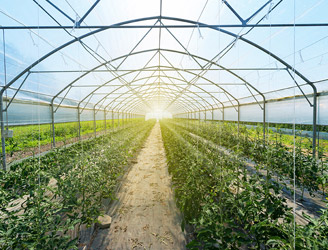
Although the use of hydroponic equipment in food production dates back almost a century, the true potential of indoor farming has yet to be realized. Hydroponic systems offer food producers more control over growing conditions, water usage, pests, diseases and more. Unlike conventional farms, commercial greenhouses can flourish in almost every climate and use considerably less space to grow a larger variety of crops, as noted by Food & Nutrition Magazine. As greenhouse technologies continue to evolve, growers are increasingly interested in harnessing hydroponic equipment to increase yields, reduce waste and create more reliable supply chains.
Greenhouse automation seeks to solve the operational challenges posed by large-scale hydroponic systems by introducing real-time monitoring, environmental controls and other self-managing features into the fray. This could be as simple as installing temperature sensors in a single greenhouse, or as complex as outfitting an entire growing operation with artificial intelligence tools. According to a recent report from Refresh – a joint initiative between nonprofits, farmers, university professors and Google researchers – AI and machine learning may hold the key to making food production more sustainable and cost-effective.
Curious how automation can help your greenhouse? Read more here.
Promising Use Cases
Optimizing growing conditions
Like other modern farming techniques, the success of hydroponic systems often relies on accurate data analytics, which enables food producers to make adjustments to growing conditions in real-time. These predictive capabilities are essential to managing large-scale facilities where several different crops are grown, though manual systems require at least some human intervention.
By introducing AI-driven capabilities into the mix, commercial greenhouses can collect and analyze a massive amount of information without ever needing to send staff onsite. When anomalies are detected, a machine-learning platform can automatically tweak greenhouse climate controls and hydroponic equipment to the desired state. For example, if a particular crop is starting to wilt, the system could adjust the liquid-nutrient solution to help prevent a total loss. Of course, achieving this level of automation will require growers to train their AI to detect inefficiencies and identify the best possible solutions.
Energy conservation
Artificial intelligence can also be used to lower a commercial greenhouse’s overall energy usage, most of which goes toward artificial lighting and climate control. One such application has been pioneered by the UK-based hydroponics system developer Intelligent Growth Solutions, whose vertical indoor farming techniques have caught the imagination of greenhouse growers around the world. Using AI, the company has been able to reduce energy costs by 50% while producing yields that are up to 200% higher than traditional greenhouses.
Other possible solutions to the issue of energy waste include using solar-powered LED lighting, integrating connected environmental sensors and aggregating climate data through a centralized management platform. Each of these applications can benefit from AI in some way, especially when it comes to making on-the-spot decisions. Some farmers are even experimenting with autonomous agricultural robots, WBUR reported, though it will likely take years to perfect these advanced harvesting tools.
Despite the challenges, hydroponic systems offer actionable solutions to the issues of food scarcity and industrialized farming. While it’s still unclear whether the greenhouse and agricultural industry will adopt these technologies en masse, global food production will likely undergo a major transformation in the decade ahead.
Have a greenhouse or nursery in need of coverage? Here’s how GrowPro can help.

