








Summary
- Tree care ranks among America’s most dangerous jobs, and outdated gear adds to the risk.
- The right tree cutting equipment keeps your crew safe and your business out of trouble.
- In this blog, we break down what actually works for contractors in 2026.
The U.S. tree trimming industry is now a $39.5 billion business. It also counts roughly 175,000 firms competing for the same residential and commercial work.
Standing out today takes the right tree cutting equipment, matched to the jobs you run on a day-to-day basis. The wrong gear can cost you bids, hours, and sometimes a worker.
In this blog, you’ll see the gear professional crews still rely on. You’ll also learn what’s changing in 2026 and what’s worth upgrading.
Your Core Tree Service Equipment List
Every working crew runs the same general categories of gear, season after season. Job sizes change, brands change, but the core list stays the same. Here’s the tree service equipment list to build a reliable operation around.
Cutting tools
- Top-handle chainsaws for in-tree climbing work
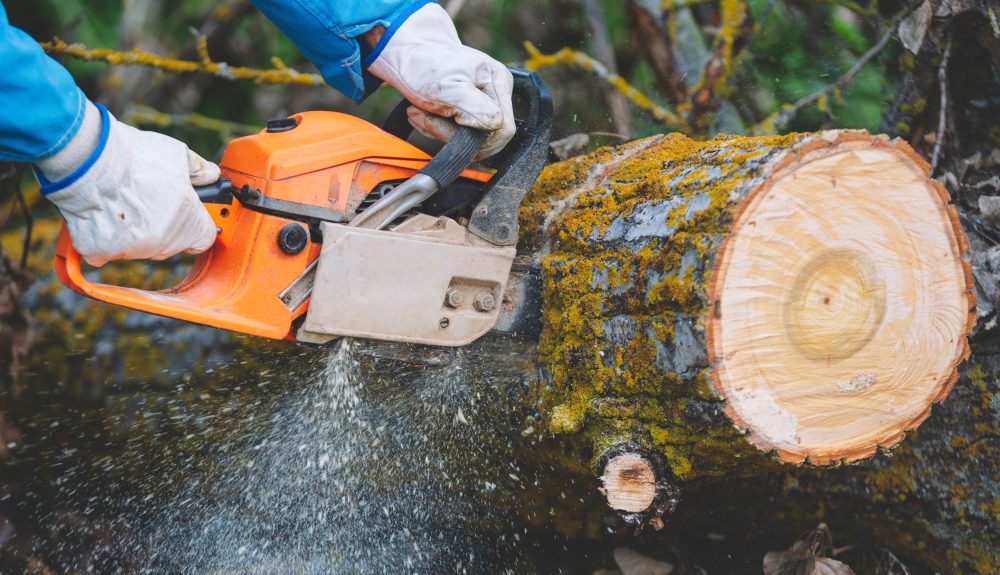
- Rear-handle chainsaws for ground cuts and felling
- Pole saws for high pruning without a climb
- Hand saws and pruners for finish work near homes
Climbing and access
- Bucket trucks and aerial lifts for tall jobs
- Climbing saddles, ropes, and lanyards rated for the work
- A second tie-off point, now standard at most certified companies
- Spurs and ascenders for trained climbers, never beginners
Removal and cleanup
- Brush chippers sized to your average daily volume
- Stump grinders, towable or self-propelled
- Compact utility loaders for tight residential lots
- Grapple trucks and log loaders for large jobs
If you’re missing pieces here, two things tend to happen. You either subcontract too often or turn down jobs you could land. The right tree cutting equipment widens your bid range fast.
Must Read: Tree Pruning and Removal Contractor Risks After a Storm
What’s Changed in 2026 and What’s Worth the Upgrade
Tree care equipment has shifted faster in two years than in the previous decade. Battery-powered tools used to be a side purchase. In 2026, they’re climbing saws running on professional jobs every week.
The Tree Care Industry Association points to wider AI adoption in 2026. Use cases include diagnostics, route planning, and on-the-job safety alerts.
Smart features matter on the equipment side, too. GPS trackers on chippers and trucks help with theft recovery and OSHA documentation. Telematics flag misuse before it becomes an incident or a claim.
Must Read: 2026 Guide to Professional Tree Care Innovation
PPE: The Gear That Protects the People Running the Equipment
PPE doesn’t bring in revenue, but it prevents serious financial loss. Skipping it leads to OSHA citations, workers’ comp claims, and lost commercial contracts. Here’s the gear standard your crew should never go without:
- ANSI Z89.1 hard hats, Class E rated for utility line work
- Chainsaw chaps or cut-resistant pants for the ground crew
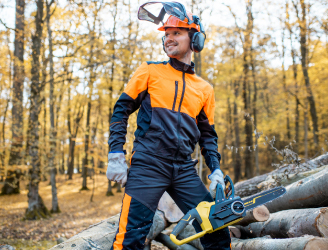
- Climbing helmets with face shields for in-tree work
- Safety glasses and ANSI-rated hearing protection
- Cut-resistant gloves designed for sawing, not gardening
- Steel-toed, slip-resistant boots with good ankle support
- Full-body climbing harness with secondary tie-off
- High-visibility vests for any roadside or street tree work
Treat PPE as part of your tree-cutting equipment plan, and not as an add-on cost. A single avoided injury covers a year of replacement gear several times over. This is also where professional tree removal equipment standards separate serious operators from the rest.
Inspect harnesses and lanyards before every shift. Replace anything showing fraying, glazing, or impact damage. One ignored defect can become a fatality investigation later.
When Equipment Breaks Something or Someone
Even with great gear, things can go sideways on tree jobs. Chippers jam at the worst possible moments. A dropped limb dents a customer’s parked truck. An aerial lift fails mid-job and the crew loses three working days. None of this is worst case scenario, as it’s a routine month in tree care.
This is where commercial tree removal equipment exposure becomes a financial conversation. Insurance doesn’t replace good equipment, but it covers the gaps when good equipment still fails. Here are the risks the right policy actually handles:
- Damage to trucks, chippers, and grinders, owned or rented
- Third-party property damage at the job site
- Worker injuries even when full PPE was used correctly
- Crane and boom incidents on bigger removals
- Wildfire liability for crews doing utility line clearance
- Pesticide application liability for full-service operators
General business insurance was not built for this work. Even the best tree cutting equipment can’t carry that financial weight alone.
Must Read: Why Some Customer Claims Resolve Faster Than Others
The Gear Is Half the Job, and The Other Half is Coverage
The contractors thriving in 2026 are the ones who pair smart tree cutting equipment choices with the right coverage. One bad day on a job shouldn’t take down a healthy business.
That’s where TreePro fits in. It’s a program built specifically for tree care companies, not bolted onto a generic policy. TreePro covers what general business insurance usually misses.
That includes utility line clearance, pesticide application, wildfire liability, and crane and boom exposure. It also handles the foundational needs: general liability, commercial auto, and workers’ comp.
The program is backed by A+ rated carriers. An A+ rating means the carrier has a superior financial ability to honor its commitments. So when you file a claim, the money is actually there.
Treat the right tree cutting equipment and the right coverage as one investment in your business. Ask your broker to contact us directly.
FAQs
- What equipment is used to cut trees?
The core tree cutting equipment for most contractors includes:
- Chainsaws (top-handle for climbing, rear-handle for ground work)
- Pole saws for high-reach pruning
- Hand saws for finish cuts in tight spots
Beyond cutting tools, you also need climbing gear, brush chippers, and stump grinders to handle a full removal.
- What is the 5-15-90 rule in tree felling?
It’s a safety rule based on accident data. Ninety percent of tree-felling injuries happen within 15 seconds of the tree starting to move and within 5 feet of the trunk. That’s why trained crews always plan a 45-degree escape route before making the backcut.
- What is the best tool for removing small trees?
For trees under 10 inches in diameter, a rear-handle chainsaw with a 16 to 18-inch bar usually is the best tree cutting equipment. A compact utility loader helps speed up stump and debris cleanup afterward.
- Which is the best insurance for tree cutting equipment?
General business insurance rarely covers the full range of risks in tree work. TreePro is built specifically for tree care contractors and their tree cutting equipment. It covers equipment, general liability, commercial auto, workers’ comp, and specialty risks like wildfire liability and crane exposure, all backed by A+ rated carriers with a superior financial ability to pay out claims.