





Summary
- Most tree care businesses underestimate the professional liability that comes with every tree risk assessment they complete.
- Knowing what the ISA standard requires and how to document it properly is what makes your assessment defensible when it matters.
- In this guide, we walk through the process, the standards, and what tree care professionals need to have in place.
In October 2025, Washington State’s Department of Labor and Industries issued a Tree Trimmer Hazard Alert after a spike in deaths. 11 professionals in the state died between 2020 and 2024, most while performing tree-trimming tasks.
Nationally, 228 landscaping workers were killed in 2023, according to the Bureau of Labor Statistics’ February 2026 report. TCIA data puts the tree care fatality rate at potentially 11 times the all-industry average.
Tree risk assessment sits at the center of addressing those numbers. A structured, well-documented assessment gives arborists a defensible basis for every recommendation they make, from pruning to full removal. Without it, the professional judgment behind each decision becomes much harder to support when something goes wrong.
This is a guide to arborist tree risk assessment. You’ll discover what it involves, what the ISA standard requires, and why it matters for your business beyond the job site.
What Tree Risk Assessment Involve
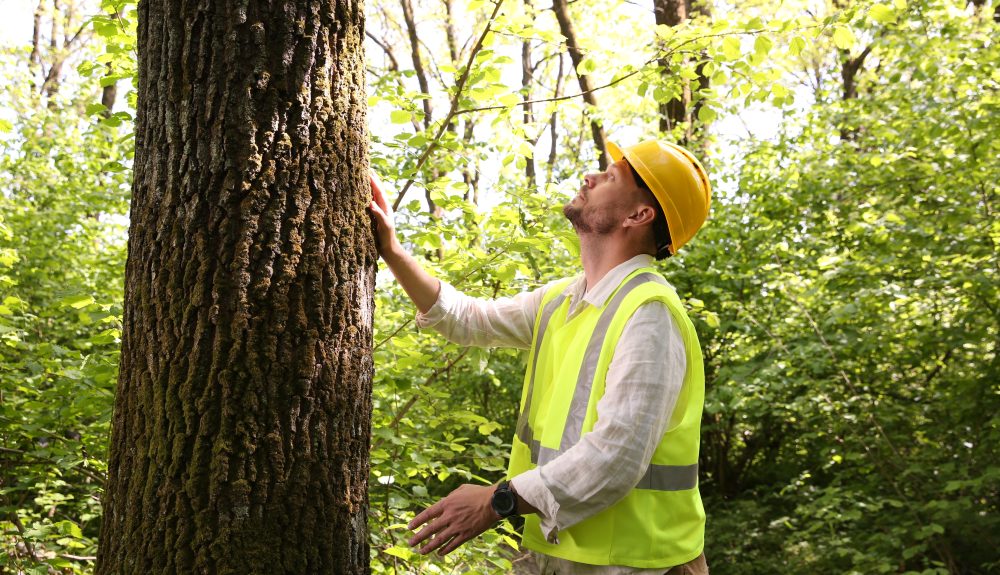
Here’s a distinction worth making clearly. A tree risk assessment doesn’t label a tree as hazardous or safe. It quantifies the risk of harm in a way that helps arborists and their clients weigh safety against the real value that trees provide.
As the Arbor Day Foundation puts it, removal should always be a last resort, not a default response to any visible defect.
For tree service insurance purposes and legal defensibility, what matters is that a consistent, documented methodology was followed.
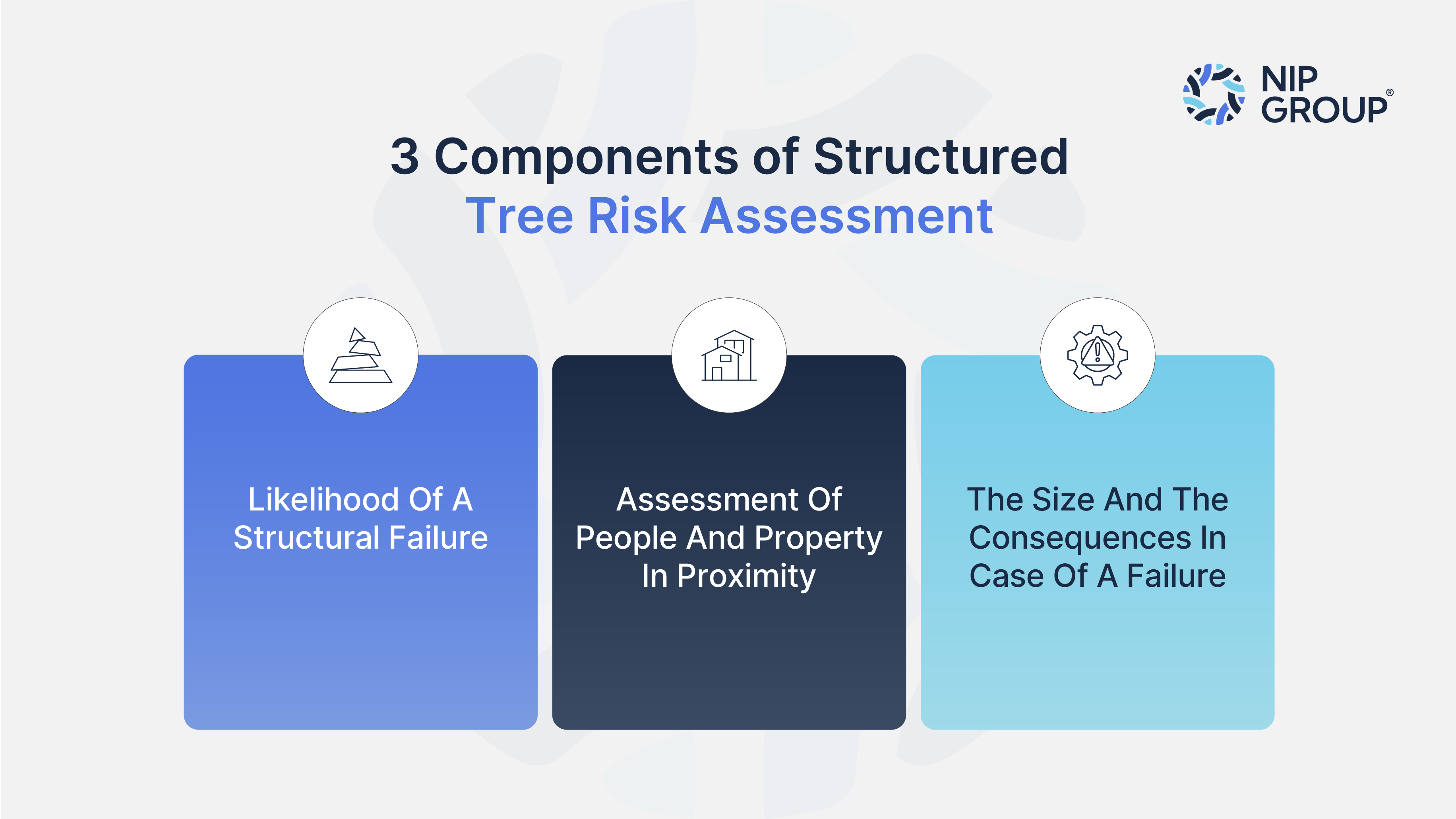
Three components govern every structured tree risk assessment:
- Target: Anything of value that could be harmed if the tree or part of it fails, such as people, structures, vehicles, or utilities
- Probability of failure: How likely the tree or a specific part is to fail within a defined timeframe, based on visible indicators of structural defect, decay, or disease
- Impact potential: The size and consequence of failure if it reaches the target
The ISA methodology, developed by Matheny and Clark, combines these three components into a recognized hazard tree assessment framework.
QTRA, the Quantified Tree Risk Assessment system, takes a more mathematical approach, expressing risk as a calculated ratio. Both are accepted in the industry. The key is consistency and documentation across every job.
Must Read: What Every Arborist Needs to Know About Crane Safety Compliance and Risk
The ISA Standard: Qualification and Reporting
What is the ISA tree risk assessment qualification? The ISA offers two credential levels. The Qualified Tree Risk Assessor credential covers foundational assessment work. The Advanced credential applies to more complex situations involving high-consequence targets or difficult-to-assess structural conditions.
Both require documented training, field hours, and ongoing recertification. The credential matters beyond competence. It affects the weight your tree risk assessment report carries in any legal or insurance review.
How to write a tree risk assessment report that holds up starts with documenting the methodology used. It should include the date and conditions of the assessment, specific defects observed and their location on the tree, the target zone evaluated, and a risk rating with the reasoning behind it. A clear management recommendation, with a timeframe, needs to close the report.
A tree risk assessment report that reaches a conclusion without showing the path to that conclusion is difficult to defend. A hazard tree evaluation that walks through each component, in documented sequence, gives you something solid to stand behind.
One more step that gets skipped too often: written communication to the client. Verbal recommendations that aren’t followed up in writing leave the arborist’s position unclear if an incident occurs after the assessment.
Must Read: Tree Pruning and Removal: Contractor Risks After a Storm
3 Things to Account For During Tree Risk Assessment

Miniature Tree on Financial Charts.
A thorough tree risk assessment reduces the likelihood of an incident. It also shapes how your business is positioned when an incident happens despite good work. Arborists who can produce a dated, signed, methodology-documented assessment for every job are in a fundamentally stronger position in a liability dispute.
A few things worth accounting for practically:
- How much does a tree risk assessment cost? Fees typically range from a few hundred dollars for a single-tree residential evaluation to several thousand for complex multi-tree or high-consequence-target assessments. That investment is modest against the liability exposure of missing a structural defect adjacent to an occupied building or a high-traffic area.
- An arborist tree risk assessment that identifies a defect, recommends action, and documents client notification in writing creates a clear handover of responsibility. One that doesn’t complete that documentation loop leaves your business holding more liability than the job duration should require.
- Post-assessment incidents, where a tree fails after an assessment-recommended monitoring rather than removal, are defensible when the risk rating was justified and the client received written notification.
Without that paper trail, the same defensible decision becomes nearly impossible to support.
TreePro Covers the Work Behind the Assessment
Tree risk assessment is professional judgment, applied systematically. And like all professional judgment, it carries liability exposure that extends beyond the day of the visit.
A recommendation made in good faith, on a fully documented basis, can still generate a claim if a tree fails and someone is harmed.
TreePro is built specifically for arborists and tree care businesses. It covers:
- General liability
- Arborist errors and omissions for professional judgment claims
- Workers’ compensation is structured for high-hazard tree care work
- Crane operations
- Limited jobsite pollution liability
- Excess capacity up to $25 million
On top of all this, it comes with 35+ years of industry experience, and wildfire liability protection is available nationwide.
Talk to your broker about TreePro or contact us directly. Make sure your tree service insurance reflects the professional liability that comes with tree risk assessment work.
FAQs
How do you do a tree risk assessment?
Doing a tree risk assessment starts with identifying the target zone, who or what could be harmed if the tree or part of it fails. From there, the assessment moves through three steps:
- Evaluate the tree’s structural condition, looking for visible indicators of decay, disease, root damage, and branch defects
- Determine the probability of failure for the whole tree and any high-risk parts specifically
- Rate the impact potential based on the size of the likely failure and its proximity to the target
The full assessment should be documented using a recognized methodology, such as ISA or QTRA, and followed up with a written report and client communication before the job is considered complete.
What are the three components of tree risk assessment?
The three components of tree risk assessment are target, probability of failure, and impact potential. Target refers to anything of value in the failure zone. The probability of failure evaluates how likely the tree or a part of it is to fail within a defined timeframe. Impact potential considers the size and consequence of that failure reaching the target. All three are combined to produce a risk rating.
What is the 3 30 300 rule for trees?
The 3 30 300 rule is an urban forestry guideline for tree canopy planning. It recommends that every home should have at least 3 trees visible from it, every street should have 30% canopy cover, and every neighborhood should have 300 square meters of canopy per resident. It’s a planning principle rather than a hazard tree assessment tool, but it reflects the same underlying premise that trees have genuine value worth protecting and managing, not just removing.
Which is the best insurance for tree risk assessment professionals?
The best insurance for arborist tree risk assessment work covers professional liability specifically. Errors and omissions coverage protects arborists when a professional recommendation, like monitoring rather than removing a tree, is later disputed after an incident. TreePro is built for exactly this, covering E&O alongside general liability, workers’ compensation, and excess capacity up to $25 million.