









The future of floriculture is vertical, urban, and powered by artificial light.
Vertical floriculture is a growing method that uses stacked layers to cultivate flowers indoors, protected from seasonal changes
The whole movement towards this new style of floriculture started when innovative growers realized that stacking crops vertically could help solve some major agriculture challenges – land use, efficiency, transportation, and water availability.
In addition, vertical growing floriculture allows year-round production, total control over conditions, and major sustainability benefits.
Vertical gardens are also taking root in businesses and public plazas. Trendy hotel lobbies now sometimes sport lush green walls where plants provide a welcome sense of liveliness. These innovations present big opportunities for the commercial production of decorative plants for the beautification of homes and public spaces.
Urban jungles, countryside greenhouses, and even regular homes could soon house hidden vertical gardens churning out orchids, lilies, and roses. All of this adds up to more demand, which means more business for floriculture businesses like yours.
But change always comes with challenges.
In this post, we’ll break down exactly how vertical growing floriculture works, its pros and cons, and how you can start implementing it in your business.
What is Vertical Growing and Why You Should Care?
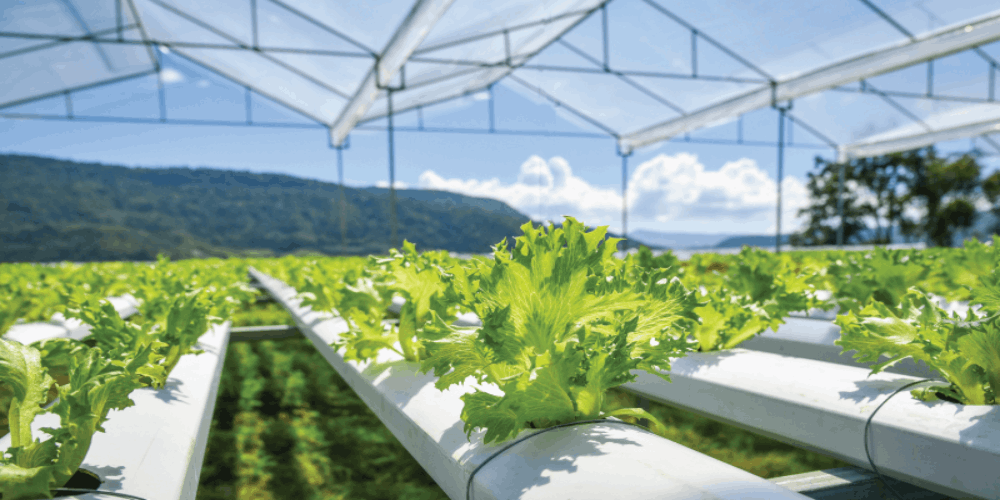
Vertical growing, also known as vertical farming, utilizes vertically stacked layers to maximize space and allow for urban cultivation.
This agricultural approach enables the production of crops in indoor facilities like warehouses or shipping containers. Vertical layers can consist of racks, stacks of pots or trays, hanging gardens, or even wall-mounted panels.
What does it require?
- Specialized lighting like LEDs enable vertical floriculture by providing each layer with the light levels needed for photosynthesis.
- Sophisticated hydroponic or aeroponic systems deliver water and nutrients directly to the plant roots.
- Sensors monitor and adjust growing parameters like temperature, humidity, pH, and nutrient levels to optimize conditions.
Compared to conventional horizontal growing, vertical farming multiplies production per square meter.
Why would florists be interested in this kind of cultivation?
Simply by moving flowers from the greenhouse to a daylight-free indoor environment, you could eliminate the effect of sunlight on temperature and humidity for plants.
Indoor vertical farms could improve floriculture by more tightly regulating these factors, as well as by controlling exposure to disease-causing pathogens and other issues.
Why move floriculture out of the greenhouse?
While commercial greenhouses are currently the norm for industrial floriculture, vertical farming trials for flower production have met with some success. An exploration conducted by researchers at Philips led to insights about lighting recipes that could be used for a variety of annual and perennial ornamental plants. These lighting recipes and the insights yielded by Philips’ experiments provide directions that make it easier to grow plants in warehouses and other non-greenhouse locations.
Vertical floriculture is part of a new opportunity for growers
Vertical farming could also someday play a role in the commercial cultivation of edible flowers that could soon become a part of everyday diets. A Euronews report explored how researchers in Europe, are studying several methods for expanding the viability and use of edible flowers, to promote the floriculture industry.
If these efforts succeed, edible flowers may become an important part of vertical food farming efforts in the future. This could mean a new line of business for businesses like yours, and is one of the reasons why the vertical growing industry is expected to grow to $15.3 billion by 2028.
The Benefits of Vertical Growing for Floriculture
For florists and flower growers, implementing vertical growing methods provides numerous potential benefits:
- Year-round production – By moving cultivation into a climate-controlled indoor environment, flowers can be grown independent of weather or seasonal changes. You can have access to a consistent inventory and flower varieties, regardless of the time of year.
- Precise control over growing conditions – Factors like temperature, humidity, light, and nutrients can be closely monitored and adjusted to optimize yields and flower quality. For example, specialized LEDs deliver ideal light wavelengths.
- Increased efficiency – Vertical stacking multiples yields per square foot drastically compared to greenhouses or fields. This optimization is key for space-constrained urban areas.
- Sustainability – Vertical farms typically recycle water, precisely regulate nutrients to minimize waste, and eliminate pesticides by controlling the environment. Hydroponic and aquaponic systems further improve efficiency.
How to Implement Vertical Growing in Your Floriculture Business
Transitioning to – or even incorporating – vertical growing floriculture won’t happen overnight. But you can set things in motion by beginning to evaluate if and how implementing vertical growing can bolster your operations.
Seek insights from early adopters to understand real-world challenges and solutions. You can start by piloting small-scale trials in shipping containers or spare warehouse space.
Converting to vertical growing floriculture requires new equipment and facilities. Key elements include:
- Indoor facility – This can be a warehouse, greenhouse, shipping container, or other enclosed space. Many vertical farms are located in cities.
- Vertical layers – Multi-level racks, towers, or other vertical structures to hold crops. These maximize space utilization.
- Growing medium – Substrates like coconut coir or perlite hold crop roots. Hydroponic or aeroponic systems are common.
- Lighting – High-efficiency LEDs are positioned to evenly illuminate all vertical layers. Light levels can be adjusted.
- Climate control – HVAC systems, humidifiers/dehumidifiers, and air circulation maintain optimal growing conditions.
- Monitoring systems – Sensors and automation adjust lighting, nutrients, temperature, humidity, and other factors in real time.
When assessing vertical floriculture, remember that the initial investment is dwarfed by the long-term advantages. You can make smart choices that set your business up for future resilience and sustainability.
Verticulture growing floriculture may soon become the new standard for the industry.
Tailored Insurance Solutions for Eco-Visionaries
Vertical growing offers immense potential to transform floriculture. However, realizing the full benefits of this emerging agricultural technology requires foresight and preparation.
Success requires foresight, calculated risk-taking, and support from partners who understand the unique opportunities and challenges faced by our evolving industry.
Your business needs coverage custom-fit to your vision.
At NIP Group, we’ve spent 35+ years building exclusive solutions to do just that.
We offer GrowPro—an insurance product tailored specifically for horticulture businesses.
To navigate a transition to vertical floriculture smoothly (and with an insurance safety-net in place), you need a partner that understands the unique dynamics and risks of your industry.
Whether you are a traditional greenhouse, nursery, retail center eyeing vertical expansion, or an emerging hydroponic startup, GrowPro provides tailored solutions.