








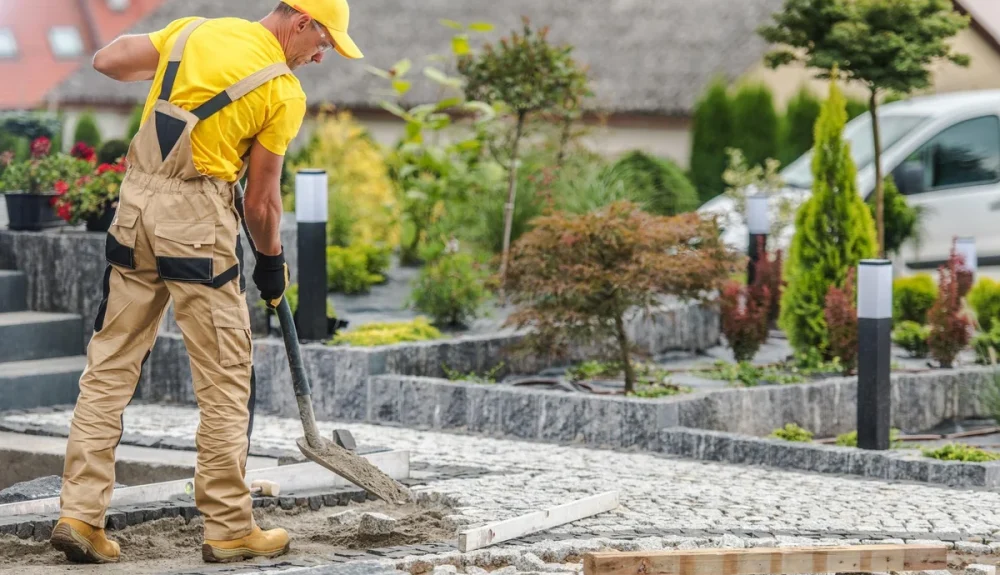
Hardscaping contractors and irrigation contractors both fall under the landscaping umbrella, but the risks they carry look nothing alike. One works with pavers, retaining walls, and heavy machinery. The other digs trenches near water lines and buried utilities. A generic policy designed for mowing crews rarely accounts for either.
This blog breaks down what each trade needs to insure and how to choose the right coverage for your type of contractor. A closer look at landscaping business insurance shows where these two trades diverge, and where a standard policy leaves gaps.
What Hardscaping Contractors Need to Insure
Hardscaping contractors need general liability and contractors’ errors and omissions coverage as their baseline. It’s because this trade carries more structural risk than routine lawn care. A retaining wall that shifts or a patio that settles unevenly can trigger a claim months after the job wraps, and the two coverages respond to different parts of that risk:
- General liability covers third-party property damage caused by heavy materials such as pavers, blocks, and stone.
- Contractors E&O covers the cases where a design or installation error causes a structural problem that only shows up later.
Equipment exposure adds another layer on top of that. Excavators, masonry saws, and trailers represent a serious investment that sits outside standard property coverage. This is where inland marine coverage comes in, protecting that equipment, both in transit and at the job site. Solid landscaping equipment management habits cut down how often claims come up, but the coverage still needs to sit behind them.
Must Read: Hardscaping Services and Insurance: Why Hiring Licensed Contractors Matters
What Irrigation Contractors Need to Insure
Irrigation contractors need errors and omissions coverage built around underground work. It’s because a faulty line often shows up as water damage weeks after the job closes. A poor splice or a loose fitting can leak quietly under a lawn or foundation before anyone notices. By the time a customer spots the damage, tracing it back to the original install is simple, and so is the claim that follows.
Two more coverages matter just as much once crews start digging:
- Commercial auto built for the real weight and frequency of hauling trenchers and pipe between job sites.
- Workers’ compensation is suited to trenching injuries, which tend to be more severe than routine landscaping work.
Workers’ comp for landscapers is worth reviewing on its own, since a policy sized for mowing crews rarely reflects the risks of trenching work.
Must Read: Is Your Irrigation Business Covered by Sprinkler Contractor Insurance?
How to Pick the Right Coverage for Your Contractor Type
Both hardscaping and irrigation contractors need general liability and a business owner’s policy as the foundation of their coverage. Where the two trades split is in the riders stacked on top of that base:
- Hardscape contractors tend to favor equipment coverage and structural E&O.
- Irrigation crews lean toward underground E&O and higher limits on auto and workers’ comp.
From there, a few factors point to which riders make sense.
- A growing crew or a wider service area is usually the signal to raise commercial auto and workers’ comp limits. It’s because more trucks on the road and more trenching hours both raise real exposure.
- A claims history with any structural or underground disputes is a signal to check E&O limits before they fall short.
Bidding on more commercial contracts is a signal to confirm coverage requirements up front. These contracts increasingly spell out minimums before work can even start. That’s where contractual risk transfer for landscaping businesses is worth a look before you bid on the next one.
LandPro is built specifically for landscaping businesses. It covers general liability, contractors’ E&O, inland marine, and workers’ compensation under one program tailored to how landscaping contractors operate. The program is backed by A+ rated carriers. It means they have a strong track record of paying out claims when they come in. Ask your broker to sign you up for LandPro or contact us for a landscaping business insurance quote.

