








“The rapid advance and adoption of technologies for soilless farming have made hydroponics more efficient and accessible. Though these tools help increase yields and enable year-round farming, they also create new and potentially costlier liabilities, making specialized horticultural insurance coverage essential.” – David Macari, GrowPro Program Manager
Though the concept of hydroponic farming has been around for centuries, it’s only in the last few decades that it’s begun to tap into its full potential. Hydroponics and aquaponics — two soilless methods for growing plants — have come into focus in recent years as possible solutions to the challenges of food insecurity and environmental sustainability.
However, for its many benefits, hydroponic farming, like other agricultural solutions, comes with its own set of unique risks and obstacles. For example, hydroponic systems can be very expensive, requiring not only specialized equipment but also experts capable of running these ecosystems. In addition, since most modern hydroponic farms utilize advanced technology, even a brief power outage, minor programming error, or trace contaminant may prove detrimental to the entire harvest. With so many industry-specific risks, hydroponic farming insurance is more essential than ever to the stability of greenhouse growers’ businesses.
The Growth of Hydroponic Farming
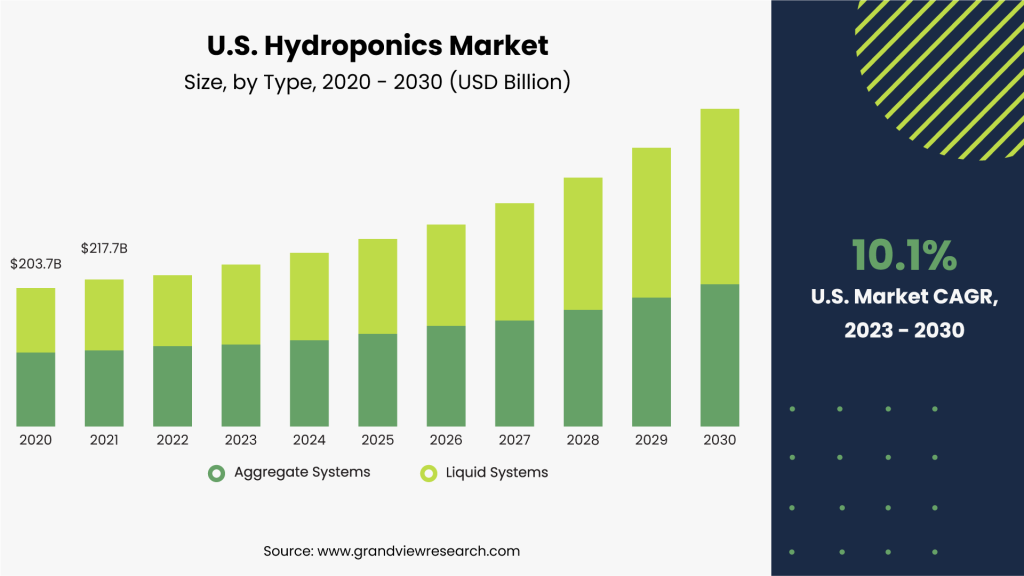
The U.S. hydroponics market remains in its nascent stages, but with rising food and land costs, is slated to grow significantly. While the global farming market measures in the trillions of dollars, the global hydroponics market was just $4.65 billion in 2022. As access to hydroponic systems becomes more common, the widespread adoption of soilless farming methods will propel the market to a compounding annual growth rate of 11.9% through 2029. In turn, this will create enormous opportunities for hydroponic growers willing to expand their businesses, and for the brokers with the right insurance products to protect these indoor farms.
The Benefits of Hydroponics

With several advantages over traditional farming methods, hydroponics offers a promising way to increase food production. Benefits of hydroponic farming include:
- Year-round growth
- Flexibility to farm vertically
- Shorter growth cycles
- Higher yields
- Fewer weeds
- Fewer pests
- More controlled conditions (temperature, humidity, etc.)
- Non-weather
- Reduced water consumption (hydroponic systems can use up to 10 times less water than traditional farms)
Trends in Hydroponics and Aquaponics
Automation and other technological advancements are a major part of why hydroponics and aquaponics have soared in popularity in recent years. The overarching trend in hydroponics has been smart farming, which we expect to remain in focus for the next several years. Public health concerns will also come into focus, especially as soilless growing accounts for a larger percentage of produce sold in grocery stores, and regulatory agencies turn their attention to hydroponic farms.
Smart farming, remote cultivation, and automation
Unsurprisingly, smart farming and remote cultivation are among the top trends advancing hydroponics and aquaponics. One of the advantages of hydroponics is the ability to control and monitor conditions and plant growth. Though traditional farming uses various technologies to boost efficiency, integrating IoT (Internet of Things) devices into hydroponic systems can help owners optimize and automate every facet of their farms. Using a data-driven approach, farmers can remotely monitor growing conditions in real time, and make adjustments as needed. In addition, smart farming devices can automate lighting, pH levels, climate, nutrient density, and irrigation systems within hydroponic and aquaponic systems.
Public Health Concerns and Increased Government Scrutiny
Food safety risks are consistently a top concern for the Food and Drug Administration (FDA). The Centers for Disease Control and Prevention (CDC) estimates 9.4 million episodes of foodborne illness each year, with produce accounting for roughly 50% of those illnesses. Though soilless plant production generally means lower risks of foodborne illnesses, pathogens can still impact hydroponic systems by contaminating the water supply.
As the industry continues its upward trajectory, federal and state governments are likely to take note, increasing their scrutiny of Controlled Environment Agriculture (CEA) such as hydroponic and aquaponic farms.
Following a Salmonella outbreak in 2021 linked to greens grown in a CEA farm, an FDA investigation of the hydroponic farm believed to produce the tainted greens identified several problematic conditions and practices. In addition, that same investigation found a different Salmonella serotype in the pond water used to hydroponically grow produce.
Over the next several years, we expect new regulations or provisions governing food safety laws specific to CEA farms, both of which present additional challenges and liabilities for hydroponic and aquaponic growers.
Complexities, Risks, and Disadvantages of Hydroponic and Aquaponic Farming
Hydroponic and aquaponic farming are some of the most practical and efficient ways to grow high-quality plants virtually anywhere in the world and during any time of year. Still, there are several complexities and risks to consider, some of which create potentially crippling liability concerns. Brokers who understand the specific challenges and risks of running a hydroponic farm today — and who can provide the insurance coverages to protect these farmers — will be well-positioned to capitalize on the industry’s immense growth opportunities.
High upfront costs
One of the main drawbacks of hydroponic farming is its high upfront costs compared with traditional farming. Though it may be more economical long-term, soilless growing requires a much more extensive system than ground farming, including a nutrient source, water pumps, a light source, constant power, and the technology and know-how to run the entire operation. These costs represent a sizable upfront investment that can make starting a CEA farm several times more expensive than traditional growing methods. With such high startup costs, protecting hydroponic farm investments is a top priority for every owner.
Complex environment and training needs
Hydroponic systems can be significantly more complex than traditional farming methods. These agricultural systems demand a higher level of expertise and training than traditional farming. The complexity of hydroponic and aquaponic farms can not only mean mistakes are more likely to occur, but that they’ll be more detrimental when they do since these systems are interconnected. From an insurance standpoint, that means losses can be more severe, increasing liability risks for hydroponic farm owners.
Fire risks
Hydroponic farms depend on artificial light to support plant growth. As a result, they’re usually outfitted with extensive electrical components that can increase the risk of fires. Artificial lights and electrical wiring within hydroponic farms must be properly set up, maintained, and inspected, particularly if the lights or wiring systems are exposed to water. Even if the electrical systems are set up correctly, fire risks remain a persistent threat and one that all legitimate tank farming insurance solutions should cover.
Water contamination risks
Hydroponic and aquaponic systems typically rely on a single water system for survival. These systems also carry nutrient solutions directly to the plants, helping them grow quickly, but potentially increasing the risk of contamination from bacteria like E. coli and Salmonella. A 2020 study at Purdue University found E. coli in produce from both hydroponic and aquaponic farms, suggesting these systems create risks for accidental contamination. Detecting and preventing the spread of bacteria in water-based farming can be a major obstacle for hydroponic growers, whose top priority is ensuring the water system stays sanitary. If not, the bacteria can contaminate the entire system and cost farmers their entire crop.
Dependence on electricity
Most hydroponic and aquaponic systems’ survival is linked to round-the-clock electricity. The light, climate, humidity, airflow, water, and nutrients that sustain the plants in a hydroponic system can all run on electricity, so a power outage can spoil an entire harvest. Comprehensive insurance for agricultural innovation should cover equipment failures and defects from power loss and electrical malfunctions.
How GrowPro Supports Hydroponic Farming
Risk management in hydroponics is every bit as important as in traditional farming, particularly because of how expensive and intricate CEA systems like hydroponics can be. Even insurance for modern agriculture can fall short of needed coverages, ignoring key components like water pipes and processing systems within hydroponic farms. As the premier insurance product for greenhouse and nursery growers, GrowPro provides policies to cover these risks and more.
Basic liability protection for hydroponic farmers may offer some defense, but it often neglects some of the basic (and most of the more nuanced) risks greenhouse farmers face. For example, many agricultural policies may specifically exclude growing stock. GrowPro, on the other hand, offers a growing stock endorsement that covers up to $250,000 of stock that’s temporarily removed from your greenhouse.
With 35 years of horticultural industry experience and the specialized coverage greenhouse growers need to protect their assets, GrowPro is the top choice for brokers and indoor farm owners. Visit GrowPro’s web page to get a quote, submit your accounts, or speak to an expert.
Regulatory Info
As of 2024, federal laws governing hydroponic and aquaponic farming are primarily the same as those for traditional soil farming — namely, the Food and Drug Administration (FDA) Food Safety Modernization Act (FSMA). While these laws can change at any time and may soon be amended or rewritten with hydroponic farming in mind, soilless farms are subject to most of the same laws that apply to traditional farming. In some cases, certain types of farms (both hydroponic and soil based) are exempt from certain safety rules. Examples of exemptions include foods named on the rarely consumed raw list, farms with average annual produce sales of $25,000 or less, and food sold directly from the farm to consumers.
It’s important to note that in addition to federal farming laws, state and local governments can impose additional regulations. However, for the most part, state governments adopt federal farm and food safety laws, focusing on enforcement through their own departments of agriculture or public health.
The FSMA has several rules pertaining to different aspects of growing, packaging, and transporting food, including:
- FSMA Produce Safety Rule establishes minimum safety standards for growing, harvesting, packaging, and storing produce for human consumption.
- FSMA Rule for Preventive Controls for Human Food requires non-exempt food facilities to implement risk-based preventive controls and adhere to Current Good Manufacturing Practices (CGMP).
- FSMA Rule on Sanitary Transportation of Human and Animal Food focuses on minimizing the risk of illness outbreaks by maintaining safe, sanitary standards for any (excluding by air and sea) transporter, shipper, or receiver of human or animal food.
- FSMA Rule for Mitigation Strategies to Protect Food Against Intentional Adulteration is designed to protect the food supply by requiring companies to mitigate risk through a food defense plan.
FSMA Rule on Foreign Supplier Verification Programs for Importers of Food for Humans or FSVP, mandates companies verify foreign suppliers to ensure certain fruits and vegetables meet FDA standards for safety, quality, and labeling.
Don’t forget to download our Growing FSMA Compliance Checklist!
GrowPro FSMA Compliance Checklist

