








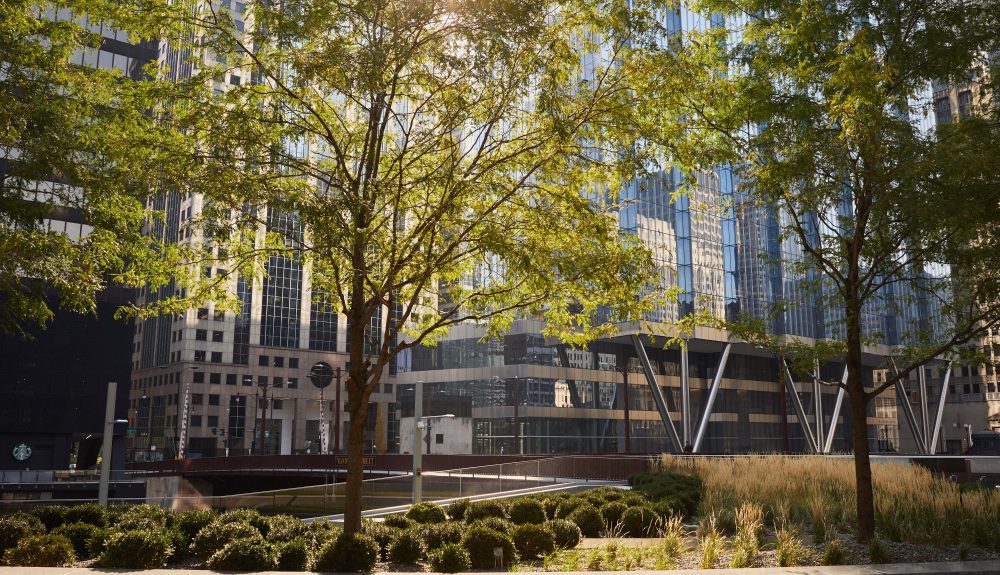
Picture this: your everyday urban landscape is no longer a concrete jungle but a mosaic of rich and flourishing greenery, enhancing not only our aesthetic scenery but also equally mitigating the effects of climate change. This vision is fast becoming a reality as the tree care industry gears up for a period of unprecedented growth and transformation in 2024. Less than a year back, the U.S. Department of Agriculture’s Forest Service announced the allocation of over $1 billion in competitive grants to plant and maintain trees. These funds would also support climate change mitigation and
improved access to nature in urban areas, benefiting a large portion of the American population.
As demand for comprehensive urban forestry management skyrockets, the tree care service industry is poised to take center stage, leveraging cutting-edge technologies and eco-conscious practices to elevate the industry to new heights. In this blog, we explore tree care industry trends for 2024, key economic factors affecting tree services, and the entry of new tech in this industry.
Rising Demand For Urban Tree Maintenance
Increasing emphasis on urban tree maintenance and expansion is one of the primary growth engines for the tree care industry and a big tree care industry trend. As cities across the globe grapple with the effects of climate change, the value of urban forests has become more apparent than ever.
In fact, data indicates that residential projects constitute the primary source of revenue for the tree service sector. This is primarily because municipalities and homeowners today are investing heavily in tree planting, pruning, and removal services to enhance the environmental and aesthetic benefits of their urban canopies. This trend is especially pronounced in rapidly urbanizing locations, where the need for comprehensive urban forestry management is becoming a top priority.
Enhanced Efficiency And Safety Through Technological Advancements
The tree care industry is also benefiting from a wave of technological innovations that are transforming the way arborists and tree care contractors operate. From advanced aerial lift equipment and specialized tree-climbing tools to data-driven software solutions for job scheduling and inventory management, cutting-edge technologies are enabling tree care professionals to work more efficiently, safely, and cost-effectively.
The integration of advanced soil moisture sensors, for example, allows arborists to monitor the health and watering needs of trees, optimizing maintenance schedules and reducing water waste. Additionally, the adoption of virtual reality (VR) technology is revolutionizing the way tree care professionals plan and execute complex projects, enabling them to visualize and simulate scenarios before even setting foot on the job site! Besides, tree care companies might be able to visualize creative new ideas in a low-risk VR environment, enabling better outcomes.
Expansion Of Service Offerings
As the tree care industry evolves, many companies are expanding their service portfolios to cater to the diverse needs of their clients. In addition to traditional tree removal, pruning, and planting services, tree care professionals are increasingly offering specialized services such as comprehensive tree health assessments, pest and disease management, and even landscape design and maintenance.
This trend towards diversification not only meets clients’ growing demands but also helps tree care businesses differentiate themselves in a competitive marketplace and enhance their long-term profitability.
Elevated Focus On Sustainability And Eco-Conscious Practices
Sustainability practices arguably top the tree care industry trends as of today. An escalating number of tree care firms are recognizing sustainability and environmental consciousness as essential prerequisites in their operations.
Clients, both commercial and residential, are increasingly prioritizing tree care providers that employ environmentally responsible methods, utilize eco-friendly equipment, and prioritize the preservation of healthy trees.
This shift towards sustainability reflects changing consumer preferences and underscores the critical role that urban trees play in mitigating the effects of climate change.
… but all of these amazing opportunities also come with associated risks
Here are a few examples of how things can go wrong despite your best efforts:
Imagine a scenario where you—with your client’s interests and sustainability in mind—try out a sustainable solution that promises to inhibit a tree limb’s growth, instead of chopping it off. Unfortunately, this impacts the health of the whole tree and it dies. Your reputation is at stake and your client is threatening to sue.
We also talked about new tech that can expand your opportunities and optimize operations. But picture a situation where your scheduling software suffers a glitch, and as a result, appointments are missed. Your clients are angry. Maybe one of them even suffers damage because your team didn’t arrive to trim a tree limb in time, and it has now fallen on the bonnet of a vintage luxury car. Your entire year’s earnings cannot begin to cover the damages to that kind of car, leaving you stressed.
Similarly, imagine deciding to dabble in tree-based landscaping projects or signing up to work on an urban tree development project, only to make an error on account of being new to the business. This could happen to anyone. And while you want to play it safe, you also want to expand your business. How do you meet both goals?
In these situations, comprehensive tree care insurance stands as a crucial risk management instrument. With dedicated tree care insurance, that covers the unique risks of your business, you protect your business (and your bank account) against unforeseen accidents and liabilities so that you can pursue business growth confidently. It’s simple, really: when you embrace proactive risk mitigation, you can thrive stress-free.
Tree Care Industry Growth Outlook And Opportunities In The Sector
The tree care industry has experienced robust growth in the last decade, and tree service market analysis estimates that the market will exceed $44 billion by 2028, courtesy of strong government support and increased commercial and residential demand.
Now, it is only natural to wonder what sets the tree care industry apart in what many would refer to as an uncertain economic landscape—it simply is the steadfast nature of its demand. Unlike discretionary services that fluctuate with economic tides, the need to maintain trees remains constant. Homeowners, municipalities, and businesses alike understand the intrinsic value of healthy trees, whether it’s for promoting environmental sustainability or ensuring public safety.
For example, tree limbs that hover near roofs of homes or power lines need to be trimmed before storm season, come what may, to avoid damage to property and mitigate the possibility of power cuts due to damaged lines.
Moreover, in today’s fast-paced world, outsourcing tree care to professionals is a preferred solution, as businesses and individuals seek specialized expertise to manage their urban forests and green spaces. That’s where NIP Group comes in. For more than three decades, NIP Group has been a steadfast pillar of support for tree care service professionals through TreePro.
TreePro transcends run-of-the-mill insurance. With TreePro, you get a dedicated risk partner, steadfastly committed to empowering and safeguarding your business, your future and your team. Our customized insurance plans pack in vital protections such as general liability, commercial auto, umbrella coverage, pesticide applicator, arborist liability insurance, and additional options.
If you are a service provider in the tree care industry, contact us today to discover how we can elevate your protection and partnership to new heights!