







“Planning, training, and rigorous safety protocols are key to preventing greenhouse accidents. Unfortunately, even the best-prepared businesses suffer accidents and losses, which is why every CEA farm should have comprehensive insurance coverage like GrowPro, which specifically addresses the unique risk management needs of greenhouses and other horticultural centers.”
– David Macari, GrowPro Program Manager
Greenhouses provide growers with the ability to control the environment of their farms, but that doesn’t mean they aren’t susceptible to risks. Greenhouses and other controlled environment agriculture (CEA) farms need to be every bit as prepared as traditional farms and must recognize – and protect themselves against – the everyday risks they face.
Examining Greenhouse Safety Risks
Indoor farms such as greenhouses contend with many of the same risks as traditional outdoor farms. They have to ensure plants get enough sunlight, water, and nutrients, and that they’re safe from pests and plant diseases. Agricultural fires are a looming threat to any growing environment, indoors or out, and with technology managing an increasing number of farm operations, cybersecurity concerns are quickly garnering more attention. Finally, there’s always the risk of workplace injury, which can create costly problems for growers and leave them short-staffed.
Contamination and plant diseases
While levels of pesticides and toxic heavy metals are lower in hydroponic produce than in conventionally grown produce, greenhouse plants may be at greater risk of contamination from pathogens and plant diseases. Since greenhouse crops are often connected to central irrigation or nutrient systems, pathogens can spread rapidly, contaminating the entire water or nutrient supply much more quickly than in a traditional farm setting.
Electrical fires
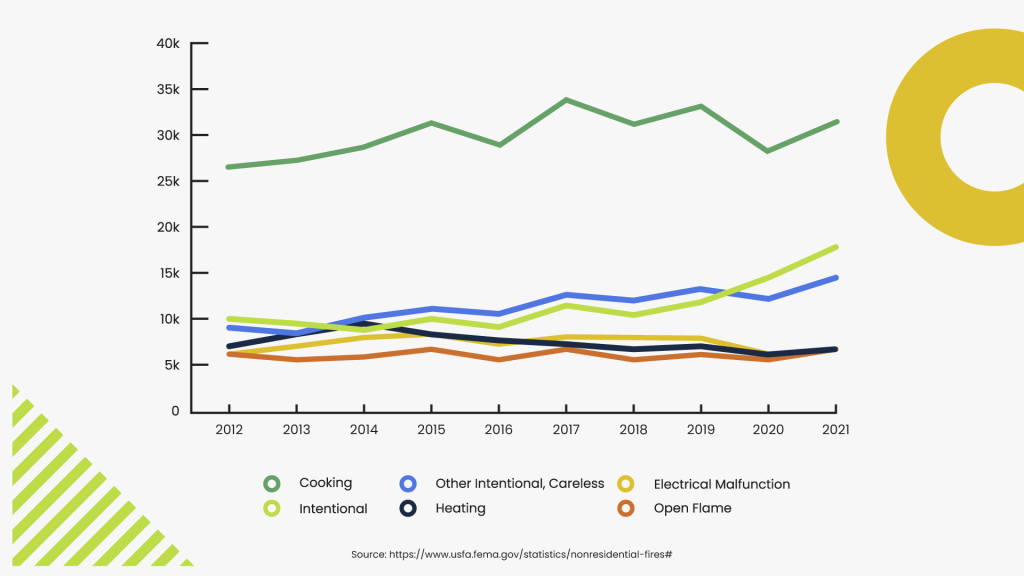
Greenhouses and vertical farms are typically outfitted with extensive electrical components to provide light and control the temperature and humidity. Unfortunately, these systems increase fire risks in greenhouses.
According to the U.S. Fire Administration, the leading causes of nonresidential building fires included arson, carelessness, electrical malfunction, and heating. The administration estimated 2021 nonresidential building fire losses caused over 1,000 injuries, with nearly $3.7 billion in losses. Nursery growers and other horticultural businesses with greenhouses are heavily exposed to these risks which, despite new safety technologies on the market, continue to trend upward.
 Equipment failure
 Equipment failure
Indoor farming has become increasingly reliant on equipment and technology. Despite the many benefits of modern farming equipment, the risk of equipment malfunction or failure creates additional challenges and liabilities for growers. Heating, cooling, and ventilation systems, nutrient delivery systems, irrigation systems, and grow lights are just a few pieces of equipment you’ll find in virtually every greenhouse. These systems might also be connected to a central computer to coordinate the greenhouse’s schedule, which is yet another point of potential weakness.
Though equipment failure may be rare, the consequences can be even more severe in a greenhouse, where the entire crop is often dependent on equipment to survive. Equipment failure can cause countless problems for greenhouse businesses, from crop losses and business interruptions to injuries and workers’ compensation claims.
Cybersecurity risks
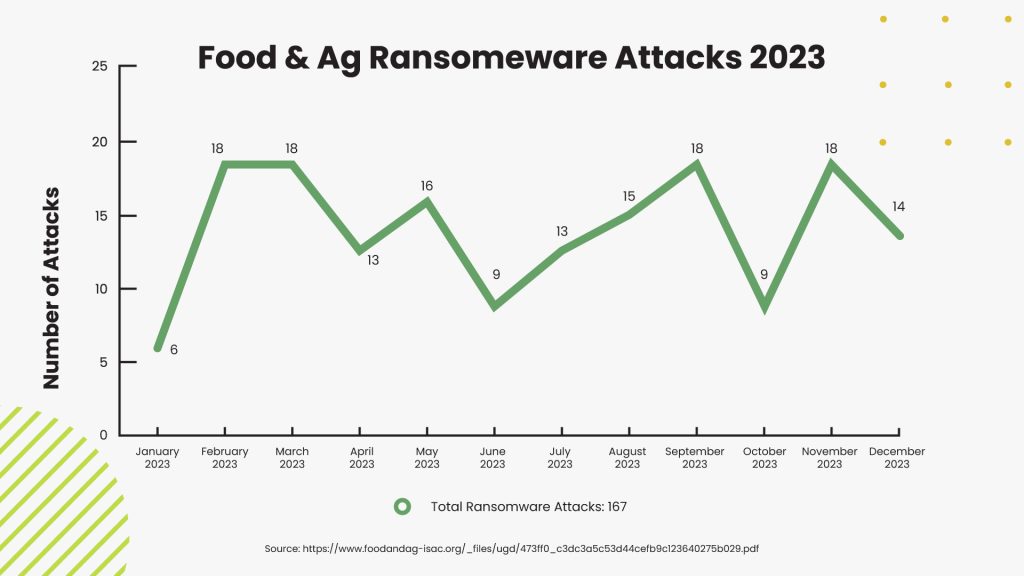
While greenhouses and nurseries might not sound like prime targets for cybercriminals, phishing, ransomware, and other cyber cybercrimes can cost indoor farmers tens, or hundreds of thousands, of dollars each year. In 2023, nearly 73% of organizations worldwide were affected by ransomware attacks. In a report published by the Information Sharing and Analysis Center (ISAC), the food and agriculture industry experienced 167 ransomware attacks, totaling 5.5% of total ransomware attacks and ranking it seventh of the 11 monitored sectors. With a 27% increase in the number of cyberattacks over the past year, the risk to indoor farming operations only continues to rise.
Workplace injuries
Workplace injuries are a persistent risk in nearly every business, and greenhouses are no exception. Workplace injuries in a greenhouse are most frequently attributed to overexertion (25%), with 20% occurring from slips or falls. Other injuries among greenhouse workers can include exposure to hazardous materials, injury from equipment misuse, or being struck by an object. To address common injuries to greenhouse workers, indoor agriculture operations must have workers’ compensation coverage.
Tips and strategies to minimize risks to growers
 Tips and strategies to minimize risks to growers
Standardize procedures
Standardizing greenhouse operations can help prevent mistakes, injuries, and inefficiencies. There should be a well-defined process for managing every step of a greenhouse’s operations, including even the most basic actions, like locking doors and turning off faucet valves. A standardized process can also streamline training for new employees, optimize processes and procedures, and make an indoor farm run more safely and efficiently. In the event of an accident, a greenhouse with standardized procedures can also expedite an investigation into what went wrong, potentially identifying any deviation from the process.
Follow government regulations and recommendations
Government regulations are designed to protect workers and farm operations, making them a great starting point for helping growers minimize risks and stay compliant. Though greenhouses and nurseries are subject to federal agricultural regulations like the Food Safety Modernization Act (FSMA), growers should pay close attention to the regulations in their local municipalities.
Mandate an employee safety training program
An employee safety training program should be mandatory for all greenhouse employees and contractors. This program should focus on agricultural and food safety, worker safety, equipment safety procedures, and your greenhouse’s emergency response plan. An employee safety training program will help prevent future accidents that can disrupt operations, and more importantly, help protect new and existing employees.
Leverage technology
Greenhouse safety technology can help protect your investment, minimize safety risks, maximize crop yields, and make growing operations more efficient. Modern greenhouse technologies may include automated irrigation, nutrition, and climate control systems; pH sensors, and even imaging technology that can alert growers of potential issues. Farming technology isn’t perfect, but it takes the guesswork out of harvesting and can help significantly reduce error.
Conclusion
 Conclusion
No matter how thoughtful or comprehensive a loss prevention plan might be, accidents can still occur. To address these risks, there’s no replacement for dependable, tailored insurance coverage. That’s why the right risk management strategy is about preventing risks to the best of your abilities and protecting yourself with horticultural services insurance for the unexpected. With more than 35 years of green industry expertise, GrowPro consistently provides guidance and coverage for the specific needs of greenhouse growers, nurseries, and other indoor farm operations.
Regulatory Basics
The FSMA has several rules pertaining to different aspects of growing, packaging, and transporting food, including:
- FSMA Produce Safety Rule establishes minimum safety standards for growing, harvesting, packaging, and storing produce for human consumption.
- FSMA Rule for Preventive Controls for Human Food requires non-exempt food facilities to implement risk-based preventive controls and adhere to Current Good Manufacturing Practices (CGMP).
- FSMA Rule on Sanitary Transportation of Human and Animal Food focuses on minimizing the risk of illness outbreaks by maintaining safe, sanitary standards for any (excluding by air and sea) transporter, shipper, or receiver of human or animal food.
- FSMA Rule for Mitigation Strategies to Protect Food Against Intentional Adulteration is designed to protect the food supply by requiring companies to mitigate risk through a food defense plan.
- FSMA Rule on Foreign Supplier Verification Programs for Importers of Food for Humans or FSVP, mandates companies verify foreign suppliers to ensure certain fruits and vegetables meet FDA standards for safety, quality, and labeling.
Don’t forget to download our greenhouse compliance & safety checklist!
GrowPro Safety & Compliance Checklist

