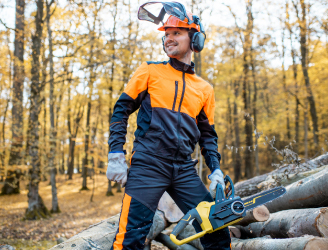











Your chainsaws represent significant investments that directly impact your operation’s efficiency and bottom line. They’re crucial for business as usual. You can’t live without them. However, they can also be dangerous when mishandled. Data from the Center for Disease Control and Prevention’s latest report shows that chainsaw-related incidents result in 36,000 injuries annually, with professional operators accounting for a significant percentage.
This guide packs in 6 checklists of chainsaw maintenance tips and actionables.
6 Chainsaw Checklist Every Tree Care Business Needs
Print and paste these so you and your workers can use them as useful reminders.
Checklist # 1: Key Components Requiring Regular Maintenance
Professional-grade chainsaws are complex machines with interconnected systems. Understanding each component is crucial for effective maintenance and professional chainsaw upkeep:
- Engine System
-
- Powers chain rotation through precise fuel-air mixture combustion
-
- Requires regular tuning and cleaning to maintain optimal RPM
-
- Needs specific 50:1 fuel mixture ratio for most professional models
-
- Must be kept clean from sawdust and debris buildup
- Chain Assembly
-
- Drives cutting performance through properly maintained teeth angles
-
- Affects kickback prevention through depth gauge settings
-
- Demands regular sharpening to maintain optimal cutting efficiency
-
- Requires proper tension adjustment to prevent derailing and wear
- Safety Mechanisms
-
- Chain brake system with automatic and manual activation
-
- Throttle interlock to prevent accidental engagement
-
- Hand guards designed to deflect debris and protect operators
-
- Anti-vibration system to reduce operator fatigue
- Support Systems
-
- Lubrication delivery through automatic oiling systems
-
- Air filtration to protect engine from debris contamination
-
- Guide bar condition monitoring for wear patterns
-
- Sprocket system maintenance for smooth power transfer
Checklist # 2 Professional Chainsaw Maintenance Tips and Schedule
Based on manufacturer guidelines and industry best practices, here’s a chainsaw maintenance checklist to ensure flawless chainsaw repair for arborists:
Daily Tasks:
- Clean air filter with compressed air
- Check chain tension before and after use
- Verify oil flow through visual inspection
- Clean bar groove and oil ports
Weekly Tasks:
- Inspect spark plug condition and gap
- Clean guide bar groove with proper tools
- Check sprocket condition for wear
- Verify fuel system for leaks
Monthly Tasks:
- Deep clean entire unit including cooling fins
- Inspect fuel system including lines and filter
- Review all safety features functionality
- Check and tighten all accessible fasteners
Checklist # 3: Professional Chainsaw Care for Tree Professionals Checklist
According to OSHA’s Tree Care Operations Guide, you should implement these comprehensive chainsaw safety check and maintenance tips and troubleshooting before each use:
- Safety Check
-
- Verify brake functionality through manual testing
-
- Test all controls for smooth operation
-
- Inspect handle security and anti-vibration mounts
-
- Check throttle lockout mechanism
- Chain Inspection
-
- Check tension according to manufacturer specs (typically 1/8 inch sag)
-
- Look for wear indicators like stretched links or damaged teeth
-
- Verify proper lubrication through oil flow test
-
- Inspect drive links for damage or excessive wear
- System Review
-
- Confirm fuel levels and mixture ratios
-
- Check oil reservoir for proper bar and chain oil
-
- Clean air filter using compressed air or soap solution
-
- Inspect spark arrestor screen for carbon buildup
Checklist # 4 Expert Chainsaw Repair Guide: Common Issues and Solutions
- Chain Sharpening Process
The U.S. Forest Service Technology & Development Program recommends these professional sharpening steps:
- Secure the chainsaw firmly in a proper maintenance vise
- Use appropriate file diameter (typically 5/32″, 3/16″, or 7/32″)
- Maintain a consistent 30-35 degree angle using a file guide
- File with steady forward strokes, 5-6 per tooth
- Ensure equal sharpening on all teeth by counting strokes
- Check and adjust depth gauges after every 2-3 sharpenings
- Chainsaw Troubleshooting Tips
When facing operational issues, follow this systematic approach:
- Poor Starting
-
- Check fuel freshness (no older than 30 days)
-
- Clean or replace spark plug, setting gap to specs
-
- Verify choke operation and air filter condition
-
- Test compression if problems persist
- Rough Running
-
- Inspect air filter for proper seating and cleanliness
-
- Check fuel mixture ratio and fuel line condition
-
- Examine the exhaust port for carbon buildup
-
- Verify carburetor settings and adjustment
- Cutting Issues
-
- Verify chain tension at operating temperature
-
- Check bar alignment and rail condition
-
- Inspect drive sprocket for wear patterns
-
- Measure chain stretch using a gauge
Checklist # 5 Safety Protocols
For optimal chainsaw care, the International Society of Arboriculture recommends:
- Always work with a trained partner within calling distance
- Never operate above shoulder height to maintain control
- Maintain proper PPE including chaps, helmet, and eye protection
- Keep detailed maintenance logs for each piece of equipment
- Follow manufacturer guidelines for specific model requirements
Checklist # 6 Advanced Chainsaw Maintenance Tips
To maximize equipment lifespan and performance:
- Store properly in dry conditions away from UV exposure
- Use fresh fuel mixed with high-quality two-cycle oil
- Clean air filter and cooling fins after every use
- Keep spare parts inventory including chains and spark plugs
- Document maintenance history for warranty and replacement planning
No Accidents Guaranteed, Then?
You have enough experience to know the truth: While religiously adhering to these checklists certainly reduces the risk of chainsaw breakdowns and chainsaw-related accidents, things can still go wrong. A worker can still get hurt, and a chainsaw could—-after years of serving you well—malfunction, and cause property damage or an injury. And let’s not even get into the nightmarish situations that a fidgety bystander onsite can land you in. We’ll leave that to the horror films.
So what can you do to avoid chainsaw breakdowns? Is there a sure-shot way to avoid accidents?
The short answer, as you may have guessed, is: No.
But you can, however, minimize the negative consequences of incidents that are out of your control with the right insurance. When we say “the right insurance” we’re talking about comprehensive insurance that covers you from:
- Chainsaw-related accidents that might cause bodily damage to either your crew or bystanders
- Chainsaw breakdowns that might cause project delays (and penalties), or even losses resulting from business interruption
- Chainsaw losses or damage that might occur if your storage area is affected by a natural calamity or a fire, or in transit to job sites
- Other risks in tree care, because let’s be real: You aren’t going to get special policies for various business risks. You need one policy that bundles in all the coverage you need for your entire universe of business risks.
TreePro: Protect your chainsaws, your crew and your bottom line
TreePro is tailor-made insurance program for tree care professionals and arborists. It offers comprehensive coverage that caters to tree service businesses of all sizes, ranging from owner-operators to the industry’s largest companies.
You get coverage against any bodily injury (from chainsaws or anything else) to your crew with workers comp, and coverage against claims surrounding your work with general liability. Commercial auto covers your vehicles and their contents, while property cover acts as a financial safeguard in case your equipment storage building catches fire, or faces flooding or any other natural calamity. TreePro also packs in insurance for crane-related risks, crime, cyber liability, wildlife liability, and more so that your business has a financial safeguard to fall back on when fate plays spoilsport with chainsaws, crew, customers, and everything in between.
Ready to hedge against what you can’t control? Get your broker to sign you up for TreePro today!