





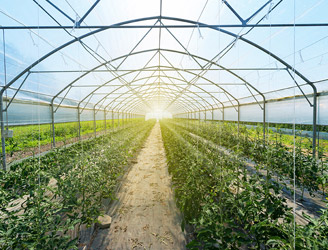




Greenhouses are a great place to grow fresh fruits, flowers, and vegetables all year round. One of the key advantages greenhouses have over open-field farming is the flexibility to continue producing through cold weather. But without preparation, planning, and indoor growers insurance, greenhouses and nurseries may find themselves at greater risk during the winter. Understanding these seasonal risks and proactively addressing them with these three cold weather greenhouse strategies can help improve safety, efficiency, and productivity.
Check all equipment and structures
While the cold-weather challenges greenhouses face are a bit different than those of traditional farming, preparing for winter is just as important. Greenhouses rely on a structure and equipment to protect plants from harsh weather, but if those systems are compromised, the plants will be, too. Maintaining greenhouse operations and thriving in winter only possible with proactive planning rather than reactive management.
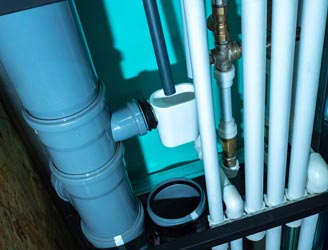
Before the cold weather sets in, inspect structures and equipment for any signs of damage or dysfunction. Check any framing or metal parts for corrosion and keep an eye out for instability or foundation issues. Examine any plastic, glass, aluminum, wood, or other materials for cracks, tears, or deterioration. Inspecting any heating equipment should also be on every pre-winter checklist, along with draining any pipes or irrigation systems that are susceptible to freezing and disabling and covering unused fans.
Improve energy efficiency
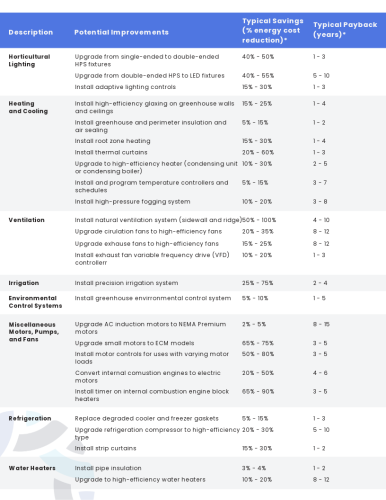
Since heating accounts for about 80% of a greenhouse’s energy consumption, sustainable greenhouse practices and winter greenhouse efficiency go hand in hand. A great starting point for any greenhouse is an energy audit. This analysis can identify where the greenhouse uses the most energy, and offer opportunities and recommendations to improve processes, potentially saving time, energy, and money.
Patching, repairing, and replacing leaky areas can improve energy efficiency for greenhouses, in addition to helping maintain the structural integrity of the greenhouse. Though it might seem insignificant, small changes such as using timers and sensors can make a greenhouse run much more efficiently. In the case of lighting, occupancy sensors can reduce energy lighting use by as much as 25%. Installing perimeter and pipe insulation and thermal curtains is another great way to improve energy efficiency with relatively low upfront costs. Sealing roll-up or curtain side walls and doors can also help prevent warm air from escaping the greenhouse and cold air from entering. If there are broken heaters, fans, lights, or other equipment, energy-efficient replacements and modern greenhouse heating solutions may be a worthwhile investment. In some cases, these greenhouse upgrades can pay for themselves in as little as one year.
Source: https://www.nyserda.ny.gov/-/media/Project/Nyserda/Files/Publications/Fact-Sheets/AG-bpgreenhouse-bk-1-v1.pdf
Create a snow removal plan
Unlike most buildings, greenhouses aren’t typically designed to handle the weight of a heavy snow. Some greenhouse styles, such as geodesic domes and gothic arches, are more resistant to snow loads and can naturally shed accumulated snow. However, others, including A-frames, gable-roof, and Quonset greenhouses, can suffer structural damage under the weight of snow.
Creating a snow removal plan is a pivotal part of managing a greenhouse through the winter months. If a greenhouse is susceptible to damage from snowfall, there are several ways to prevent unsafe snow accumulation. One of the simplest solutions is to use a roof rake to remove snow by hand. Though the roof rake is the lowest-cost solution, it requires the most manual labor and can potentially damage plastic materials.
One of the more popular ways to protect a greenhouse from heavy snow loads is to install a heat pipe beneath the gutter system. The heat pipe melts the snow on the roof, which then drains directly into the gutters. Another option may be to use the greenhouse’s heat to melt the snow. This method involves opening the energy curtains, allowing the heat to rise and warm up the roof. Unfortunately, this won’t work if the inside temperature isn’t warm enough or if the snow falls faster than the heat can melt it.
Filling greenhouse winter risk management gaps with specialized insurance
Sometimes even the best plans and all the preparation can’t help prevent accidents. If and when that happens, greenhouse and nursery owners should be able to count on their insurance policy to help them get recover and keep their operations going. GrowPro goes beyond basic liabilities, specializing in horticultural risks to offer customized greenhouse growers insurance that’s better by design. In addition to the core coverages you expect and the endorsements you might need, you’ll also get year-round greenhouse farming tips and other helpful guidance from industry experts.
Ready to submit your accounts or speak with an expert?

