








The day starts out like any other. Your crew arrives early at a client’s property—an older maple is leaning too far over the driveway and needs to come down. It’s a routine removal job. You’ve done this a hundred times.
Then, in a split second, the unexpected happens.
The stump grinder chews into something unexpected. Instead of wood and roots, metal sparks fly. A hissing erupts—the buried gas line is severed. The odor floods the worksite, forcing an emergency evacuation and a frantic 911 call.
At that moment, you’re flooded with questions like:
• Were underground utilities clearly marked before work began?
• Was the crew trained to verify permits and clearance zones?
• Did the equipment operator follow depth and proximity protocols?
• Did the hazard assessment account for hidden infrastructure?
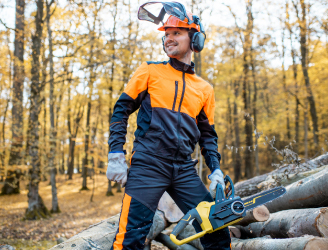
Tree care work is physically demanding and—let’s face it—risky. That’s why safety has to be baked into every part of the job, from prep to pack-up.
In this blog, we’ll walk through the most common safety risks certified tree care professionals face—and practical ways to reduce them before they spiral into liability.
Hazard #1: When the Worksite Becomes a Danger Zone
Accidents happen fast. A branch swings wider than expected. A passerby steps too close. A tool slips from a height.
Even when your crew follows safe work procedures for tree cutting, the risk of injury or property damage is real—and it follows you off the job site. One misstep can lead to medical claims, lawsuits, or damage payouts.
Before your crew fires up a chainsaw, run through this checklist:
- Post “Danger – Tree Work Ahead” signs at all pedestrian-facing entry points
- Use bright barrier tape or cones to mark a clear drop zone
- Assign a dedicated ground spotter for equipment-heavy jobs
- Require high-visibility vests and helmets at all times
- Do a 5-minute job site briefing to confirm roles and risks
Additionally, one very wise tree care safety standard would be signing up for general liability insurance.
Think of it as your safety net for the things no checklist can catch. In case of any unfortunate accident, it helps ensure your business can recover without skipping a beat.
Hazard #2: From Strains to Serious Injuries
Between 2020 and 2023, there were 243 tree care-related fatal occupational injuries in the U.S.—that’s an average of 61 deaths per year, according to data compiled by TCIA from OSHA and news sources.
And that’s not counting the sprains, back injuries, hearing loss, or long-term strain that tree care safety training can fail to prevent. Build a healthier crew with:
- Mandatory PPE—especially helmets, ear protection, and steel-toe boots
- Clear policies on rotating tasks to avoid repetitive motion injuries
- Regular stretch breaks and hydration routines on hot days
- A culture where workers feel safe to report early pain or fatigue
And while no plan is foolproof, Workers’ Compensation insurance helps carry the burden when injuries happen. It’s there for the crew and for your business when hospitalization and surgeries, rest and recoverycare are needed most.
Hazard #3: When “You Missed a Spot” Turns Into a Claim
You finish the job. The crew’s packed up. But a few weeks later, the client calls saying a stump was left behind, a branch wasn’t removed, or the clean-up was sloppy. Whether the claim is fair or not, it’s your name—and wallet—on the line.
Now, they’re withholding payment, or worse, threatening legal action.
That’s why Errors and Omissions (E&O) insurance is essential. It helps cover the cost of defending your business if a customer says your work was incomplete, incorrect, or didn’t match what was promised.
But let’s try to avoid that call in the first place. Here’s how to stay one step ahead:
- Use clear, written job contracts with start-to-finish details
- Take before-and-after photos on every job site
- Confirm any scope changes in writing—texts or emails count
- Do a final walk-through with the client and get a verbal sign-off
Hazard #4: When Tools Walk Off the Job Site
It’s 6:45 a.m. Your crew rolls up to a commercial property and realizes a $1,200 chainsaw is gone. So is the pole pruner. No broken windows. Just vanished.
Tool theft isn’t always a dramatic smash-and-grab. It’s often quiet, fast, and expensive. And if it happens en route, at a job site, or overnight in your lot, guess who’s replacing that gear?
Unfortunately, you also lose time along with money, because of billable hours on the job and filing police reports and insurance claims.
You can reduce your exposure with habits like:
- Lockable storage bins and GPS tracking on trailers
- Pre- and post-job tool checklists
- Park work trucks under lights or near visible cameras
And for what even the best habits can’t prevent, Inland Marine insurance steps in. It covers your tools and equipment—whether they’re stolen from a locked trailer, damaged on a remote job site, or lost in transit between locations.
More importantly, it helps you avoid costly downtime and frustrated clients—all of which can erode trust and compromise your crew’s ability to safely proceed with their tree care work.
Hazard #5: When Chemical Treatments Backfire
Chemical treatments—herbicides, insecticides, and fungicides—play a key role in tree care safety. But if misapplied, they can leach into groundwater, harm nearby plantings, or spark complaints from neighbors.
A smart arborist chemical hazard assessment includes these precautions:
- Choose only EPA-approved and industry-recommended products, and avoid mixing unfamiliar formulations
- Always conduct patch tests on a small area before full application to spot adverse effects early
- Never spray on windy days or near storm drains, where drift and runoff can carry chemicals offsite
- Back your operations with Pollution Liability and Excess Liability coverage, which helps cover cleanup, legal defense, and third-party damage claims
TreePro by NIP Group: Your Safety Net in a Hazard-Heavy Industry
As a tree care business owner, you’re up against gravity, weather, equipment, liability—and often, all at once. That’s why hazard assessments by and for arborists are essential for your business.
But even the best safety plans need a backup. That’s where we come in.
With 35+ years of experience, TreePro by NIP Group is the longest-running insurance program built specifically for certified tree care safety professionals. It’s not a one-size-fits-all policy—it’s a partnership that evolves with you, from single-crew jobs to multi-site operations.
We’re A+ rated for financial strength, trusted nationwide, and ready when things go wrong—so you can stay focused on what’s going right.
Whether it’s injury claims, client disputes, pollution risks, or a chainsaw that goes missing—we’re the team that has your back, so you can protect your crew, your equipment, and your livelihood.
Ask your broker about TreePro by NIP Group.
FAQs
- How often should we update our hazard assessment protocols?
Update them annually at minimum, and immediately after any incident, equipment upgrade, or process change. This keeps your arborists aligned with current risks and shows regulators, clients, and insurers that safety is a living part of your operations. - Do insurers provide any safety training or resources to support our crews?
Yes. Many provide access to digital safety libraries, printable job site checklists, sample documentation templates, and even webinar-based training sessions. - What’s the right way to document a near-miss incident?
Record the date, location, potential hazard, and what prevented injury or damage. Review it with your crew to extract lessons and update protocols if needed. - Will insurance still help if the claim against us turns out to be false?
In many cases, yes. Coverages also help cover legal defense costs. Even if the claim is baseless, your insurer may step in to provide attorneys, handle filings, and manage settlements.