








Summary:
- In commercial snow removal, the edge for 2025–2026 is proof-first ops with route apps, GPS/geofences, etc., that turn every storm into time-stamped evidence.
- Multi-tasking equipment and clear service logs reduce slip-and-fall disputes and safety risks, providing customers and courts with transparency.
- This blog shows exactly how to deploy that tech stack, build one file per site, and align it with coverage.
By early 2026, commercial snow removal will be judged primarily on the basis of tech adaptation and automation.
Procurement is writing “show your work” into scopes, and building teams are expecting a live view of what’s happening on their lots while the storm is still moving.
The contractors who are winning days and keeping accounts are treating every pass as a measurable action. How?
With technologies like geofences to confirm arrivals and pavement-temperature sensors to flag refreeze before tenants arrive, contractors are turning snow-covered landscapes into accessible spaces.
In this blog, we will lay out the tech operating principles for 2026 commercial snow removal and how to run it at scale.
What Will Define High-Performing Snow Removal Services
The next season belongs to teams that turn snowstorms into shared, real-time pictures of the site, and back it up with clean records. Here’s how commercial snow removal leaders will run the play in 2025-2026:
Smarter Routing & Site Proof
- Route & crew apps
Drag-and-drop runs and site priorities on one screen. Geofenced check-ins confirm arrival and departure without extra taps. Escalations ping the right foreman when sidewalks lag. The same setup scales for residential snow removal with simple check-ins and photo prompts that cut callbacks. - GPS + geofencing
Auto “arrived/departed,” breadcrumb trails, and speed/idle snapshots show where each machine actually worked. Geofence by zone, i.e., loading docks, main entrances, side lots, stairs, so records match the property map and you can rebalance crews mid-event. - Dashcams & site photos
Forward and rear cams with night mode capture conditions at arrival and finish. App prompts ask for before/after shots by zone and attach them to the work order. Save clips and photos for two to three seasons so disputes have a clear, time-stamped context.
Tech That Improves Operations
- Spreader controllers and sensors
Tie the material output to truck speed and pavement temperature so the rate stays consistent as you slow or turn. Build preset “recipes” per site spec and log the exact application used.
For commercial snow removal, that record is the difference between “we treated” and proof you can send with the invoice.
- Weather APIs and pavement temperature
Use hyperlocal radar and Road Weather Information System feeds to time pre-treats before the first slick. Pavement-temp sensors and quick infrared checks tell crews when refreeze is likely, which prevents the 5 a.m. surprise at entrances. - Incline sensors for roof snow removal
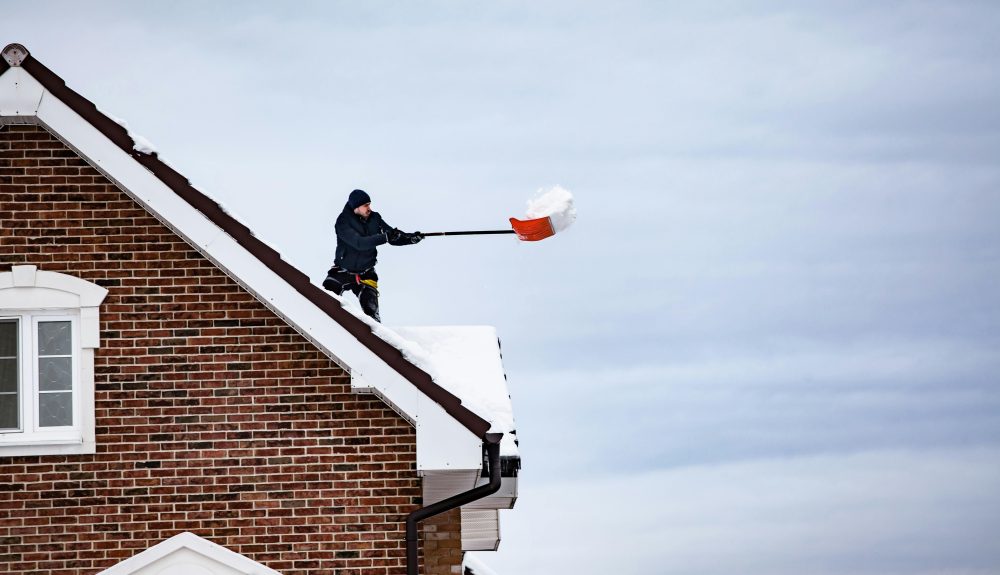
Inclination angle detection on the snow plow is much easier now with incline sensors. Set red-tag thresholds so crews stop at the safe load and get a quick tie-off photo before work. These small steps turn a high-risk task into a clear, defensible record.
Equipment Upgrades That Matter
Choose snow removal equipment that efficiently shifts tasks and features a v-plow with a trip-edge for mixed lots. Also, consider using pushers with pull-back kits for docks and compact loaders equipped with quick-attach brooms for freeze-thaw cleanup.
Two good-to-have options would be walk-behind spreaders with guards for storefronts and ramps, and liquid brine rigs to cover wide lanes quickly and leave a clean trail in the log.
Service Logs Built for Claims
Every site will keep one clean file. It can be geofenced arrivals, pavement temps, application rates, before/after photos, and a supervisor sign-off.
Therefore, standard names for storms, sites, and zones will make retrieval easy. It is recommended to save files for two to three seasons because if it isn’t in the log, it didn’t happen. So, apps will prompt the photos you need before crews can close the commercial snow removal.
Simple SOPs That Keep Tech Useful
Tech only works when crews use it. So, short and field-ready routines, such as charging devices before roll-out, aiming cameras, tagging zones, and maintaining audit logs during the storm, will keep data complete without slowing production.
Privacy notices at entrances and a quick “what we capture and why” script for tenants will prevent friction later.
Future-Ready Commercial Snow Removal With Insurance
Storms end when the record is clean. If you want fewer disputes:
- Treat every pass like a data point
- Route apps that show arrivals and departures
- GPS trails that match zones
- Spreader controllers that log rates
- Pavement-temperature sensors that explain timing
That is how modern commercial snow removal earns trust in 2025, and will hold it in 2026.
This is also how you protect people. Clear sidewalks, documented entrances, and verified snow removal services on stairs and ramps prevent injuries before they become claims.
LandPro has supported snow and landscape operators for 35+ years. We align real-world operations with coverage that responds, such as General Liability and Umbrella, Auto, Inland Marine/Equipment, Workers’ Compensation, Property/Business Income, and Cyber. So your evidence shortens investigations and your business keeps moving.
Ask your broker to connect you with LandPro, or contact us to learn more.
FAQs
- What is a fair price for snow removal?
In the U.S., “fair” depends on the scope, including lot size, sidewalks, depth triggers, de-icing, response time, and documentation. Commercial snow removal is often priced per-push with depth tiers or seasonal with caps, clear specs and time-stamped proof set expectations. - What is the fastest way to remove snow?
Pre-treat with brine before the first inch, plow during the storm (not after), and stage the right gear by zone, including V-plows and pushers for lots, blowers for walks guided by live routing apps and geofenced check-ins. - What is the best tool for snow removal?
Match the tool to the site compact loader with a 10–14′ pusher for large lots, a pickup with a V-plow for mixed lanes, a two-stage blower for sidewalks, and liquid systems for ice control in snow removal services. - Which is the best insurance for commercial snow removal?
Choose a specialty package for commercial snow removal with General Liability with Umbrella, Auto, Workers’ Comp, Inland Marine/Equipment, Property/Business Income, and Cyber. Programs like LandPro align these coverages with your routes, logs, and equipment without fuss.