








“As the tree care industry evolves, tree service businesses continue to adopt new technologies to improve safety and efficiency, while grappling with the challenges of increased risks, rising costs, labor shortages, and an unpredictable regulatory landscape.”
– Tim Greifenkamp, TreePro Program Manager
The green industry outlook for 2026 and beyond remains bright, with forecasts of a compounding annual growth rate of 5.5% through 2032. As tree care market growth continues to create new opportunities for businesses and their brokers, enterprises that stay agile and adapt to new ways of working can put themselves in the best position to earn more market share.
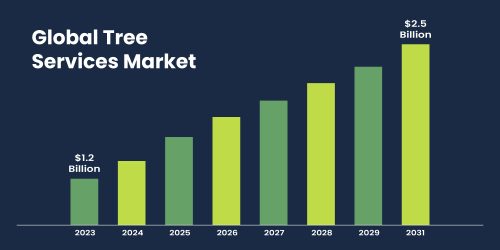
Source: www.verifiedmarketresearch.com/product/tree-services-market/
As the industry leans more heavily on technology to contend with increased complexity, changing regulations, unpredictable weather patterns, and labor shortages, brokers have an opportunity to grow their businesses and gain the trust of prospects and clients by offering tree service broker insights and helping them stay ahead of the curve.
7 Tree Care Industry Trends to Watch in 2026
The tree care industry is evolving rapidly in response to new and existing challenges such as climate change, labor shortages, urbanization, and unpredictable regulatory shifts. As operational complexity increases and costs continue to rise, understanding these trends can help brokers differentiate themselves and set clients and prospects up for success. While the future is always uncertain, these seven tree care industry trends should be on the radar of brokers and tree service businesses seeking sustainable growth.
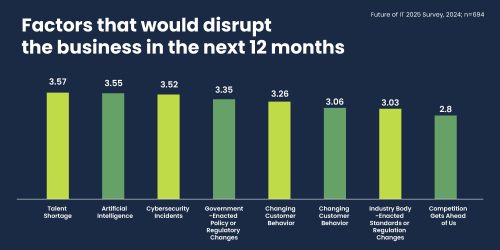
Source: www.infotech.com/research/ss/security-priorities-2025
1) Continued adoption of AI tools
AI has sent shockwaves through the global economy, and the tree care industry is no exception. The continued adoption of AI tools is likely to touch all parts of a tree care company’s business, from initial sales to real-time, site-based safety checks.
2) Increased complexity
Urbanization, unpredictable weather patterns, and a dependence on technology in everyday operations have increased the complexity of the tree service industry. These operational complexities can add to the challenge of tree care risk management and further reinforce the need for specialized arborist liability insurance.
3) Unpredictable changes to OSHA regulations
For decades, the Tree Care Industry Association (TCIA) has lobbied Congress — and received bipartisan support — for a set of OSHA safety standards dedicated to tree care. However, to date, no such standards exist. While federal guidelines have generally become more stringent over time in an effort to protect employees, proposals to deregulate the workplace mean the changes we can expect to see in 2026 could tighten or loosen regulations for tree care work.
4) Workforce challenges and labor shortages
Workforce challenges and a shortage of qualified tree service workers continue to pose a serious challenge to tree care companies, slowing operations, increasing risks to employers, and pushing up prices. While the TCIA supports apprenticeship programs and other efforts to attract new workers, labor shortages in the industry are likely to continue through 2026.
5) Cost increases
The combination of high risks, labor shortages, severe weather, and equipment costs mean prices are likely to increase across the board in 2026, both for tree care companies and their customers. This includes fixed costs like tree service insurance, mixed costs (including wages), and capital expenditures (such as equipment).
6) An emphasis on risk-smart culture and safety training
As tree care risks and the costs of tree service insurance rise, many companies will rightly focus on safety training, promoting a risk-smart culture, and other risk mitigation techniques to prevent costly liability and workers’ comp claims. With a higher risk profile and the additional challenge of protecting less experienced workers, many tree care companies will look to prioritize incident prevention.
7) Increased reliance on data for decision-making
Tree care companies continue to follow the broader trend of data-driven decision making to reduce risk and improve operational efficiencies. Use cases for tech tools and datasets in the arboriculture industry include risk assessments, pricing and planning, customer-relationship management, safety tracking, and more.
Hypothetical Case Study: Drone Assessment Helps Avoid Major Incident
A Texas-based tree care company was hired to trim several trees on a large, wooded property. Before beginning the project, the company conducted an assessment using a drone equipped with a multispectral camera. Using an AI-based software application, the company identified that several trees on the property showed signs of oak wilt, which the arborist confirmed through additional testing. The arborist then informed the owner of the infection, recommending the removal of certain infected trees, creating a trench-based buffer zone to protect other trees, and administering a fungicide injection to the healthy oaks on the property.
While the initial cost of the drone and camera were significant, the company was able to successfully use the imaging results for early identification of the disease, preventing it from spreading further while protecting the homeowner’s property and preserving the remaining oaks.
The Role of Insurance for Tree Care Pros in 2026
As the tree care industry continues to evolve at breakneck speeds, basic workers’ comp and general liability for arborists can no longer provide the comprehensive coverages tree care companies need. With more complicated operations and more significant risks resulting from weather changes, utility infrastructure, and an increasing reliance on technology, the case for more specialized, more comprehensive insurance is compelling.
NIP Group’s TreePro tree service insurance is the next generation in commercial insurance. With specialized coverages tailored to the evolving risks of arborists — including cyber, wildfire, and pollution liability — tree service businesses can stay ahead of the curve with coverage by design.
Visit the TreePro web page or call 800-446-7647 today to submit your tree care accounts, explore the full scope of eligible risks, or speak with a program expert.
10 Ways AI Is Transforming Tree Care Operations