








Summary:
- S. wastewater infrastructure is decades past its intended lifespan, making every sewer line cleaning job a potential liability event
- When hydro-jetting damages a compromised pipe, liability tends to follow the last contractor documented on site
- In this blog, we cover where general liability holds on sewer line cleaning jobs and where standard policies fall short
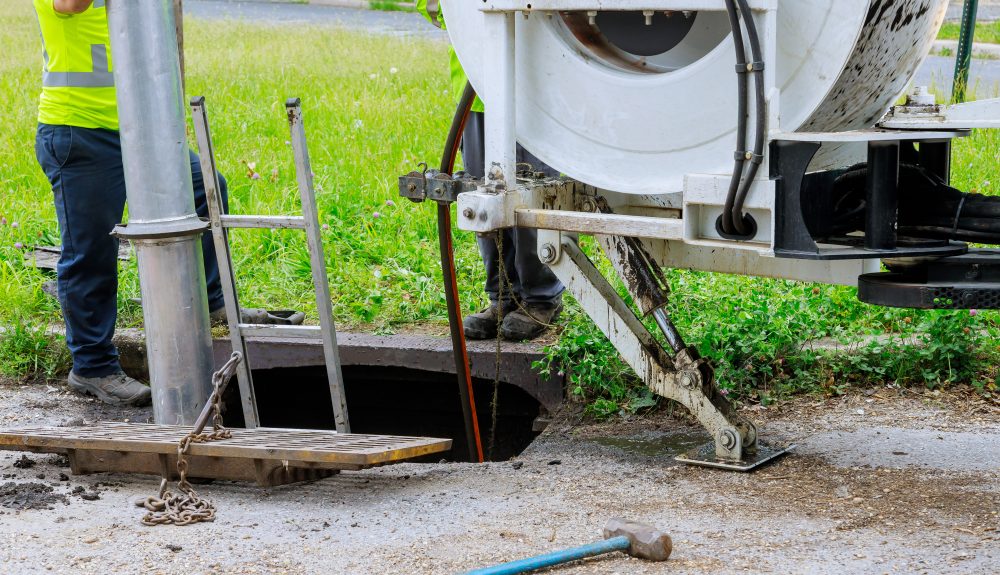
Most sewer line cleaning jobs look routine from the outside. A crew arrives, runs the equipment, clears the blockage, and moves to the next call. The problem is that the damage doesn’t always happen while the crew is on site. It surfaces days later, on a pipe nobody looked twice at, and the contractor who did the cleaning gets the call.
U.S. wastewater systems are 60 to 80 years old in many parts of the country, well past their designed lifespan of 40 to 50 years. The EPA estimates $271 billion is needed just to maintain existing infrastructure, and the country records between 23,000 and 75,000 sanitary sewer overflows every year. A large portion of those systems were built with clay, cast iron, and Orangeburg pipe. Clay fractures under sustained pressure. Cast iron corrodes and becomes brittle over time. Orangeburg softens and deforms under pressure it was never rated for.
None of this is visible before a job begins. Contractors taking on main sewer line cleaning work go in without any clear picture of what the pipe walls look like inside. Pre-existing cracks, root intrusion, and joint separation give no warning before the equipment goes in. The cleaning method then adds pressure on top of an already weakened structure.
Where Sewer Line Cleaning Equipment Creates Liability
Hydro-jetting uses high-pressure water, typically between 3,000 and 8,000 PSI, to clear grease, roots, and debris. On pipes in reasonable condition, it works well. On pipes that are already compromised, that pressure becomes a structural problem.
Older cast iron and clay pipes develop microfractures under stress that aren’t visible during the job. The pipe fails two days later, and the contractor who ran the equipment is the last person documented on site. That’s where the liability conversation starts.
The specific risks worth knowing:
- Pressure rebound: A fully sealed blockage can trap and reverse pressure, causing hose whip and direct injury risk to crew members
- Wrong pressure for the pipe type: A PSI setting that works on newer PVC can destroy an aging clay joint. Plumber sewer line cleaning operations that skip pre-job pipe assessments carry this risk on every older property they service
- Latent damage: Microfractures created during cleaning don’t always cause immediate failure. Completed operations claims are among the most common liability triggers in commercial sewer line cleaning work
By the time a claim surfaces, the crew is long gone and the paperwork is all that’s left.
How Sewer Line Failures Escalate
A broken line during or after a sewer line cleaning service job doesn’t stay contained for long. In March 2026, a single sewer pipe failure in Midland, Texas released over 125,000 gallons of wastewater, requiring emergency containment, chlorination, and contractor repair. Hydro-jetting was used as part of the response effort.
That kind of incident pulls in property owners, municipalities, and environmental authorities quickly. Cleanup costs stack up across containment, chlorination, soil remediation, and structural repair. When multiple parties are affected, the question of who is liable rarely has a clean or quick answer.
For contractors doing residential sewer line cleaning work, the scale is smaller but the exposure pattern runs the same way. A pipe fails after cleaning, sewage backs up into a basement or yard, and the crew that ran the equipment gets the call. Without prior documentation of pipe condition, the argument about who is responsible becomes very difficult to resolve.
For more context on how pipe repair methods and liability connect, this breakdown of open-cut versus trenchless sewer repair covers the risk shifts contractors are navigating as methods evolve.
What GL Covers on Sewer Line Cleaning Jobs
General liability covers third-party property damage from accidental pipe breakage, bodily injury from sewage exposure, and completed operations failures that surface after the job is done. For sewer line cleaning work, that last one matters most, since damage is frequently delayed.
The gaps are where contractors get caught.
- Pre-existing damage disputes are the most common friction point. When a pipe fails after cleaning, the insurer may argue it was already deteriorated. Without a pre-job camera inspection on record, that argument is hard to counter.
- Sewage as a pollutant is a jurisdiction-dependent problem. Courts across the U.S. are divided on whether sewage triggers the absolute pollution exclusion in a standard GL policy. Some apply it, some don’t. Contractors who assume GL will always respond to sewage-related claims are carrying more exposure than they realize.
- Faulty workmanship exclusions come into play when wrong pressure selection or poor technique is cited as the cause. Some carriers use this language to push back on sewer line cleaning claims involving older pipe systems.
These gaps tend to become visible only after a claim is already in motion.
Protecting Your Sewer Line Cleaning Service from Claims
A few habits separate contractors who get through liability disputes cleanly from those who don’t:
- Camera inspection before sewer line cleaning equipment goes into any older line. This creates a defensible record if a dispute follows
- Pressure settings matched to pipe material and age, not just the severity of the blockage
- Before-and-after documentation on every job. Photos and field notes carry real weight when a claim arrives weeks later
- Client sign-offs when the scope involves pipes already known to be deteriorated
The sewer line cleaning cost of building these habits in is low. The cost of skipping them on the wrong job is not.
Coverage Built for Commercial Sewer Line Cleaning
Sewer line cleaning sits at the intersection of aging infrastructure and high-pressure equipment. The liability that follows doesn’t always appear during the job, and standard general liability assumptions don’t always hold when claims involve underground pipe failures, sewage contamination, or damage that surfaces days after the crew has left.
UtilityPro is built for utility contractors working in water, sewer, and gas line environments where immediate and delayed risks are part of the daily reality. To find out what coverage looks like for your specific operations, contact us directly.
Ask your broker to sign you up for UtilityPro.
FAQs
Q1. What Hydro-Jetting Does to Old Sewer Lines
High-pressure water between 3,000 and 8,000 PSI was designed to cut through grease and root buildup. On a healthy pipe, it does exactly that. On an aging clay, cast iron, or Orangeburg line, that same pressure can crack pipe walls, blow out joints, or cause sections to collapse entirely.
What makes this particularly risky for contractors is the timing. The pipe may hold during the job and fail hours or days later. By then, the crew is gone and sewage is backing up into a basement or leaking into surrounding soil. The cleaning job is the last thing documented on that line, which makes it the first thing a property owner points to.
A pre-job camera inspection is the most practical way to establish pipe condition before sewer line cleaning equipment goes in. It doesn’t prevent old pipes from failing, but it gives contractors a factual baseline to work from if a dispute follows.
Q2. Does GL Cover Hydro-Jetting Damage to Sewer Pipes?
A commercial GL policy can cover accidental pipe damage during sewer line cleaning if the damage is sudden and causes third-party property loss. Coverage gets complicated when:
- Pre-existing pipe deterioration is cited by the carrier
- Faulty workmanship exclusions are applied to operator error
- Completed operations claims surface days after the job ends
Review how your policy handles these scenarios before a claim forces the conversation.
Q3. Is Sewage a Pollutant Under a General Liability Policy?
It depends on jurisdiction and policy language. Courts across the U.S. are divided on this. Some have applied the absolute pollution exclusion to sewage claims. Others treat sudden sewage events as property damage rather than environmental contamination.
Sewer cleaning contractors should review their specific policy language and consider whether a pollution liability endorsement fits their scope of work.
Q4. Who Is Liable When a Sewer Line Breaks During Cleaning?
Liability typically attaches to the last contractor on site. Even when a pipe was already deteriorated before the job, the sewer line cleaning service provider is usually the first party named in a claim.
- Pre-existing damage disputes are common and hard to defend without pre-job documentation
- Completed operations coverage addresses post-job failures, but limits and exclusions vary significantly across carriers