








SUMMARY
- Commercial hydroponic systems run on pumps, power, and climate controls. When any of those fail, the crop does not last long.
- Standard business insurance was not built for that risk profile, and most growers find out the hard way when a claim gets disputed.
- In this blog, we cover what a commercial hydroponic setup actually involves, where installs go wrong, and what the right coverage looks like.
Hydroponic farms are showing up in warehouses, converted buildings, and city centers across the U.S. A 51,000 sq ft vertical farm opened in Westbrook, Maine, in 2025 to supply local produce year-round, and the global market behind this shift was valued at $10.5 to $12.3 billion in 2024. Contractors are being brought in to build these operations, and the scope is nothing like a standard commercial fit-out.
What most operators do not anticipate is that a commercial hydroponic system build is not scaled-up gardening. It is a mechanical, electrical, and plumbing project that happens to grow plants at the end of it, and where it goes wrong has less to do with the crop and more to do with the systems holding it up.
Choosing the Right Hydroponic Farming System for the Build
System type should be settled before planning begins. It determines plumbing layout, electrical load, and the maintenance requirements you will manage long-term. Here is how the main commercial hydroponic system formats compare:
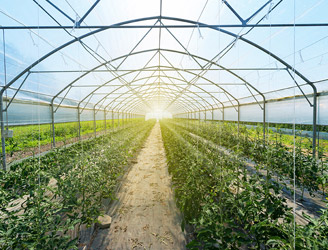
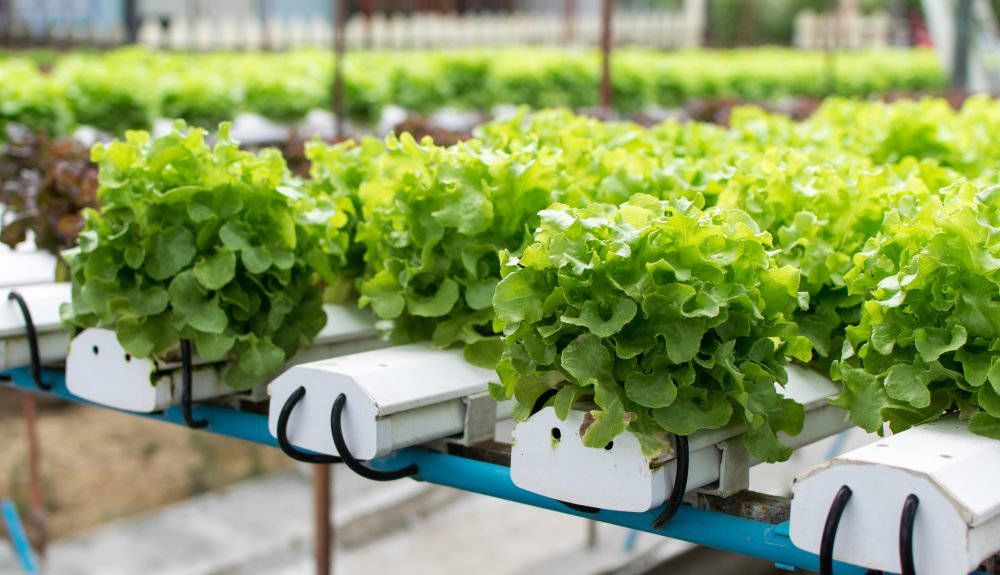
- NFT (Nutrient Film Technique): Nutrient solution flows continuously through sloped channels over plant roots. Standard for leafy greens and herbs. Efficient to run, but entirely pump-dependent. Flow stops, roots dry out fast.
- DWC (Deep Water Culture): Roots sit in oxygenated nutrient solution. Fewer moving parts than NFT, making for a simpler install. Aeration must run without interruption.
- Drip Systems and Dutch Buckets: Solution is delivered to each plant on a timed cycle. Standard for fruiting crops like tomatoes and cucumbers at a commercial scale. Emitters need regular maintenance to keep delivery even across the system.
- Aeroponics: Roots are suspended and misted with nutrients at set intervals. Fastest growth rates of any format, but the most system-dependent. A misting interruption affects the full crop quickly.
Crop type and production volume should both factor into your system choice, alongside your realistic capacity for ongoing maintenance.
Must Read: Hydroponics vs. Traditional Farming: 5 Coverage Gaps Brokers Can’t Ignore
Core Infrastructure Every Hydroponic Growing System Needs
Every commercial hydroponic system installation depends on the same core layers being correctly in place, regardless of which format you use.
Water and nutrient delivery
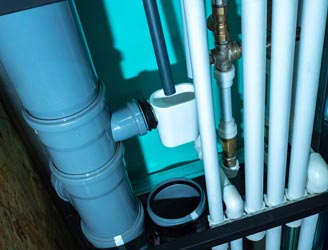
Reservoir tanks, pumps, distribution lines, and drainage must all be sized for your intended production volume. pH needs to stay between 5.5 and 6.5 for most crops, which means monitoring equipment should be built into the system from the start.
Electrical and lighting
LED grow lights draw a significant load and run long daily cycles. Pump motors and controllers add to that demand. Proper grounding, circuit protection, and state code compliance are required in any water-heavy environment.
HVAC and climate control
Temperature and humidity need continuous management. Ventilation design affects plant health as much as it affects the long-term condition of electrical and structural components.
Monitoring and automation
Sensors and controllers need accessible calibration points built into the layout. Sensors that drift quietly can create crop losses that show up with no alarm before the damage spreads.
Backup systems
Redundant pumps and emergency power are not optional on a commercial build. A power outage that knocks out irrigation and climate control at the same time can wipe out a full crop cycle within hours.
Installation Mistakes That Cost Hydroponic Growers Later
Most post-handover failures in hydroponic systems trace back to decisions made during the build. The most common ones are:
- Undersized electrical capacity that cannot support full production loads
- Drainage design that creates contamination risk or pooling near growing structures
- No pump or power redundancy, leaving no fallback when equipment fails
- Maintenance access that was never built into the layout from the start
There is also an insurance dimension worth knowing. When a system failure occurs, and the build has documented design gaps, standard policies may dispute whether the loss qualifies as a covered event. Coverage gaps and installation gaps tend to surface at the same time. Getting the right hydroponic growers’ insurance in place before the system goes live is part of protecting what they have built.
Why Hydroponic Farming Systems Carry a Different Risk Profile
Soil gives traditional crops a buffer. It holds moisture and slows damage when something goes wrong. Hydroponic systems have none of that. Every plant depends on water flow and the electrical systems keeping it within a specific operating range.
In a recirculating hydroponic farming system, a pump failure or power outage can move through the full setup quickly. Waterborne pathogens spread through shared water. A nutrient imbalance affects every plant drawing from the same reservoir.
Standard business insurance was not written for this risk profile. Equipment breakdown is often excluded. Crop and stock protection rarely accounts for living inventory at different growth stages. Business interruption tied to a system failure, rather than a storm or fire, frequently falls outside what a standard policy will respond to.
Protecting Your Hydroponic Farming Investment
Once your hydroponic system goes live, the operational and financial risk is yours to carry. Standard insurance was not built for that exposure.
GrowPro is NIP Group’s specialty program for greenhouse growers, nurseries, and hydroponic farming operations. AXA XL, an A+ rated carrier, backs it. An A+ rating means superior financial strength, which means the carrier has the full resources to pay a covered claim when it counts. Coverage includes equipment breakdown, crop and stock protection, property, business interruption, general liability, and more, structured around how indoor growing operations actually run.
Ask your broker to sign you up for GrowPro, or contact us directly to get started.
FAQs
Q1. What are the most common hydroponic systems used in commercial setups?
Four formats dominate commercial production. Each suits a different crop and comes with its own maintenance profile.
- NFT: Best for leafy greens and herbs. Water-efficient but entirely pump-dependent.
- DWC: Fewer moving parts, strong for lettuce and basil at scale.
- Drip / Dutch Buckets: The standard for tomatoes, cucumbers, and fruiting crops.
- Aeroponics: Fastest growth rates, but the most system-dependent of the group.
Match the system to your crop type and your realistic capacity to maintain it long-term.
Q2. What do contractors need to know before installing a hydroponic system?
Confirm the system type before planning starts, since it drives everything downstream. Foundations need to handle the weight of filled reservoirs. Electrical planning needs to cover continuous pump operation and LED lighting cycles, alongside all automation controls.
HVAC design has to manage high indoor humidity as much as the plant temperature requires. The detail most builders get wrong is maintenance access. It gets left out of the layout and becomes a recurring problem the moment the system is running.
Q3. What is the biggest risk in a hydroponic farming system?
System failure, and it moves fast. Hydroponic plants have no soil buffer, so there is no slow recovery window when something goes wrong.
The most damaging scenarios are:
- A pump failure that cuts water flow and dries out roots within hours
- Waterborne pathogens are spreading through recirculating water and hitting the entire crop at once
- A nutrient or pH imbalance affects every plant drawing from the same reservoir
The faster you catch it, the less you lose. Most operations find out too late.
Q4. Does standard business insurance cover hydroponic equipment and crop loss?
Generally, no. What most standard policies leave out:
- Equipment breakdown from pump or HVAC failure
- Crop and stock loss across different growth stages
- Business interruption from a system failure rather than a fire or storm
Hydroponic farming systems need specialty coverage built around equipment dependency, living inventory, and year-round production. A standard policy was not written with any of that in mind.

