









Summary
- Most tree trimming business owners leave significant revenue on the table by offering too narrow a range of services.
- Expanding into pruning contracts, removal, stump grinding, and storm response changes the revenue profile of every client relationship.
- In this blog, we cover four services every growing tree care business should have in its offering.
According to IBISWorld’s July 2025 analysis, the U.S. tree trimming services industry reached $39.5 billion in market size in 2025. There are now 175,035 businesses in this space, up 6.1 percent in a single year.
IBISWorld specifically notes that successful operators expanded their service lines to capture both residential and commercial demand.
That is where the real opportunity sits for a growing tree trimming business. Single-service operators compete on price. Multi-service operators compete on value, retention, and revenue per client. Here are four services worth adding to any tree service business looking to grow.
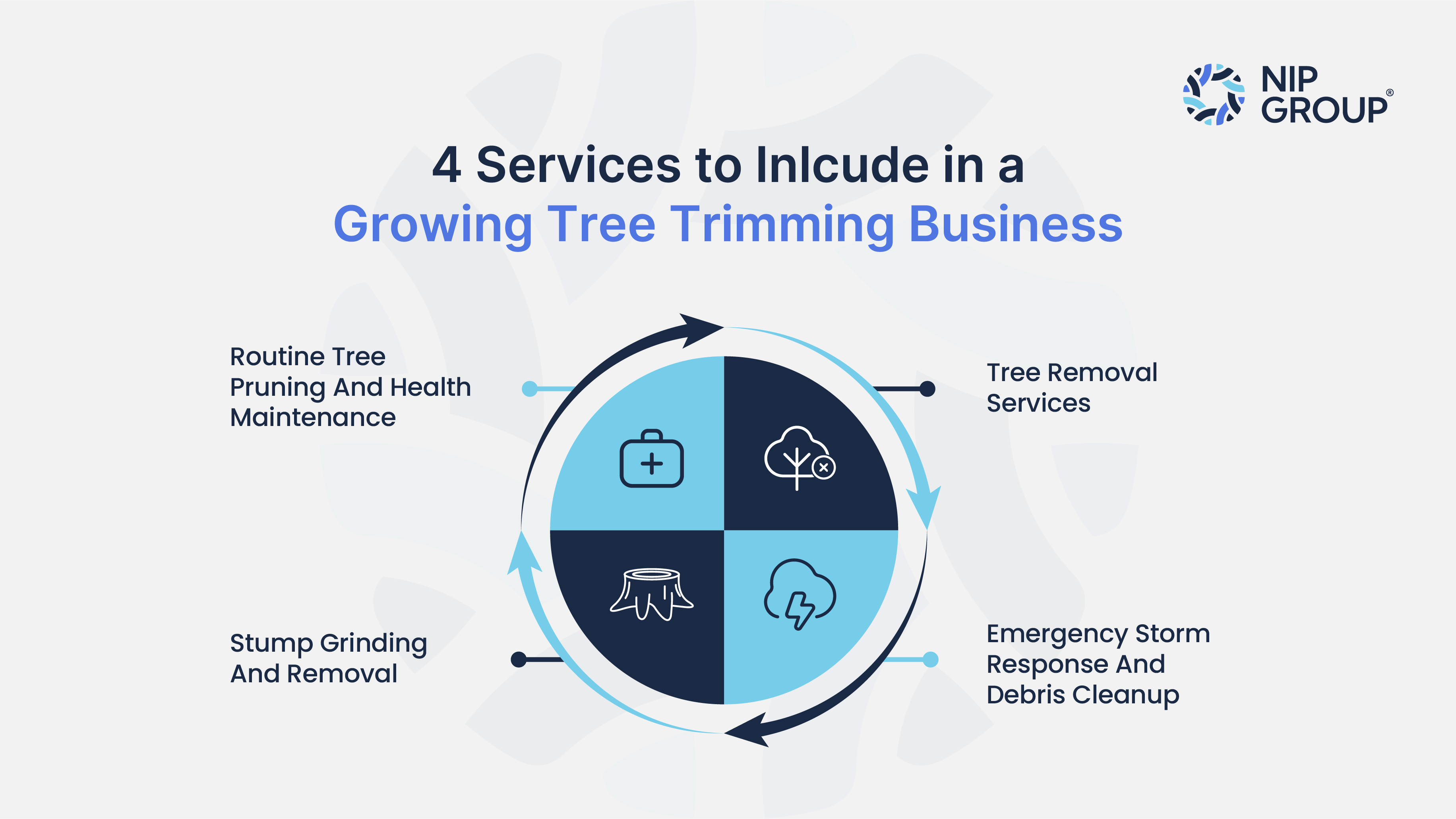
1: Routine Tree Pruning and Health Maintenance
Pruning is the foundation of a sustainable tree trimming business. It generates recurring revenue because healthy trees still need professional attention every one to three years. It builds ongoing client relationships that produce referrals, upsells, and long-term contract value.
What makes pruning particularly worth investing in:
- A thorough pruning visit surfaces issues like dead wood, pest activity, or structural defects
- Property managers and HOAs put pruning on maintenance schedules, which produces predictable work
- Proper pruning is governed by ANSI A300 standards, which means ISA-certified arborists can command a credential advantage when bidding institutional contracts
- Seasonal timing affects pricing power, with spring and fall work typically commanding stronger rates than off-season visits
For a tree service business plan that targets steady cash flow, routine pruning and maintenance contracts are the most reliable foundation to build on.
2: Tree Removal Services
Residential Tree Removal
Residential removal is typically high-revenue service per job for a tree trimming business. Large removals near structures, power lines, or fencing require skilled rigging, precision cutting, and often crane access. That complexity commands pricing that pruning work rarely reaches.
People searching for a tree cutting business are often motivated by urgency, whether it is a dead tree or storm damage. Fast response and documented cleanup convert a single removal job into a long-term client relationship.
Commercial Tree Removal
Commercial removal contracts involve more stakeholders and frequently more regulatory requirements. Permits and utility coordination are often required before work begins.
Adding commercial removal to your tree removal business requires the right equipment and crew, the compliance knowledge commercial clients expect, and the tree service business insurance documentation most commercial property managers and facility management firms require before awarding a contract.
Must read: What Every Arborist Needs to Know About Crane Safety Compliance and Risk
3: Stump Grinding and Removal
Stump grinding requires a dedicated piece of equipment, a walk-behind grinder for residential work or a tracked unit for larger stumps, but the incremental labor cost per job is low relative to what the service earns.
The business case is straightforward. Most clients who book a removal want the stump gone too. If your tree service business does not offer grinding, that revenue goes to a competitor, or the client has to manage a second contractor. Neither outcome builds loyalty or retention.
Stump removal also opens the door to soil backfill, seeding, or sod installation, moving the per-job ticket higher. For a tree service business plan that prioritizes revenue per client, stump grinding is among the most accessible paths to that outcome.
Must read: How to Evaluate Insurance Needs for a Tree Trimming Service
4: Emergency Storm Response and Debris Cleanup
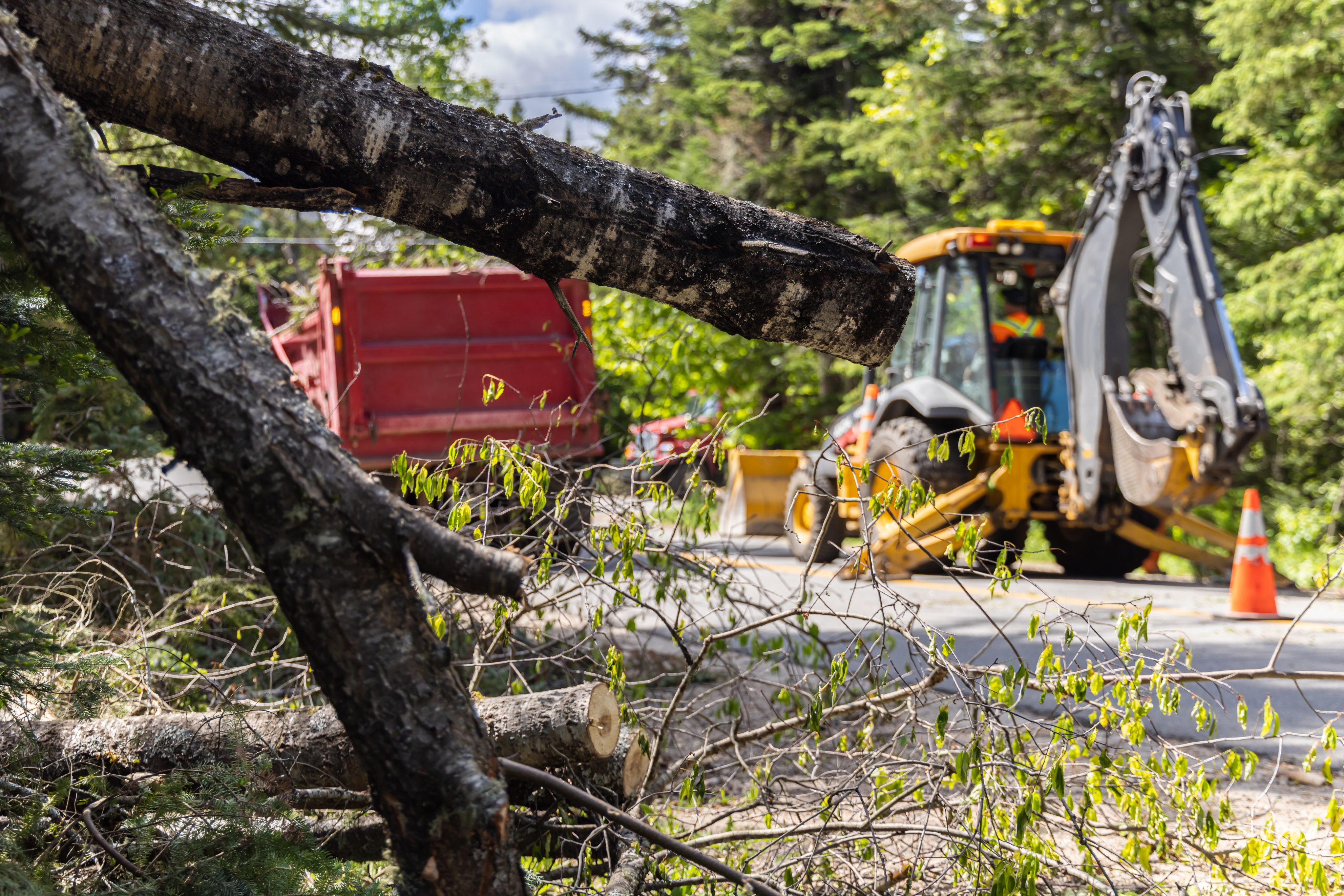
Closeup selective focus view on a closed highway as workers clear fallen trees after high wind. Branches are seen in foreground with blurry excavator.
Emergency storm response is where a tree trimming business earns its its strongest local reputation. When a storm drops trees onto homes, vehicles, or power lines, clients need help fast and will pay accordingly.
Key reasons to add this service to your offering:
- Emergency calls command premium pricing. Response speed changes the value equation for the client entirely.
- Insurance adjusters and restoration companies actively seek reliable local providers after major weather events. Getting on that list generates consistent referral volume well beyond the storm season.
- Storm work builds neighborhood and commercial district reputation faster than most marketing.
- Debris removal and site cleanup after a storm response creates an additional revenue stream that many crews undercharge for when pricing the initial job.
- Adding emergency availability to your tree cutting business requires after-hours communication protocols and insurance coverage that specifically accounts for work performed under time pressure and compromised site conditions.
TreePro: Built for Everything a Tree Service Business Does
Working in tree care is inherently dangerous. A growing tree trimming business that adds services also adds risk. Larger removals, crane work, storm response under pressure, and stump grinding near underground utilities all carry distinct liability exposures. The coverage needs to match the work at every stage of growth.
TreePro is built specifically for the tree care industry. Here is what the program provides:
- Specialized coverage options designed for tree care operations of all sizes
- Risk control, claims management, and compliance and safety resources to help you manage the unexpected
- Crane and boom exposure coverage, plus snow and ice removal, areas many insurance providers in this market ignore entirely
An accident, injury, property damage, or theft should not put your business under. The right tree service business insurance policy manages the legal and financial burden when something unexpected happens.
TreePro is a proud member of TCIA, ISA, and UAA, reflecting a genuine commitment to the industry it serves.
Talk to your broker about TreePro or contact us directly. Make sure your coverage keeps pace with your tree trimming business.
FAQs
Is tree trimming a profitable business?
Tree trimming is a profitable business for operators who manage their service mix and pricing well. The U.S. industry reached $39.5 billion in 2025. Profit margins depend heavily on labor management, equipment costs, and how many services a tree trimming business offers per client visit. Single-service operators tend to compete on price. Businesses offering pruning, removal, stump grinding, and emergency response generate significantly more revenue per client relationship.
How much money do you need to start a tree service business?
Starting a tree service business typically requires between $10,000 and $50,000 at a minimum, depending on whether equipment is purchased new or used. Core startup costs include:
- Chainsaws, climbing gear, and hand tools
- A chipper and truck or trailer to transport equipment
- Business licensing and compliance fees
- Initial insurance coverage, which is non-negotiable in this industry given the liability exposure
Larger tree removal business operations that include crane access or aerial lift equipment require significantly higher capital investment upfront.
What equipment is common for a tree cutting and removal business?
Common equipment for a tree cutting business and tree removal business includes chainsaws in multiple bar lengths, pole saws, wood chippers, stump grinders, climbing harnesses and rigging hardware, and work vehicles with appropriate towing capacity. Larger operations add bucket trucks and crane rigs for complex removals near structures or power lines. Equipment selection should match the types of jobs your business is taking on consistently, not the largest job you might occasionally bid.
How do you get comprehensive insurance for a tree care company?
Getting comprehensive tree service business insurance starts with working with a specialty insurer that understands tree care risk specifically. General contractor policies are often inadequate for tree work because they may not cover aerial operations, crane use, or the completed operations liability that follows a removal job.
TreePro is built for this, covering the full risk profile of tree care businesses including crane and boom exposure, workers compensation for high-hazard climbing work, and more.

