









Landscaping is one of the most dangerous jobs in the United States.
But you don’t need us to tell you this.
You have seen or imagined the scenarios that lurk on every job site: a ladder slipping on soft ground, the jagged teeth of a chainsaw cutting into a careless hand, a tree branch crashing down on an unprotected head.
Your worker’s well-being is the foundation of your company’s success. You have the responsibility – and power – to make safety your number one concern.
How can you do that? Use this comprehensive landscaping safety checklist to armor up against hazards, prevent accidents, protect your workers, and lead your team to a safe, productive year.
Don’t let your crew become another statistic. This landscaping season, be your crew’s hero.
Essential Components of a Safety Checklist In Landscaping Projects
- List of daily tasks: Clearly outline the tasks planned for the day, ensuring that everyone is aware of their responsibilities. A daily schedule promotes better coordination and minimizes the risk of oversight.
- Employee assignments: Specify which employees are assigned to each task. Clear delegation of tasks establishes accountability and ensures that individuals are appropriately trained for their designated responsibilities.
- Protective gear requirements: State the necessary protective gear for each task. Whether it’s safety goggles, earplugs, gloves, or other equipment, having a clear list reinforces the importance of personal safety.
- Vehicle/Machine safety information: Provide detailed information regarding the safe operation of vehicles and landscaping machines. Include guidelines on proper usage, maintenance, and any specific safety measures unique to each piece of equipment.
Now that we’ve covered the must-haves in a landscaping safety checklist, let’s break down these steps into a broader safety plan for landscaping projects:
1. Ensure Proper Safety Equipment and Protocols
Did you know: the proper use of PPE can prevent 37% of workplace injuries?
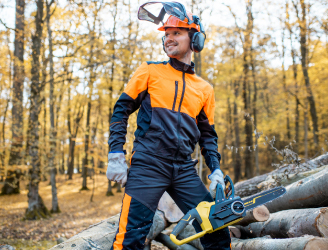
Outfitting your crew with basic safety gear – hard hats, gloves, ear, and eye protection – is the bare minimum. However, this is still not a standard that’s followed strictly. 12-14% of total disabilities at worksites are caused due to employees not wearing appropriate PPE.
Merely providing and mandating PPE isn’t enough. Make sure everyone knows how to use PPE properlyand ensure that your workers stick to the rules. For example, on a hot day, your workers might skip some PPE for the sake of comfort. This should not be permissible. You and your team should always prioritize safety over comfort in every situation.
Get anti-fog sprays for your staff.
In addition to wearing proper PPE like chaps, boots, helmets, and gloves while operating chainsaws, keep bystanders at a safe distance.
When using a chainsaw, maintain solid footing, use both hands for maximum control, operate only when fully alert, and turn it off when carrying or transporting.
As a blanket rule, ensure first aid kits are fully stocked and accessible. Designate an on-site safety supervisor for each job site. Hold regular safety meetings to identify hazards and reinforce good practices.
Place ladders on stable, level ground. Maintain three points of contact when climbing. Do not stand on the top two rungs. Secure ladders from movement. Have a second person hold the ladder when working at a great height.
Before using any pesticide products, make sure to read the label for instructions. Chemical pesticides should come with a safety list. Your workers will need to cover their nose, and mouth, wear gloves, and safety glasses while using any chemicals.
Simple precautions go a long way in preventing injuries.
2. Maintain Your Equipment
Landscaping tools and machinery can easily turn hazardous if handled improperly, or not properly maintained. Designate experienced staff to oversee equipment operations.
Before you start any job, give your tools a once-over. Inspect all equipment like ladders, chainsaws, and wood chippers before use. Remove damaged or faulty equipment from service.
Follow the manufacturer’s instructions for safe use, maintenance, and storage of machinery and chemicals. Go over protocols during training and reinforce them through supervision.
Inspect machinery routinely for problems like loose parts, damaged guards, leaks, etc. Address issues immediately to avoid breakdowns or malfunctions during use.
Create a preventative maintenance schedule that specifies when and how to perform regular maintenance on your equipment to keep it in optimal condition.
3. Carry Out Hazard Assessment
Before kicking off any landscaping gig, survey the worksite for potential hazards.
Check for uneven terrain, low-hanging tree limbs, sidewalk cracks, and the like which could contribute to slips and falls. Set up barriers and reroute operations away from hazardous spots.
Search for underground piping or wiring that could be inadvertently damaged and cause injuries.
Keep an eye on the skies, too — watch out for any overhead power lines or other utilities in the area. If necessary, request lines to be de-energized during tree trimming.
Identify any restricted areas, stay tuned to weather changes, and always have an emergency action plan in your back pocket.
4. Daily Driver Vehicle Inspections
Vehicles used for landscaping, like pickup trucks, trailers, mowers, etc., must be properly maintained for safety.
Delegate the responsibility to the drivers. Make it a daily drill to check tire pressure and tread wear, lights, windshield wipers, fluid levels, and brakes before use.
Nipping minor problems early on to avoid breakdowns, accidents, and injuries. Document any issues needing repair and fix promptly. Enforce safe driving practices like speed limits, seat belt use, and distraction avoidance.
You can assign the duty of checking the vehicles to the drivers, and the duty of checking the other equipment, such as blowers, chainsaws, and weed trimmers, to the shift leaders.
5. Proof of Service for Landscaping Tasks
To ensure your team members have carried out necessary tasks, require proof of service, which can be photos or a step-by-step log. Detailed documentation serves as a visual record, and is a valuable resource for all team members.
Moreover, establish a client-centric approach by having clients actively participate in validating your work.
Have clients sign off on detailed receipts that meticulously outline the services rendered. Dive into the specifics, noting the equipment utilized, materials deployed, prevailing conditions, and any potential safety hazards that were addressed during the task.
6. Take Care of Your Crew
Your crew’s safety should always come first. Keep these tips in mind:
- Prioritize breaks and hydration: Schedule regular breaks to prevent fatigue. Rotate repetitive tasks among workers. Provide water and electrolytes for hydration in heat. Watch for signs of heat illness.
- Speak up about hazards: Empower workers to point out risks or stop work if unsafe conditions exist. Maintain open communication between management and crew. Fix identified hazards promptly.
- Model and reinforce safe behaviors: Follow all safety procedures yourself. Praise safe work practices. Coach in the moment to correct unsafe behaviors instantly. Discipline repeat offenders.
LandPro: The Ultimate Safety Partner
In landscaping, caution is not just a virtue, but a lucrative strategy. When you implement robust safety protocols, your workers, clients, and business thrive.
But that’s easier said than done. Building a bulletproof safety program is no small feat and demands an insurance partner who knows your trade inside out.
For over 30 years, LandPro has been a landscaping partner for professionals nationwide.
LandPro provides customized tailored coverage, industry-specific risk guidance, and a wealth of green service expertise. We empower you to cultivate a risk-free environment custom-fit to your operations.
Don’t leave the protection to chance – partner with LandPro for landscaping insurance and safety resources that are grounded in real-world experience.
Together, we can nurture your business to flourish safely today, tomorrow, and beyond. Contact us today.