






Picture this:
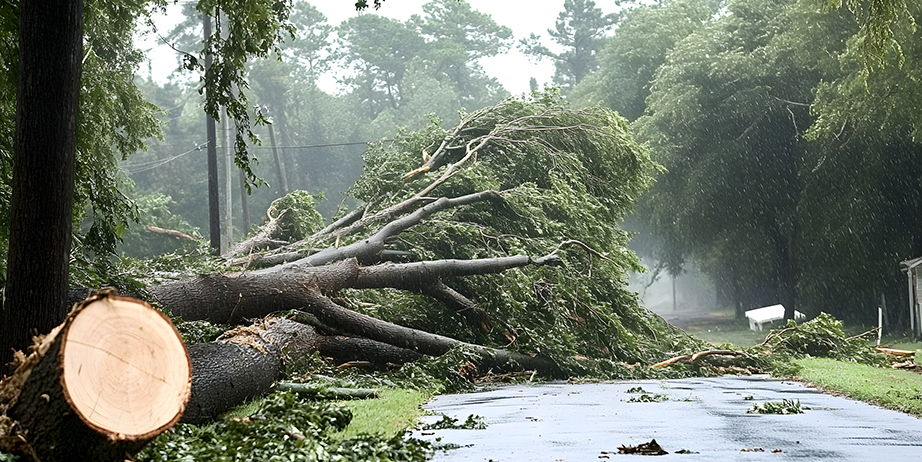
A massive storm rolls through overnight. By morning, a 60-foot oak has crashed onto a client’s truck.
Your crew gets the call, not just to remove the tree, but to answer the bigger question: What now?
Natural disasters disrupt jobs, destroy equipment, block roads, and sometimes pause your entire business.
And they’re happening more often. Tree care companies are feeling the pressure, not just during cleanup, but in how they prepare ahead.
This blog walks through what a natural disaster plan looks like for a tree care business, how to keep operations moving, and how natural disaster insurance for businesses plays a critical role in protecting everything you’ve worked for.
The Business Risks Tree Care Companies Overlook During Disasters
You probably already expect some equipment damage or crew delays during a major storm. But what many tree care businesses overlook is how fast small disruptions turn into long-term losses.
Gaps That Stall Operations.
A single downed crane without inland marine coverage can delay jobs for weeks. If your storage yard floods and tools aren’t insured where they’re kept, that’s a six-figure replacement cost out of pocket.
Then There’s Paperwork.
Most contractors keep key documents on a desktop or in a filing cabinet. But when your office is inaccessible or your system is offline, you can’t access job site instructions, client agreements, or even your insurance policy.
Cloud backups and mobile access are now highly recommended. They’re disaster-proofing tools.
What About Your Crew?
Can they check in safely? Do you know who’s where if communication lines are down?
During a disaster, phones die, signals drop, and schedules fall apart. That’s why your emergency plan should include pre-assigned check-in times and fallback methods like radio communication, paper-based crew rosters, or designated meet-up spots by zone.
Keep an up-to-date hard copy of emergency contact info in every vehicle and with each crew lead. It’s also worth training your team on a basic “if-then” plan: if we lose contact, here’s where you go, who you report to, and how long to wait before escalating.
Building a Natural Disaster Plan for Your Tree Care Business
A strong natural disaster plan for your tree care business helps you bounce back faster and gives your operations structure when everything else feels chaotic.
Start by identifying what’s essential to keep your business moving:
- Digitize your essentials. Store schedules, estimates, insurance records, and vendor contacts in a cloud-based platform accessible from any device.
- List critical equipment and storage locations. Know which assets you’ll need within 24–48 hours of a storm and where they’re stored.
- Assign post-event roles in advance. Decide now who’s responsible for assessing equipment, who contacts clients, and who checks in with your crew. Don’t wait to delegate.
Go a step further and:
- Map out local risk zones. Know which job sites or neighborhoods are prone to flooding, fire, or road closures. Use this to prioritize equipment placement and routing decisions.
- Build ties with local operators. In high-disaster zones, peer contractors can be valuable allies for sharing resources or covering missed jobs.
- Pre-plan vendor partnerships. Line up equipment rental contacts, fuel suppliers, and backup dump sites you can lean on during recovery.
- Run mock scenarios. Test your plan during a quiet month, simulate a power outage or blocked route, and see what gaps emerge.
- Document lessons after every event. Keep a simple log of what worked and what didn’t. Use it to strengthen your next response.
What to Look For in Your Insurance Before the Next Disaster Hits
If your coverage doesn’t reflect how your tree care business operates day to day, recovery after a natural disaster will be slow, expensive, or both.
Here’s what natural disaster insurance for your business needs to include:
- Inland marine coverage that extends to every location.
Your tools aren’t sitting in one warehouse. They’re on trailers, in trucks, or staged at job sites. Confirm they’re protected if disaster strikes in all of those places. - Protection beyond named perils.
If your policy only lists a few events, don’t assume that damage caused by floods, hurricanes, or wildfires is covered. You need to see it in writing. - Business interruption coverage with real recovery windows.
If storm damage halts operations for 10 days, how much of that downtime is reimbursed? Do your limits reflect your monthly income? - No subcontractor blind spots.
If you bring in outside crews for post-disaster cleanup, verify they’re covered under your policy. Many small businesses find this out too late.
The best business insurance for natural disasters is the one built around how you work, with crew structure, equipment movement, and seasonal risks included.
TreePro: Because Preparation Only Goes So Far
You can prep your trucks, back up your schedules, and line up vendors in advance.
But when natural disasters take a swing at your business, the difference between recovering in days versus months comes down to having the right insurance in place.
And not just any insurance. The kind that’s built for your work, not borrowed from another industry.
That’s what TreePro by the NIP Group delivers.
For over 35 years, we’ve worked directly with arborists and tree care businesses. We didn’t guess at your needs. We built TreePro around them.
Here’s what makes TreePro different:
- Coverage that scales with you. Whether you’re running one truck or managing multi-crew storm cleanups, TreePro adapts to your operation.
- Designed for high-risk realities. Working near power lines? In wildfire-prone regions? We offer up to $25 million in specialized liability protection across the U.S.
- Support that doesn’t clock out. Disasters don’t wait for office hours. Neither do we. Our team is available when timing matters most.
- Experience you can trust. We speak your language because we’ve built this program in lockstep with tree care professionals for decades.
You don’t need more coverage. You need the right coverage, made for the job, not forced to fit it.
Ask your broker to sign you up for TreePro today.
FAQs
- What is the best natural disaster insurance for tree service businesses?
The best natural disaster insurance for a tree service business is one that’s built for arborist operations. Look for inland marine coverage, flexible liability limits, and protection for utility and storm-response work. - Should I document equipment damage before filing a claim?
Yes. Take photos, note serial numbers, and record when and where the damage happened. Good documentation speeds up processing and helps prevent payout delays. - Can I insure temporary storage units used during storm season?
Many natural disaster insurance policies for businesses allow for add-on coverage, but it’s not automatic. If you’re using jobsite containers or third-party yards to store gear during peak season, confirm they’re listed on your policy. - What kind of downtime does business interruption coverage include?
It depends on your business insurance for natural disasters. Some cover total shutdowns only, while others include partial losses, like reduced crew availability or blocked job access. Read the fine print or ask directly.