





Summary
- Third-party property damage on a commercial build can pull multiple policies, contracts, and parties into the same claim simultaneously
- Without the right coverage stack, commercial construction companies risk absorbing costs that run well into the millions and disrupt active projects
- This blog breaks down which policy responds first, how subcontractor liability works, and what drives claim speed on a commercial build
When something goes wrong on a commercial build and a third party files a property damage claim, the question of who pays rarely has a clean answer. Contracts pull in multiple directions, multiple policies get reviewed at once, and the longer the dispute runs, the more expensive it gets for everyone involved.
A recent US case tied to a faulty commercial construction project saw a jury verdict exceeding $16.8 million, which later climbed past $20 million once interest was factored in. That is what unresolved third-party damage looks like when the right coverage is not in place from the start.
Understanding which policy responds first, what happens when a subcontractor causes the damage, and how fast commercial construction companies can expect a claim to move is worth knowing before the incident forces the question.
Which Policy Actually Responds When Third-Party Property Gets Damaged
A “third party” in insurance terms is anyone outside you and your insurer. On a commercial build, that usually means a neighboring property owner, a building occupant, a utility company, or a member of the public whose property gets damaged during the course of your work.
The policy built to respond to those claims is Commercial General Liability, or CGL. The Insurance Information Institute describes CGL as the first line of defense for many common claims, covering third-party property damage and defense costs when your business is legally liable.
Builders’ risk handles physical damage to the structure under construction, but it does not respond to a third-party liability claim. When a contractor damages an adjacent building, disrupts a neighboring business, or breaks something that belongs to someone else, CGL is the policy that moves first.
If the damage involves a company vehicle or equipment being transported between sites, commercial auto typically responds instead. Commercial construction insurance companies and commercial building construction companies that carry all three coverage types have the most complete stack for active job sites.
Underground Utility Strikes and Why They Get Expensive Fast
Utility strikes are one of the most common and costly third-party damage scenarios in site work. OSHA’s excavation guidance notes that digging without confirmed utility locations can damage gas, electric, communications, water, and sewer lines, and that when underground damage endangers life, health, or property, the contractor is responsible for notifying the utility operator and emergency services immediately.
The repair bill is only the beginning of what a single utility strike can trigger. Beyond the immediate cost of repairs, a strike can produce service disruptions across multiple properties, stop-work orders on the project itself, third-party claims from affected residents or businesses, and a subrogation action from the utility company looking to recover what it spent.
Standard CGL policies may not automatically cover underground property damage. Many carry exclusions for damage to pipes, conduits, and cables during excavation unless a specific endorsement is added.
For commercial concrete construction companies and large commercial construction companies doing any below-grade work, confirming that XCU coverage is part of the policy before the job starts is a step worth taking. XCU stands for explosion, collapse, and underground hazards, and it is an endorsement that extends your CGL to cover those specific scenarios. Without it, a utility strike can leave your policy silent on a claim that runs into six figures.
When a Subcontractor Causes the Damage
When a subcontractor causes third-party property damage on your job site, the general contractor does not automatically walk away clean. Vicarious liability means the GC can be held responsible for a sub’s actions, particularly when the GC directed the work or controlled the site conditions under which the damage occurred.
Three contract provisions determine who ultimately bears the cost:
- Indemnification clause: Requires the party that caused the damage to cover the resulting costs, shifting financial responsibility through the contract rather than through the courts
- Additional insured endorsement: Adds the GC or property owner to the subcontractor’s policy so that coverage applies upstream when a claim is filed
- Waiver of subrogation: Prevents the insurer from pursuing recovery against other parties after paying out on the claim
The gap that creates real problems is a certificate of insurance that does not match what the contract actually requires. When the sub’s COI shows the wrong limits, missing endorsements, or wording that does not align with the contract terms, the claim gets complicated quickly, and the GC is often left managing the fallout.
Top commercial construction companies that vet subcontractor paperwork before work begins consistently spend far less time untangling this after something goes wrong.
How Fast a Claim Actually Moves
There is no fixed timeline on a third-party property damage claim. Every claim is different, and the information-gathering stage alone can involve photos, witness statements, and specialized reviews depending on the scope of the incident.
What consistently speeds things up:
- Early notice filed with the insurer as soon as the incident happens
- A clear incident description with time, location, and cause documented on the day
- Photos taken on-site before conditions change or work resumes
- Clean contract paperwork showing scope, subcontractor agreements, and COI records
What slows things down is almost always the opposite. Disputed liability between multiple contractors, missing documentation, delayed reporting, utility owner involvement, and subrogation investigations can stretch a claim from weeks into months.
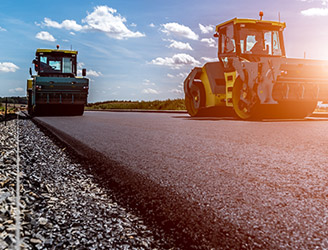
For local commercial construction companies running active projects, the documentation habit is what separates a manageable claim from a prolonged dispute. This is especially relevant for roadway contractors, where modern equipment and automation are already reshaping how risk gets assessed and documented after an incident on a job site.
What the Claim Costs Beyond the Claim Itself
Even when insurance responds, commercial construction companies still absorb costs that sit outside what the policy covers. Project delay penalties and liquidated damages add up when a stop-work order runs longer than expected. Standby time for crews and equipment is rarely billable, and replacement rentals while damaged machines are off-site come straight out of the operating budget.
Beyond the immediate project, a claim affects your Experience Modification Rate, which directly influences what you pay at renewal. Construction commercial companies that treat documentation and risk control as daily operational habits tend to come out of claims in a significantly stronger position than those that address coverage only after a loss has already happened.
Get the Coverage Stack Right Before Someone Else Files First
For commercial construction companies, third-party property damage claims move fast once they are filed, and the contractors who come through them cleanly are almost always the ones who had the right coverage in place before the incident happened.
SitePro is built for site preparation, grading, excavation, paving, and roadwork, with general liability, commercial auto, workers’ compensation, inland marine, and completed operations coverage designed around real jobsite exposure.
It is backed by an A+ rated carrier, which means the carrier holds a superior financial ability to meet its claims obligations when it counts. With over 35 years in specialty construction companies’ commercial insurance, the program brings risk control and claims management grounded in how these jobs actually run.
Contact us directly to review your current coverage, or ask your broker to sign you up for SitePro.
FAQs
- Who is responsible for property damage caused by a subcontractor on a commercial construction site?
The subcontractor whose work caused the damage carries direct liability, but the general contractor is often pulled in as well. GCs can be held responsible for a sub’s actions when they directed the work or controlled site conditions.
How liability splits ultimately depends on the contract, specifically the indemnification clause and whether the sub carried adequate insurance. When the sub’s policy falls short, the GC’s CGL typically ends up responding to the claim.
- Does commercial construction insurance cover damage to underground utilities?
Standard CGL policies may not automatically cover underground utility damage, and the gap usually comes down to one missing endorsement.
What the exclusion means: Many CGL policies exclude damage to pipes, conduits, and cables during excavation unless an XCU endorsement is specifically added. XCU stands for explosion, collapse, and underground hazards.
What happens without it: A utility strike can trigger costs that the base policy does not respond to, including:
- Third-party repair bills from the utility owner
- Service disruption claims from affected properties
- Subrogation actions from the utility company seeking cost recovery
What to do: Commercial construction insurance companies typically offer the XCU endorsement as an add-on. Contractors doing any below-grade work should confirm it is included before the job starts, not after a strike forces the question.
- What’s the difference between builders’ risk and general liability on a commercial build?
Builders’ risk and general liability serve two separate purposes on a commercial build, and neither policy covers what the other does.
Builders’ risk covers physical damage to the structure under construction, including materials and on-site equipment, for the duration of the project.
General liability covers third-party claims for property damage or bodily injury caused by your operations, including damage to neighboring properties or public spaces.
For commercial building construction companies working on sites with adjacent structures, running an active job without both policies in place is where coverage gaps tend to surface after an incident.
- What documentation do I need to support a third-party property damage claim?
For large commercial construction companies and smaller operations alike, the records that matter most are the ones created at the time of the incident.
- Time-stamped site photos taken before conditions change or work resumes
- Written incident description covering what happened, when, and where
- Equipment inspection logs showing maintenance and condition records
- Subcontractor COIs confirming coverage was active at the time of the incident
- Contract documents showing scope, indemnification terms, and additional insured requirements
Witness statements help when liability is disputed between multiple parties. The stronger your documentation trail going in, the faster the insurer can move on the claim.