









Summary
- Labor shortages are pushing site contractors to rethink how daily work gets done.
- Construction technology is closing that gap through tools built for job sites.
- This blog covers what is changing on-site and where new coverage gaps show up.
Site work looks different from what it did even five years ago. Crews are running leaner, and the tools they use to plan and run a job have changed with them. That shift has a name: construction technology, and it is starting to decide who wins the work.
Deloitte’s 2026 Engineering and Construction Industry Outlook came out this past November. It found that firms using digital tools are cutting project timelines by up to 20%. Building information modeling and digital twins are driving that gain. For a site contractor, that means a three-week grading job can be closed in a little over two weeks. Fewer weeks on one job means more time for the next one.
This blog looks at what construction technology includes and how it is impacting day-to-day site work. It also covers what that shift means for the coverage protecting your equipment and crew.
Must Read: Why Construction Risk Management Now Requires Real-Time Monitoring Tools
What Is Construction Technology in Practical Terms?
It is the software and connected devices that run on a site. Together, they turn raw data into decisions your crew can act on. A design file and a GPS reading used to live in separate places. Construction technology pulls them into a single system, and both your office and your field can see it.
For a small excavation or grading crew, that shift matters. A mismeasured grade or a missed change order used to surface days later, before anyone caught it. Now that the error shows up on a screen before the crew moves on. A foreman who once radioed updates to the office now sends the same read from a tablet. The office sees it as it happens.
Examples of Construction Technology on Today’s Job Sites
Examples of construction technology now show up on nearly every active site, whether the crew runs two trucks or twenty. The most common tools include:
- Building information modeling and digital twins map the site early, so crews spot buried utility lines before digging starts
- GPS-guided grading and machine control keep digging accurately, so there is less work to redo
- Drones survey the land and track stockpile volume, so you get accurate updates without walking the whole site yourself
- IoT sensors on excavators and trucks track location and hours, and warn you before something breaks down
- Project management software keeps schedules and safety logs in one place
Together, these construction technologies help a crew catch problems as soon as they arise. It also gives smaller operations a new way to compete with larger ones in terms of accuracy and precision. However, running specialized equipment also raises the stakes on protecting it, which is where a dedicated excavation business insurance program earns its keep.
Must Read: How Modern Equipment and Automation Are Shifting Risk for Roadway Contractors
How Construction Technology Is Shifting the Industry
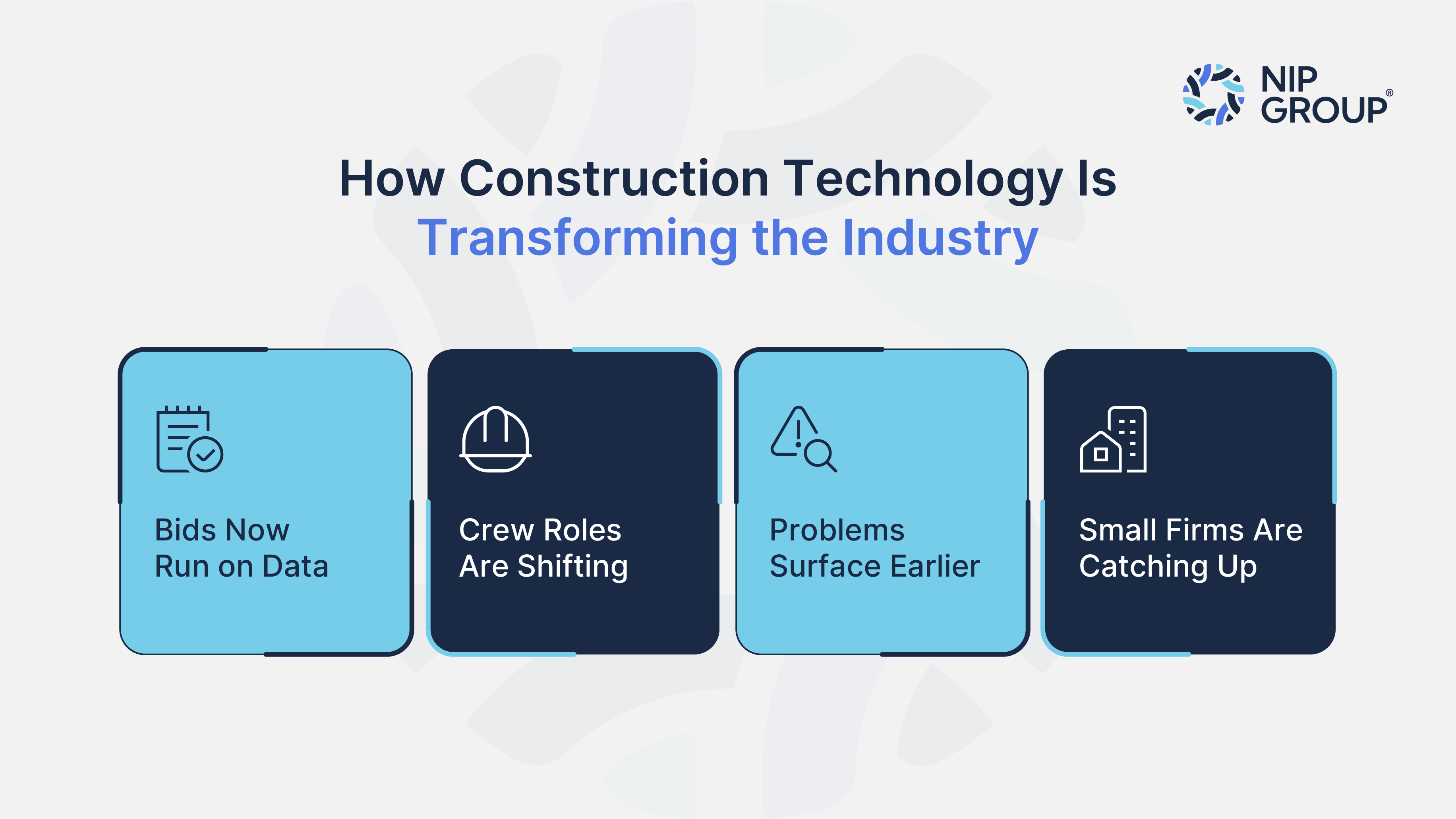
The bigger shift comes from how contractors use the tools across projects. Four shifts define the change on active job sites:
- Winning bids now depend on data: General contractors and property owners increasingly ask for digital site documentation before they even shortlist a bidder. A contractor without that process risks losing the job before pricing gets discussed.
- Crews are playing different roles: Site staff spend less time on manual measurement and more time reviewing data and flagging exceptions. That shift is creating new roles for workers comfortable with a screen and a shovel.
- Problems surface in planning: A conflict between a design plan and a buried utility line gets caught before the crew breaks ground. Catching it early protects the schedule and keeps the crew safer once digging starts.
- Small Firms Are Catching Up: Adoption once required a budget only a large firm could manage. Regional operations can now afford the same tools, closing that gap fast.
None of this shows up as a new gear on the lot. Instead, it shows up in who wins the bid and who stays profitable as the labor market stays tight.
How Construction Technology Is Transforming the Industry
Technology in Construction: Why Adoption Is Accelerating Now
Adoption is not happening because the labor market is not giving contractors a choice. The construction industry is going to need around 349,000 new workers in 2026. That number will grow to 456,000 in 2027. A large share of that gap comes from workers retiring rather than slow growth. For a contractor who cannot find enough hands, the shortage forces a choice. Turn down work, or build a process that can help the current crew do more.
That is exactly why the adoption of construction technology is picking up speed. GPS-guided grading and telematics enable a smaller crew to cover more ground without adding names to the payroll. The numbers back this up. The U.S. construction and design software market is projected to reach $4,082.3 million by 2030, according to Grand View Research. That works out to 8.5% annual growth, starting in 2025.
That kind of growth signals a significant shift in how site work gets planned, priced, or delivered. Construction technology sits at the center of that shift.
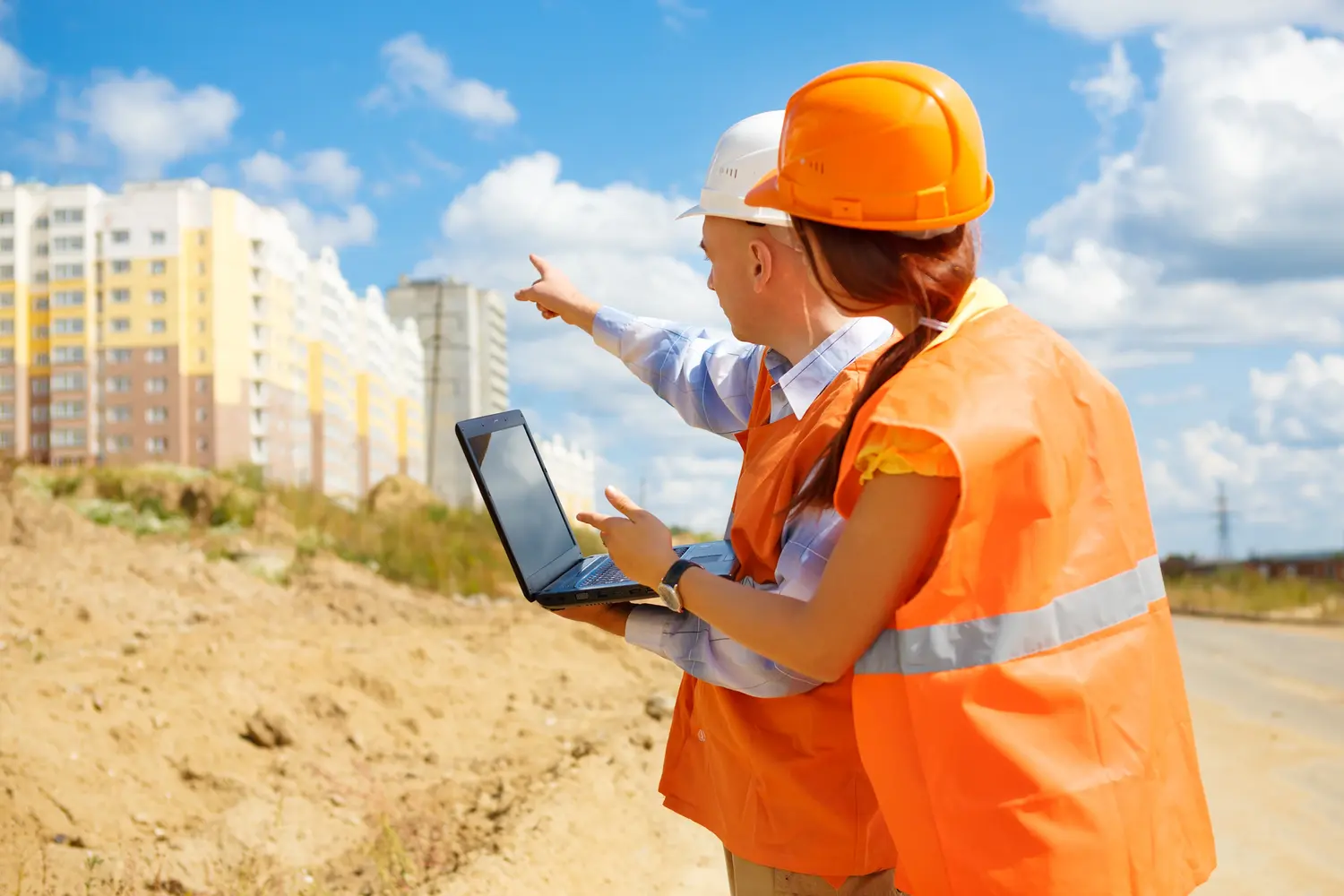
New Job Site Risks and the Coverage Built to Match Them
Every tool that helps a crew work faster also adds something new to protect. Start with the equipment itself. A drone can go down mid-survey, or a GPS receiver can go missing overnight. That is an inland marine question, and your equipment schedule needs to reflect what you currently own.
Then there is the judgment call itself. Automated grading can still misjudge a site condition. When that happens, the resulting property damage lands on your general liability policy. Whether a person or a machine made the call, the outcome is the same. Construction technology has changed how site work happens. However, the responsibility for the outcome still sits with you.
SitePro is built to cover exactly this. It combines general liability, workers’ compensation, commercial auto, and inland marine into a single program. That program is shaped around how site work runs today. SitePro is also backed by A+ rated carriers. That rating comes from A.M. Best. It signals that the carrier can consistently pay out claims, even in a year with several large losses. Ask your broker to sign you up for SitePro or contact us directly today.
FAQs
1. Will AI replace the construction industry?
AI is unlikely to replace the construction industry. It is changing how work gets planned and tracked, from scheduling software to jobsite sensors. Someone still has to run the equipment and stand behind the finished job, and that will not change anytime soon.
2. What are the 7 stages of construction?
The 7 stages of construction move a project from idea to handover. Most contractors break it down as:
- Planning
- Design
- Pre-construction
- Procurement
- Construction
- Commissioning
- Occupancy
Skipping documentation at any stage creates gaps that surface later in disputes or claims.
3. What are the five methods of construction?
The five methods of construction usually refer to traditional building, prefabrication, modular construction, panelized construction, and 3D-printed construction. Traditional building still dominates most residential and light commercial work. The other four methods move more of the process off-site. That is where a lot of current construction technology investment is heading.
4. What are the newest technologies in building construction?
The newest technologies in building construction center on speed and site visibility. Right now, that includes:
- AI-assisted scheduling
- Digital twins and building information modeling
- Drone surveys
- IoT sensors and telematics on equipment
Adoption still varies by contractor size. These are the tools shaping how bids get won and jobs get delivered in 2026.