










Summary:
- A failed crane sling or poor choker hitch can turn a routine removal dangerous.
- The right sling type and hitch configuration keep tree removals controlled and safe.
- This blog explains what crane sling and hitch choices mean for safer tree removals.
The Department of Labor released findings from a construction site in Fort Lauderdale on October 29, 2024. A rigger fell nearly 30 stories when a crane’s climbing frame gave way. The investigation found the failure started in the rigging. Inspectors had missed corroded and cracked pins that should have taken the equipment out of service before the lift. The crew also skipped the required pre-use check. OSHA fined the contractors $61,299, the maximum penalty allowed by law.
That case involved crane erection work on a high-rise job site. The same lesson applies directly to arborists rigging crane-assisted removals. Any lift near a structure or a power line puts the crane sling and hitch to the test. When something gives way mid-lift, the failure is almost always in the sling or the hitch.
This blog covers crane sling types and hitch options first. Then it walks through correct rigging steps and choker configuration. You’ll also see where your coverage needs to respond.
Must Read: What Every Arborist Needs to Know About Crane Safety Compliance and Risk
Why Do Tree Crews Depend on a Crane Sling for Removals?
A cut section of tree can weigh several hundred pounds. Lowering that weight by hand takes time. It also keeps the ground crew standing directly under the drop zone. A crane sling changes that setup entirely. It wraps around the cut section and holds it steady as the crane takes the weight. Crews depend on a crane sling for tree removals because it:
- Keeps ground workers out of the path of a falling section
- Holds heavy pieces steady instead of letting them drop or swing free
- Protects roofs, fences, and vehicles from a section landing off target
- Moves large pieces off the tree faster than lowering them by rope, cut by cut
None of this works without a sling built for the load. Polyester and wire rope slings hold serious weight without stretching or slipping mid-lift. That strength is what turns a risky tree removal into a controlled one.
What Types of Crane Slings Do Arborists Rely On?
Every crane sling doesn’t suit every removal. The load’s weight and position near the tree decide which one fits best.
-
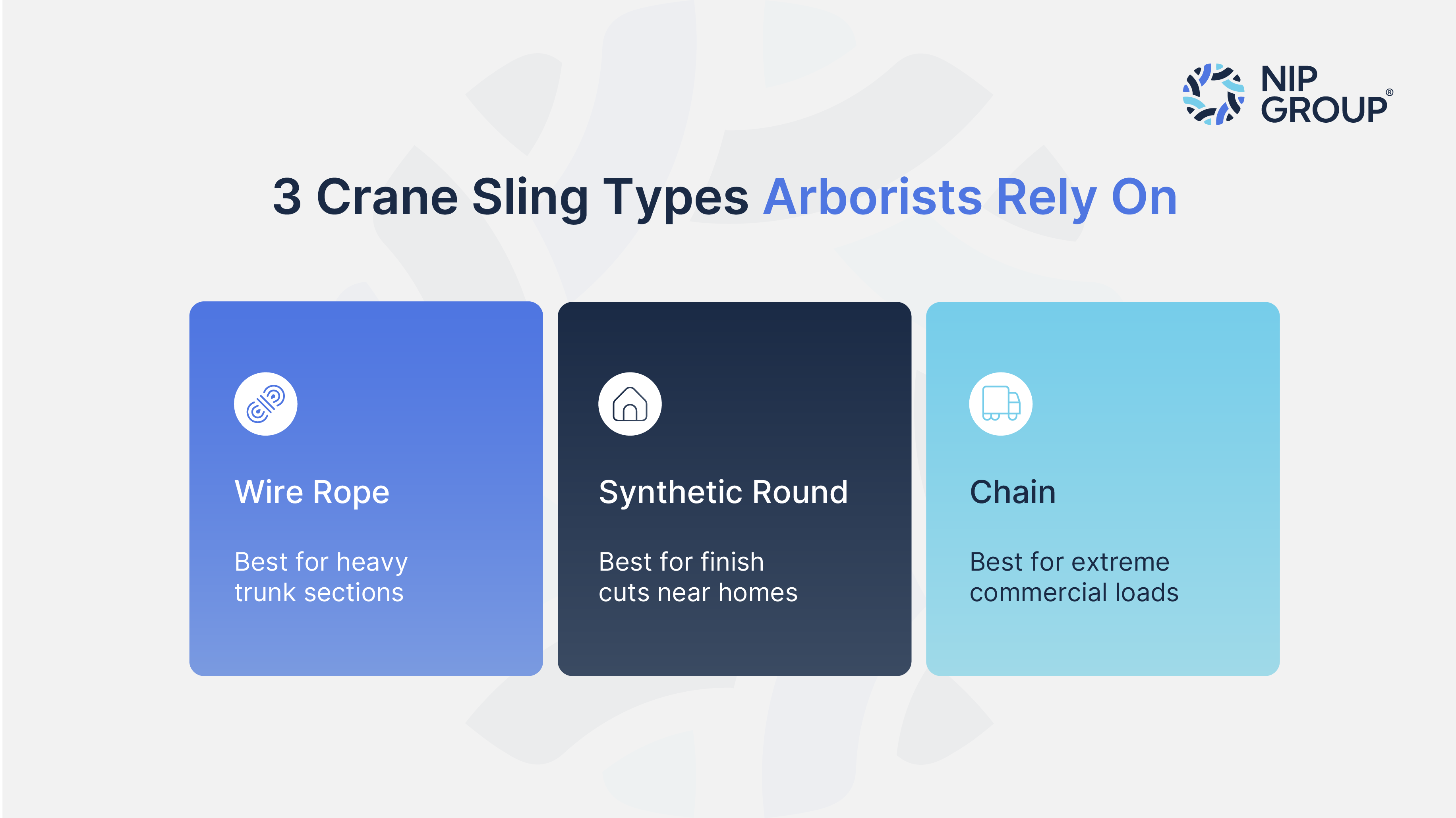
Wire rope slings
They hold up against rough bark and heavy trunk sections without stretching. They handle the biggest pieces, though their weight makes them harder to position by hand.
-
Synthetic round slings
These flex easily around limbs and cut sections. Ground crews reach for them on finish cuts near homes. The softer material protects bark and nearby structures as the piece comes down.
-
Chain slings
They carry extreme loads and resist heat. Most residential removals never need this much capacity, but heavy commercial jobs sometimes do.
Choosing the right sling for crane work starts with reading the load correctly. So, it’s important to get that call right before the first cut is made.
3 Crane Sling Types Arborists Rely On
How Do You Rig a Crane Sling the Right Way on a Tree Job?
Rigging a crane sling correctly starts before the saw touches the wood. Get the setup right first, then check it again before every lift.
- Set the anchor point over the load’s center of weight: An off-center anchor lets the section tip or spin the moment it’s cut free.
- Wrap the sling around the load: A sling that’s only draped on top can shift or slide loose under tension, especially on smooth or wet bark.
- Pad the sling wherever it touches sharp bark: A sharp edge cuts into the sling’s fibers a little more with each use. That damage adds up long before it’s visible.
- Keep the sling angle close to vertical: A steep angle keeps tension low and gives the sling its full rated capacity. As the angle gets shallower, tension on the sling climbs fast, and its safe capacity drops with it.
- Agree on hand signals with the crane operator: A missed signal is often the difference between a controlled lower and a load swinging into the wrong spot.
Conditions change between lifts. A sling that passed inspection an hour ago can pick up new damage on the next pick. So, repeat these checks before every lift:
- Confirm the rated capacity tag is legible: If the tag is missing or unreadable, take the sling out of service until it’s replaced.
- Retire sling with cuts, fraying, or burn marks: Small-looking damage can cut a synthetic sling’s strength by a wide margin.
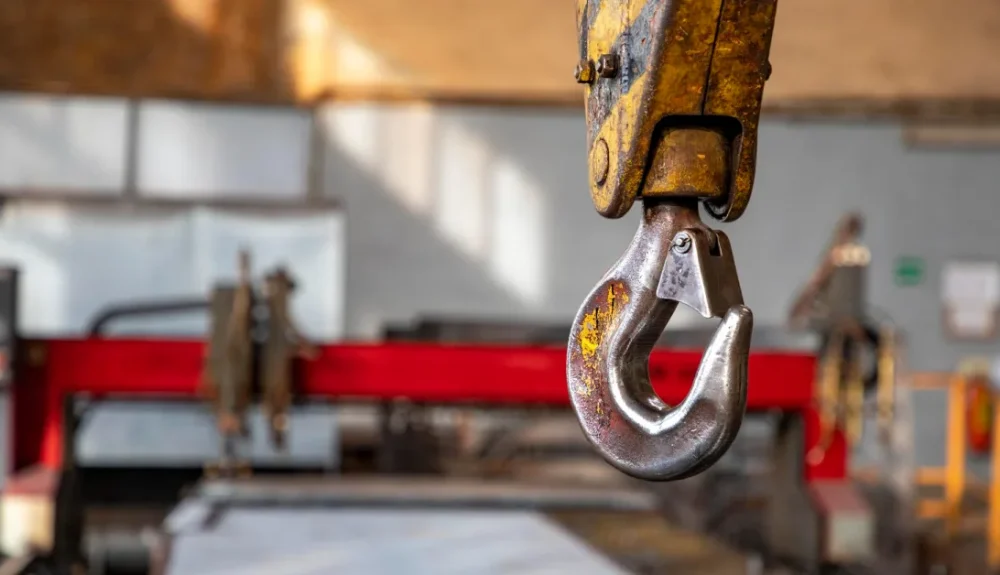
- Check hooks/hardware for cracks or corrosion: Worn hardware fails under load just as easily as a damaged sling. It’s also often the harder thing to spot on a quick visual check.
- Clear the drop zone: Anyone standing inside that zone is exposed if a section swings early or drops before the crane takes full weight.
Must Read: Key Crane Operation Safety Measures for Arborists
How Does a Choker Configuration Change Your Crane Sling‘s Capacity?
A choker hitch wraps the sling around the load and cinches it tight. That cinch point bends the sling sharply. A sharp bend puts extra stress on the material, and that’s what lowers the crane sling‘s rated capacity. Most riggers plan for a drop of roughly 20 to 25 percent compared to a vertical hitch. How much you lose depends on the choke angle and the type of sling you’re using.
The tightness of that bend matters more than most crews realize. A thick sling wrapped around a thin log bends harder than a thin sling would. That harder bend wears the sling out faster and weakens it with every lift.
However, this doesn’t make a choker hitch the wrong choice. It’s often the right one. A choker hitch controls a limb as it swings free while it’s being lowered. It keeps the cut section from rolling or twisting on the way down.
Getting the hitch right is one thing. Rigging it correctly on the day is another, and this is where most choker mistakes creep in on a real job:
- Choking close to the sling’s fitting, which concentrates stress in one spot
- Wrapping too tight for the load’s thickness, straining the sling more than needed
- Exceeding the sling’s rated angle, which quietly cuts its safe capacity
- Reusing a worn choker hitch on a section heavier than it’s rated for
What Should Your Coverage Protect on a Crane-Assisted Job?
When a rigging line fails, or a choker slips mid-lift, the section in the air doesn’t stop where you planned. It can come down on a roof, a fence line, or a car parked in the driveway. A crane sling failure during that same lift can put a ground worker directly in the drop zone. These are the risks a crane-assisted removal carries every time the crane goes up, not edge cases.
Standard contractor policies often miss pieces of this picture:
- General liability limits may fall short of what a crane-related property damage claim costs
- Workers’ compensation also needs to reflect who is exposed during a lift
- Inland marine coverage should extend to the slings and rigging gear your crew uses on-site
These gaps are exactly what TreePro is built to close for arborists and tree care businesses running crane-assisted jobs. It covers crane and boom exposure directly, alongside general liability and workers’ compensation. It also covers commercial auto built around this kind of work. The program is backed by A+ rated carriers, meaning carriers with a superior financial ability to pay claims when they come in. Ask your broker to sign you up for TreePro, or contact us to see how the program fits your crew.
FAQs
1. What is the 3-3-3 rule for cranes?
There’s no single official version of this rule. It’s an informal industry mnemonic, and different trainers define it differently. Some use it for pre-lift pauses, others for load movement rhythm. It’s a useful habit-building tool, but it’s not an OSHA standard. So always follow your written lift plan and load chart over any shorthand rule.
2. What sling configuration is the strongest?
The strongest configuration depends on how the sling wraps the load. Here’s how the main sling configurations compare:
- Vertical hitch: Gives the sling its full rated capacity, but nothing more
- Choker hitch: Cinches around the load, which lowers capacity rather than adding to it
- Basket hitch: It’s the strongest option here. Rigged at a 90-degree angle, it roughly doubles the vertical hitch’s capacity. It’s because the load sits cradled across two legs instead of hanging from one.
- Bridle hitch: Splits the load across multiple legs from one hook, useful for balance more than raw capacity.
3. How many slings are allowed in a crane hook?
There’s no fixed number written into OSHA rules. What matters is the hook’s rated capacity and throat opening. Bridle hitches commonly use two to four legs. But every leg has to fit the hook safely, and the combined load has to stay within its rated limit.
4. What is the maximum weight a crane can lift?
The maximum weight that a crane can lift comes down to the crane’s size and class:
- Boom trucks and small mobile cranes, common on tree jobs, typically top out in the low tens of tons
- Larger mobile and crawler cranes can lift into the hundreds of tons
- The largest crawler cranes in the industry exceed 3,000 tons
The real number for any job comes from that specific crane’s rated capacity chart, adjusted for boom angle and reach.

