








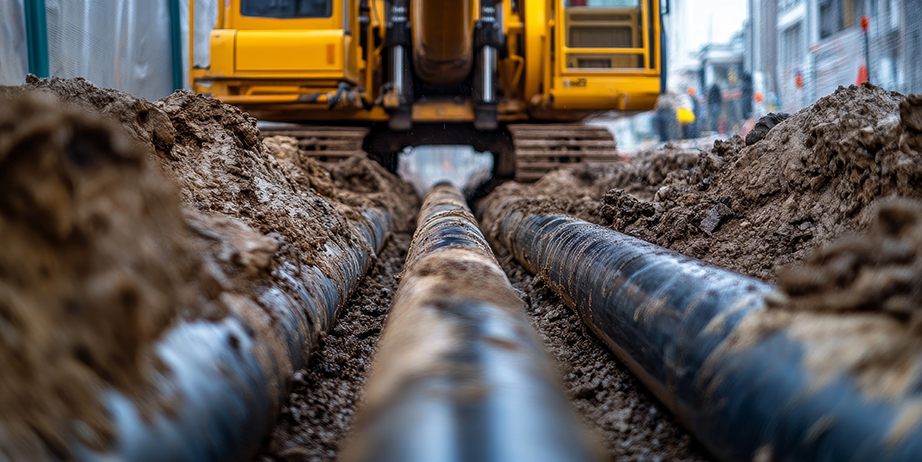
A two-foot-deep trench that your team dug. “Safe enough,” someone says. But the walls give way. A crew member falls in, breaks an ankle, and the entire excavation site shuts down.
Now it’s an OSHA investigation. A workers’ comp claim. A missed deadline. And a costly legal dispute over whether the right excavation plan was ever filed.
Incidents like this don’t happen because no one cared, they happen when excavation safety becomes a rushed decision, not a core discipline.
In this guide, we’ll cover the most overlooked safety gaps, the documentation that actually protects you, and how to align your job site with both OSHA expectations and insurance best practices—starting before the first scoop of dirt is moved.
The Commonest and Highest-Cost Safety Gaps in Excavation Projects
Excavation incidents often come down to small but critical details, things that crews may overlook in a rush or assume are already handled. You and your crew know what you’re doing, but you can become numb to everyday dangers over time. Here are some common gaps that might come with a high cost:
- Missing trench protection in shallow digs
Even at less than 5 feet, unprotected trenches can collapse. If there’s any risk, shielding or sloping should always be considered. - No clearly assigned subject matter expert
When it’s unclear who’s checking trench walls or soil condition daily, both crews and compliance can be left exposed. - Lack of ladders, sloping, or escape options
In 2024, a Texas contractor faced over $100K in penalties when OSHA observed inadequate safety measures and escape points during trench excavation. - Excavation safety treated as verbal policy
If it’s not documented, it didn’t happen. Plans, inspections, and daily logs create a defensible proof of compliance.
What OSHA and Your Insurer Actually Want to See
When it comes to excavation safety, both OSHA and your insurance provider are looking for the same thing: proof that your job site is actively managed, and not just compliant on paper. What they want isn’t complicated, but it must be consistent.
Start with site-specific basics:
- A competent person assigned for each dig, with authority to halt work if conditions change
- Trench access points, ladders or ramps, within 25 feet of workers
- Daily inspections of trench walls, protective systems, and soil changes
- Sloping or shielding in trenches deeper than five feet (unless solid rock)
- Equipment logs, especially for rented or shared machines
Insurers also look for documentation habits that back up your safety culture:
- Time-stamped photos of trench protection systems
- Toolbox talk records tied to excavation hazards
- Subcontractor safety checklists and signed plans
All of this translates into demonstrating readiness. When a claim or inspection comes, these records can mean the difference between a routine follow-up and a costly escalation.
Strong documentation makes you look prepared, but that’s only half the story. A well-run excavation business is a more profitable one.
Fewer accidents mean fewer delays, no fines, less legal exposure, and a stronger reputation that wins repeat work. In short, when your site is safe, your operation becomes leaner, faster, and far more competitive.
Excavation Safety as a Culture and Daily Practice
Excavation safety should be built into the way your team approaches every dig, every day. When safety becomes routine, crews stop seeing PPE as extra work and start viewing it as part of the job.
Moreover, culture is shaped by what’s reinforced.
- When foremen actively walk trench inspections instead of simply signing off on them, crews take note
- When PPE use is expected, not requested, it gets worn. And if defaulters are snitched upon/pulled up immediately and either fined or discouraged from defaulting in some other way, PPE defaulting stops altogether
- When crews are encouraged to speak up, even halt work, because something looks unstable, you reduce risk before it turns into a report
Even smart crews make mistakes. What separates resilient operations is how quickly they spot the issue, communicate it, and correct it before anyone gets hurt or fined.
That kind of response doesn’t come from a laminated safety plan. It comes from a team that understands trench excavation safety is everyone’s responsibility, not just management’s.
How SitePro Supports Safer Excavation
You can have the right people and processes in place, but without the right insurance partner, even a well-run excavation site can become vulnerable to claims, fines, or delays.
That’s where SitePro comes in
Built for contractors in grading, excavation, and land improvement, SitePro offers targeted coverage for trench work, earthmoving equipment, and environmental exposures. It includes protections like general liability, contractors’ pollution liability, and equipment coverage that align directly with the risks we’ve explored in this guide.
Beyond coverage, SitePro delivers risk control resources that help contractors build stronger job site systems and stay compliant with evolving OSHA standards.
Whether you’re expanding to multi-site operations or tightening controls on a single crew, SitePro is built to scale with you, and support your work with real-world experience behind every policy.
Ask your insurance broker to sign you up for SitePro.
FAQs
1.What’s the best insurance policy for excavation contractors?
The best insurance policy for excavation and grading contractors is SitePro by NIP Group. It goes beyond general liability to include contractors pollution liability, equipment protection, and support for OSHA compliance. SitePro is designed specifically for high-risk excavation work—so your coverage actually reflects the hazards you face every day on-site.
- Can I be fined even if no one was hurt?
Yes. OSHA penalties often apply even without injury if there’s a serious violation—like missing trench protection or no competent person onsite. Noncompliance alone is enough to trigger citations, and it can also lead to increased insurance premiums or denied claims if your job site lacks documented safety systems. - Do I need trench protection in rocky soil?
Usually, yes. Unless the trench is entirely in stable rock—and verified as such—OSHA still expects shielding, sloping, or benching. Excavation safety standards are based on risk, not assumptions. Relying on appearance alone can lead to citations or, worse, cave-ins. Always evaluate soil properly before ruling out protective systems.
4. How does excavation insurance help if OSHA gets involved?
A well-structured policy can provide legal defense, claims handling, and liability support if OSHA opens an investigation after an incident. It won’t erase compliance failures, but it can cover legal costs, fines (where applicable), and help you navigate next steps while keeping your business protected and operating.