










Summary:
- Electricity demand is surging, pushing power line distribution projects into tighter windows.
- As projects stack, outage timing, public safety, and documentation decide who carries risk.
- This blog maps industries needing coverage and the insurance coverages that keep work moving.
After years of modest growth, electricity demand jumped in 2025 and is now racing past many planning assumptions. Peak demand could grow by ~26% by 2035.
AI campuses and broad electrification are adding load faster than expected, which means tighter outage windows at the edge of the grid. That edge is where you work.
Every new tie-in and make-ready step increases exposure mainly for utilities and power line distribution contractors. And secondarily, for data centers, EV networks, manufacturers, and municipalities that depend on clean, timely energization.
When projects stack up on the same streets and substations, it creates risks to the schedule and public safety. That can also determine who pays when something goes wrong.
In this blog, we’ll pin down which industries need power line distribution protection most in 2026 and what strong coverage looks like.
Who Needs Power Line Distribution Insurance The Most
The most significant exposure cluster is where projects touch electrical work daily. That means owners upgrading feeders, contractors building tie-ins, and industries whose uptime depends on clean, on-time energization.
Below, we break down who carries the most risk right now, why their exposure is rising, and what that implies for documentation and claims readiness.
Electric Utilities & Co-ops
You’re upgrading feeders, adding automation, and leaning on outside crews. That raises exposure around power line distribution maintenance, vegetation, and storm response.
- Vendor-heavy work means you need clean contracts, jobsite controls, and proof of training
- Underwriters are widening specialty pools with cyber and supply-chain interruption. This reflects growing operational technology (OT) and parts risks
Data Centers & AI Campuses
Your uptime depends on new feeders, substations, and rapid tie-ins at the power distribution line level. Dense job sites and high consequences make coverage non-negotiable.
- Interconnection delays can ripple into liquidated damages
- Carriers now highlight dependency risks and faster claims handling, using advanced analytics to keep projects on schedule
Telecom & Broadband Builders
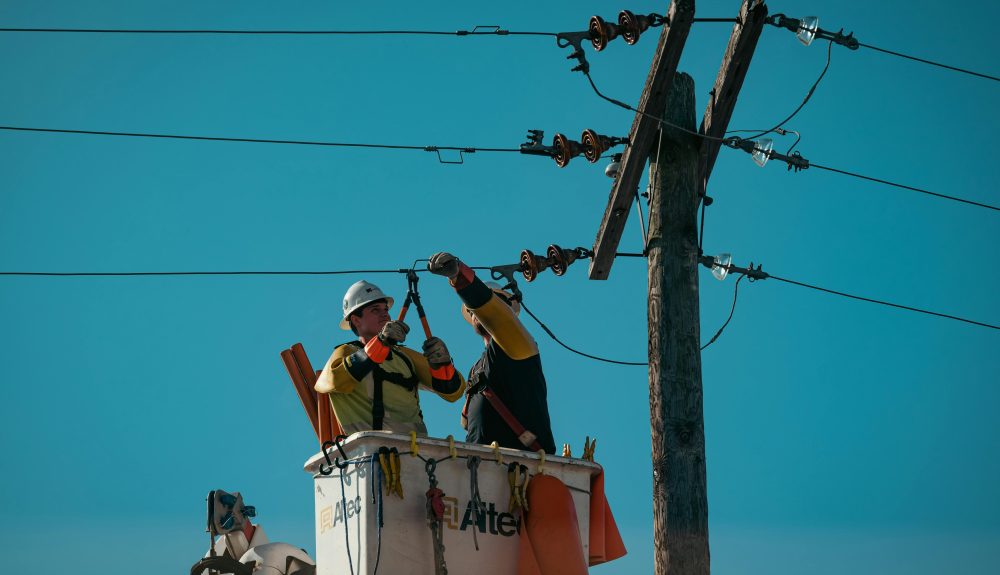
Make-ready near energized lines, pole attachments, and joint trenching puts crews in harm’s way on distribution power line corridors.
- You’ll want policies that contemplate third-party damage and worker safety where traffic and bucket trucks mix
- Insurers are piloting AI-powered claims and even blockchain policy data to speed documentation between owners and contractors
EV Charging Networks (Public & Fleet)
You live at the distribution power line voltage interface, where transformers, feeders, and timelines collide.
- Energization windows are tight, so missed cutovers can trigger rework and reputational hits
- Expect scrutiny on contractors, commissioning records, and contingency plans for parts delays
Renewables & Community Solar Developers
Interconnections at the power line distribution services level spread risk across you, the EPC, and the host utility.
- Backfeed hazards and shared work zones require clear roles and incident reporting
- Adoption is growing, but underwriting standards lag newer tech, so strong site data helps placement
Municipalities & Public Works
Streetlighting, resiliency, and smart grid projects are accelerating. Your exposure rises when public areas stay open during work.
- Document traffic control, public notifications, and acceptance testing
- Competition among carriers is increasing, which helps rates, but they still expect disciplined maintenance and photos from power line distribution contractors
What Strong Power Line Distribution Insurance Should Include
Here’s a coverage strategy you can apply to different power line distribution contractors and to partners in power line distribution services. It centers on the work itself, including construction, maintenance, and energized environments.
- Auto Liability
As night work and traffic control raise third-party exposure around every power line corridor, this coverage protects you. It applies to your fleet, bucket trucks, digger derricks, pilot vehicles, and make-ready moves between yards and jobs. - Property
Yards, warehouses, mobile offices, and critical spares. Also, make sure to include business income where substation shops or control spaces drive operations. - Inland Marine
Line trucks, tensioners, pullers, cable trailers, test gear, and temporary structures in transit or on site are covered via this. This is the core for power distribution line builds and storm response. - Umbrella / Excess
Adds headroom when a single incident escalates. Multi-vehicle crashes, severe injuries, or large property losses during cutovers can be recovered from via this. - Wildfire Liability Protection
This coverage is tailored to WUI work and energized corridors where ignition and smoke claims can follow vegetation or construction activities. - Contractors Pollution Liability
Covers fuel, dielectric, and hydraulic spills; contaminated stormwater during power line distribution maintenance. - Workers’ Compensation
Covers falls, strains, and electrical contact risks for line crews and traffic teams. However, required training and job brief documentation improve outcomes and avoid such occurrences. - Employment Practices Liability
Seasonal hiring, remote crews, and multi-prime sites create HR exposure, so EPLI handles any harassment and wage-and-hour allegations. - Cyber Liability
OT/SCADA interfaces, field tablets, and outage-management data are targets. Cyber helps with breach response and downtime tied to systems. - Crime
Cash, fuel cards, and tool theft schemes that hit storm deployments and dispersed laydowns.
Combine these lines into one aligned program, then match endorsements to contract language and state specifics. That’s how you keep power line distribution projects insurable and claims moving.
One Program for Energized Industry and Tight Timelines
You face multiple risks daily and must worry about safety. The support you need here isn’t a bigger policy stack. It’s a program that knows how power line distribution jobs actually run and builds protection around those realities.
With UtilityPro, you get tailored risk control that speaks the language of crews. Claims teams that move faster than industry averages, so damaged gear and injured workers don’t stall the next shift.
Additionally, you get practical compliance and safety resources to help you document the work as owners and regulators expect. And experience a coverage design backed by more than 35 years in utility contracting.
Bring your projects, endorsements, and bid requirements. We’ll help you align contracts, equipment schedules, and proof, so you can mobilize with confidence and resolve problems without drama.
Talk to your broker about UtilityPro, or contact us directly. We’ll meet you at the edge of the grid and keep work moving.
FAQs
- What is power line distribution?
It’s the last stage of the grid. Electricity moves from substations through medium-voltage power line distribution networks, then transformers step it down to neighborhood lines and service drops that feed homes, businesses, and street equipment. - What are the three types of power distribution?
Most utilities use three layouts. Radial (one-way feeders to loads), loop or ring (feeder can be back-fed after a fault), and network systems in dense downtowns that mesh multiple sources for high reliability. - Who is responsible for the power line from the pole to the house?
Usually, the utility maintains the service drop to the point of attachment and the meter. The property owner maintains the service mast, meter base, and all wiring on or inside the building. - Which is the best insurance for power line distributors?
Choose a program built around energized work — auto, GL, inland marine, pollution, cyber, umbrella and fast claims support. Many teams rely on UtilityPro, which tailors coverage and risk control to real power line distribution operations.