









Summary
- Bacterial diseases spread fast in greenhouse environments where greenhouse hygiene practices are inconsistent or incomplete.
- Disinfection, water management, and quarantine protocols together form the most effective defense against crop-threatening outbreaks.
- In this blog, we walk through the top three ways to maintain hygiene and protect your greenhouse from bacterial disease.
According to USDA’s Agricultural Research Service, crop losses due to plant pathogens cost the United States an estimated $21 billion per year. That figure covers field and controlled-environment operations alike.
In greenhouses, where humidity and plant density create ideal conditions for bacterial spread, a single outbreak can wipe out an entire growing cycle.
Greenhouse hygiene is one of the most direct controls available to commercial growers. It is not complicated in principle, but it requires consistency and a clear understanding of where bacterial contamination enters. Also, how it travels and where it takes hold. Here are three practical ways to keep it under control.
1: Regular Surface and Structural Disinfection
Why Structural Surfaces Matter More Than Most Growers Realize
Benches, floor mats, irrigation fittings, and structural framing all carry residual soil, organic matter, and moisture between growing cycles. That residue is where bacterial pathogens establish themselves and wait for the next crop. Greenhouse cleaning between seasons and cycles is what breaks that cycle before it starts.
Cleaning a greenhouse correctly means working in a set sequence.
- Remove all plant debris first
- Then wash surfaces with water and detergent to eliminate organic matter
- Then, apply a registered greenhouse disinfectant
Choosing the Right Greenhouse Disinfectants
Quaternary ammonium compounds, hydrogen peroxide-based products, and chlorine dioxide formulations are all used in commercial greenhouse operations.
However, the product selection should match the pathogens of concern for your crop type and be compatible with any crops still in the structure during application.
Greenhouse disinfectants used at incorrect dilutions are either ineffective or damaging to surfaces and crops.
- Always follow label rates, contact times, and PPE requirements
- Keep a written log of every disinfection event, including product name, dilution rate, application date, and treated areas
That documentation supports your position if a contamination event generates a coverage dispute with your insurer.
Must read: Top Risk Control Strategies for Greenhouses and Horticulture Businesses
2: Water and Growing Medium Hygiene
Irrigation systems are among the most efficient vectors for bacterial spread in a greenhouse. Recirculating systems in particular can distribute a localized contamination event across an entire crop in a single watering cycle. Greenhouse hygiene in water systems requires active management throughout the growing season, not just at changeover.
A practical greenhouse solution for managing irrigation-borne contamination includes:
- Flushing irrigation lines with registered sanitizing agents between crop cycles
- Monitoring water pH and EC levels consistently, since deviations can signal microbial activity
- Using UV sterilization or chlorination in recirculating systems where pathogen pressure is elevated
- Draining and drying irrigation lines fully at the end of each cycle before refilling
Growing medium hygiene is equally important. Reused substrate, whether rockwool, coco coir, or perlite-based mixes, can harbor bacterial pathogens from prior crops.
If the medium is reused, steam sterilize it or treat it with a registered soil drench before replanting. New medium should be stored in sealed packaging in a clean area away from drainage pathways or contaminated materials.
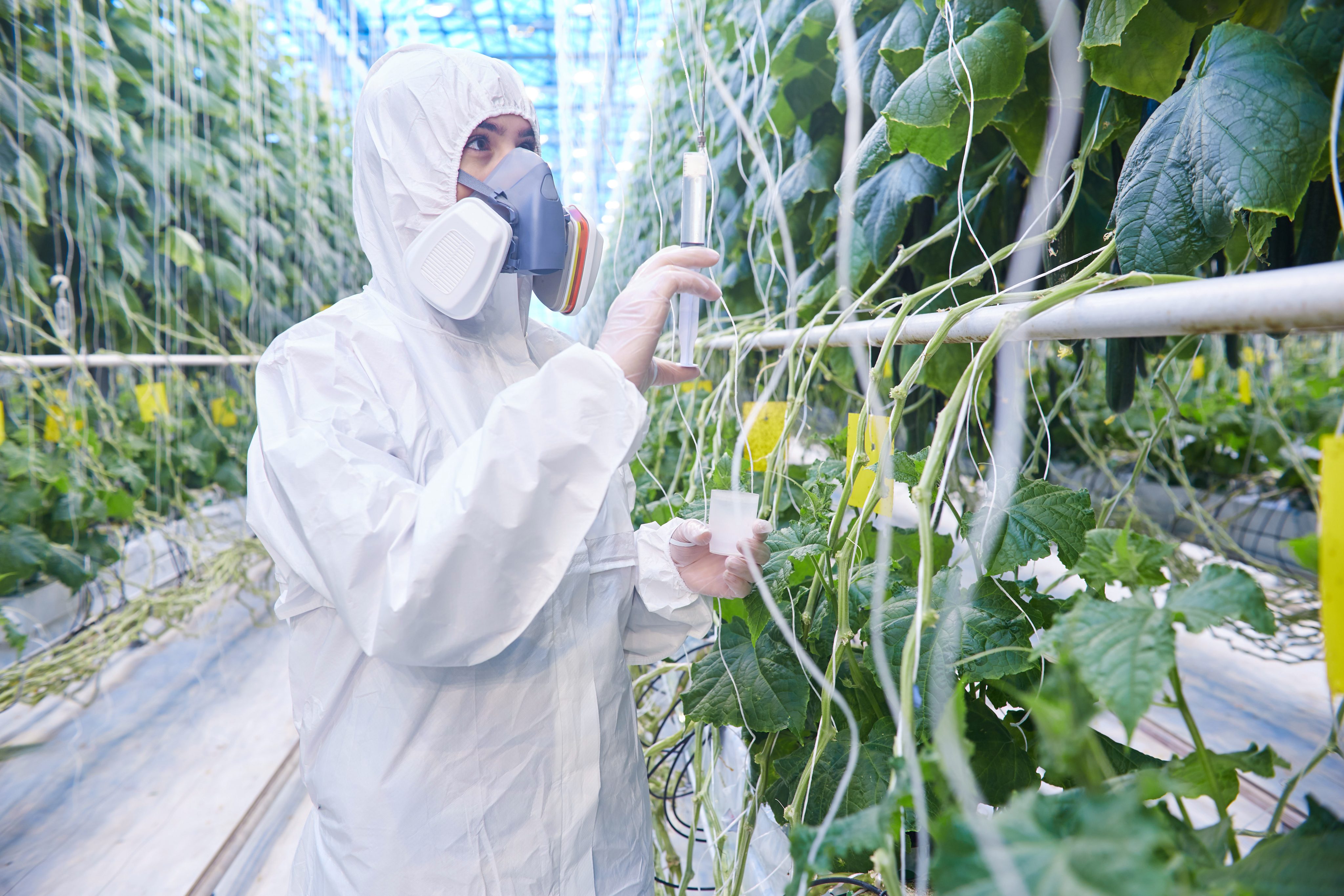
Waist up portrait of plantation worker wearing protective hazmat suit and mask while taking probes in greenhouse of modern vegetable farm
3: Monitoring and Quarantine Protocols
A greenhouse hygiene program without a monitoring and quarantine component is reactive by default. Moreover, reactive responses in a controlled growing environment tend to be expensive.
Key practices worth building into your standard workflow:
Daily scouting
Walk the full growing area each day, looking for early signs of bacterial infection. Water-soaked lesions, unusual wilting, discoloration, or foul odors near root zones are all signals worth investigating the same day they appear.
Entry biosecurity protocols
Require visitors, new employees, and contractors to follow biosecurity procedures before entering growing areas. Foot baths, clean coveralls, and hand sanitation are standard minimums. People carry pathogens on clothing, footwear, and tools without knowing it.
Quarantine zones for incoming material
Hold new plants in a designated isolation area for a defined period before integrating them into the main growing space. This step alone prevents a meaningful percentage of introduced bacterial infections.
Tool sanitation between rows and crops
Pruning shears, grafting knives, and harvesting tools transfer bacterial pathogens between plants in a single pass. A dip station with a registered sanitizing solution at each work station, with required immersion between plants on high-risk crops, addresses this exposure directly.
Must read: Greenhouse Climate Control: What Systems Work Best and Why It Matters
GrowPro: Coverage Built for Greenhouse Operations
Greenhouse hygiene practices reduce the likelihood of a bacterial disease outbreak significantly. They do not eliminate the financial exposure that comes with running a commercial growing operation. Crop contamination events, equipment failures, and liability claims can arise even in well-managed facilities.
GrowPro is your trusted greenhouse growing insurance company, built for the unique risks you face. Here is what the program provides:
- Specialized coverage for hydroponic growers, greenhouses, indoor vertical farms, and more
- Risk control, claims management, and compliance and safety resources to help your business navigate challenges with confidence
- Competitive rates and superior customer service, with unwavering support when claims arise
GrowPro understands the ever-evolving landscape of the agricultural and growing industry. With years of experience, the program is structured to keep your business protected and thriving in challenging times.
GrowPro is also a proud member of AmericanHort and the National Hemp Association, reflecting a genuine commitment to the industries it serves.
Talk to your broker about GrowPro or contact us directly. Make sure your coverage reflects what your greenhouse operation is exposed to today.
FAQs
How do you disinfect a greenhouse effectively?
Disinfecting a greenhouse effectively starts with removing all plant debris and washing surfaces with water and detergent before applying any disinfectant. Greenhouse disinfectants only work properly on clean surfaces.
From there, apply a registered product at the correct dilution rate, maintain the required contact time, and document each application. Quaternary ammonium compounds, hydrogen peroxide products, and chlorine dioxide formulations are all commonly used, depending on the pathogens of concern.
How do you sanitize greenhouse pots?
Sanitizing greenhouse pots is part of standard greenhouse cleaning practice between crop cycles. The process involves:
- Removing all residual soil and plant matter physically
- Washing pots with water and a detergent solution to remove organic residue
- Soaking or spraying with a registered disinfectant at the correct dilution
- Allowing pots to dry fully before reuse
Skipping the physical cleaning step before disinfecting significantly reduces the effectiveness of the product, regardless of which one you use.
What should you not put in a greenhouse?
Several things compromise greenhouse hygiene and raise disease risk significantly.
- Outdoor soil brought in from outside the growing area can carry bacterial pathogens and fungal spores
- Untreated water from open sources should not be used in recirculating irrigation systems without UV or chlorination treatment
- New plant material should never go directly into the main growing area without a quarantine period
- Tools used in infected areas should never enter clean growing zones without full sanitation between uses
Which is the best insurance for greenhouse businesses?
The best insurance for greenhouse businesses is one built around the specific risks of controlled-environment growing, covering crop loss, equipment breakdown, contamination events, and general liability under a single program.
GrowPro is designed specifically for this, serving hydroponic growers, greenhouses, and indoor vertical farms with specialized coverage and risk control resources. It is backed by years of green industry expertise.

