






Trees are part of the fabric of our planet – and they’re a critical resource for our environment.
Did you know? There are upwards of 228 billion trees in the United States and as of 2021, approximately one-third of our land is covered by forests. Trees are part of life virtually anywhere in the world, but particularly in the U.S. where we’ve built cities and towns and neighborhoods among forest land while many trees remain thriving (and new trees are planted).
As communities grow, buildings rise and populations migrate to new areas, the infrastructure surrounding us becomes more ingrained with the ecosystem. Trees grow, as well, meaning they have the potential to interact with utility lines, power lines, homes, and more.
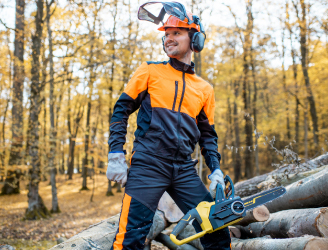
Tree Care Industry Magazine estimates there are more than 63,000 tree trimming professionals in the United States, and the dangers of the work cannot be ignored. As weather changes along with climatic patterns, experts expect the demand for tree care to only increase over time. Tree trimming safety standards do not currently exist, but there have been increasing calls for OSHA to move quickly; the most recent formal legislative action taken was in 2008.
Utility workers who are tasked with maintaining and removing trees in the area of power lines and other infrastructure-related equipment do critical work. Their safety is also at risk whenever they’re on the job, making coverage and support of these workers paramount for both them and for the areas in which they’re working.
The High-Risk Nature of Jobs Performed by Utility Line Arborists and Utility Line Clearance Companies
Tree trimmers who clear utility lines often operate in high-risk settings, close to active power lines and other electrical hazards. Whether they’re in a populated community or in a more rural area, the risks of clearing and maintaining trees remains the same: at any moment, whether working in a group or alone, they can be exposed to severe conditions.
Serious injuries and fatalities among tree care professionals most often occur due to exposure to electric current.
The Tree Care Industry Association’s April 2023 report, which was based on data from the U.S. Bureau of Labor, contained noteworthy findings. The fatality rate (estimated) for tree trimmers was 110 per 100,000 – and the nonfatal injury rate was 239 per 10,000.
Weather is the most prevalent risk – both during and after a storm. Workers who operate during storms are subject to dangers like falling or damaged power lines, uneven or unstable equipment like ladders, lifts and trucks, and other electrical hazards. These risks are in addition to impaired vision due to driving rain, high winds and low sunlight.
While we’re able to estimate the amount of time available to work before severe weather interrupts, we can’t always be perfect with those predictions. Spring and summer are volatile weather periods in most areas of the United States, with pop-up showers and thunderstorms occurring on a regular basis.
Another aspect of weather risks, however, is after a storm hits. Power lines and utility lines can be affected by rain, wind and ice, making the job all that more difficult. Per OSHA regulations, line clearance tree trimmers can only operate in these conditions if lines and circuits in the area have been de-energized and deemed safe for work.
Public Safety Risks of Utility Line Clearance and Tree Trimming
First and foremost, the public safety risk is about voltage and its proximity to the homes and businesses in the area of the power lines. Utility line workers and tree trimming professionals understand the high-voltage nature of their work, but often the public isn’t aware of the work being done – or knows the potential hazards involved (to both the workers and themselves). Hazard assessment, typically conducted before work is to begin, is also an essential component of risk mitigation and reduction.
Making sure utility and power lines have been de-energized and safe for work is a primary concern, and also ensuring all homes and businesses in the area maintain access to power.
The Impact of Tree Trimming and Arborist Work on Power Reliability
Accidents happen, but they can be prevented in most cases. In this context, “accidents” refers to both workplace accidents and accidental cuts to power in the area when arborists are at work.
Voltages of lines atop utility poles – which are often at or above the level of treetops – can be 100 times as powerful as voltages in the home (if not more). Because these lines are commonly found along city streets, in neighborhoods, rural areas and even in backyards, there’s an increased risk for the arborist.
The work is vital and important to ensuring safety and efficiency of our utility lines, but workers must also be protected. Further along in this piece, we’ll talk in more detail about TreePro, a unique and comprehensive insurance program that covers arborists and tree trimming professionals.
TreePro is a Comprehensive National Insurance Program for Tree Trimming Professionals and Arborists
TreePro is the largest program of its kind – and carries an “A+” rating from A.M. Best, one of the largest insurance regulators in the world, so brokers and their clients benefit from its strength and stability and arborists will enjoy the security they need to focus on successfully growing and running their businesses.
Because tree work is inherently dangerous, proper coverage and support is critical to the success and viability of both the work and tree companies. Make no mistake: you should not let accidents, injuries, property damage (or even theft) negatively impact your business. An experienced tree service insurance provider, like TreePro, will help you manage problems when they arise and will always be ready when the unexpected happens.
The benefits of coverage with TreePro
TreePro, offered exclusively by NIP Group, provides specialized insurance coverage for tree trimming professionals and arborists.
From underwriting to claims and risk management (and more in between), our team has the unique experience required to support tree businesses during challenging times and keep them contributing to the nation’s infrastructure development in a sustainable and resilient manner.
Insurance Risks Facing Tree Trimming
We closely examine risks such as power line transmission and distribution, communication line construction and maintenance, water/sewer/gas line work, and more. Recognizing the emerging risks faced by wildfires and a changing climate, TreePro also offers excess capacity to $25 million and specialized wildfire liability protection available nationwide (including California).
Tree service workers demand not only protection, but also a committed safety partner that understands their needs and the risks involved with the work. That’s where TreePro stands out as the foremost insurance partner for this industry – we know the work, we know the risks, and we know how to give workers and their employers what is required to get the job done.
What’s Covered by TreePro?
In short, our coverages are comprehensive – we leave no stone unturned when it comes to protecting tree trimmers and arborists, while also providing tree businesses with a necessary peace of mind.
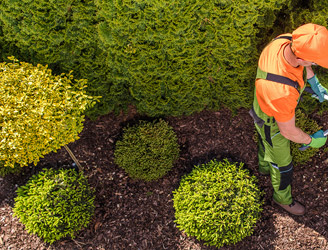
Risks covered include tree pruning, tree spraying, utility line clearance, lawn care, landscaping, irrigation installation, snow and ice removal, and more. TreePro offers “better tree service coverage by design,” which means we cover arborist errors and omissions, crane coverage, limited jobsite pollution, and other risks.
TreePro has been insuring tree professionals and their employers for more than 30 years, and is currently the largest and most comprehensive provider of its kind. Perhaps more than any other insurer, we understand the unique risks facing the tree care industry – which is why TreePro members receive access to our vast library of risk management resources.
For arborists, tree trimmers, and tree companies to successfully conduct business and protect their workers, TreePro is the best insurance solution.
For more information on TreePro coverage, to request a quote, or speak with an expert, please visit our website.