











Summary:
- Contracts in 2025 hinge on an active utility contractor license, bonding, verified experience, financials, supervisor credentials, and documented OSHA/811 training.
- Prequals also expect layered utility contractor insurance with the right limits and endorsements, treated like an operating system that absorbs shocks without stopping work.
- This blog explains the licensing baseline and insurance stack utility contractor companies need to pass prequal, win bids, and stay resilient throughout the project lifecycle.
In 2025, the bid room has shifted. Owners and GCs are now asking how you’re qualified and protected to perform your work.
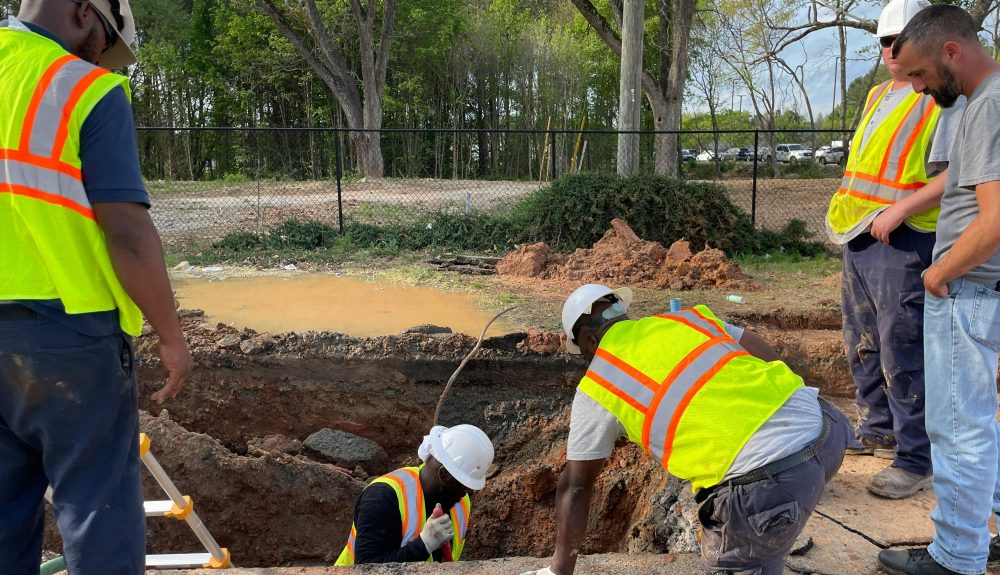
If someone asks, “What is a utility contractor’s role?” the answer is simple: it is to install and maintain water, sewer, gas, power, communications, and storm systems. So, as one, you’ll always be performing high-risk operations.
Therefore, awards today hinge on two proofs: an active utility contractor license and an insurance program that matches your scope. Miss either pillar and you’re screened out before price.
This blog lays out the licensing and insurance requirements you need to win in a tough market for utility contractors in 2025.
Essential Licensing Requirements for Utility Contractors
Across the U.S., licensing boards and prequal teams are checking the same core items. To be viewed as a credible utility contractor, line these up before bidding and renew them on schedule.
- Completed application with business entity details and responsible managers
- Trade and business exams proving technical competency and basic law knowledge
- Verified experience for you or your qualifying supervisor, often by project affidavits
- Financial statements showing stability and the capacity to take on work
- Active utility contractor license bond sized to state requirements
- Proof of insurance matching scope and limits listed in bid specs
- OSHA and one-call training records, trenching and confined-space qualifications
- DOT and fleet compliance, MVR policy, and driver files ready for review
- Written safety program, QA/QC procedures, and incident reporting workflows
Get these pieces in order, and your utility contractor license will move faster. Also, buyers will see a contractor who’s ready to perform.
Underground Utility Contractors
Procurement teams want to see trench safety by the book (OSHA Subpart P), confined-space readiness, and DOT operator qualification for gas work.
They’ll expect 811 one-call records, pressure and leakage testing to spec, AWWA disinfection procedures, and clean erosion-and-sediment control with documented inspections.
Restoration matters, too, as backfill density and surface match are checked against local standards. Therefore, ensure that you keep hydrostatic test logs and chlorination reports. When your documentation mirrors your practices, you clear reviews faster and win work with less friction.
Site Utility Contractors
For site work, reviewers focus on code-savvy execution and clean coordination. You’re expected to use GPR/daylighting to avoid cross-bores and install conduit to spec, including depth, separation, bend radius, mandrel/proofing, tracer wire, and continuity tests.
Traffic control must match MUTCD plans with certified flaggers and clear pedestrian routes around saw cuts and open panels. Additonally, electrical scope demands National Electrical Safety Code compliance, arc-flash labeling, and lockout/tagout with documented de-energization permits.
To wrap it up, finish with restorations that pass ADA transitions and pavement standards, then submit redlines and as-builts that match the inspection log. That’s the bar for utility contractor safety on site utilities.
Insurance Requirements for Utility Contractor Companies in 2025
Owners and GCs now assume you carry a layered, documented program that actually matches your scopes.
To move through prequalification without friction, build proof that your coverage and endorsements are job-ready. That means you can show how claims get absorbed without stopping work.
In short, you treat utility contractor insurance like any other operating system in your business.
People & Fleet
- Workers’ compensation pays statutory benefits and supports return-to-work plans, so field injuries don’t become long shutdowns
- Auto Liability and physical damage covers owned, hired, and non-owned units with MVR policy and telematics for traffic control exposures
- Umbrella or excess liability stacks limits to reach five to twenty-five million for municipal and DOT work
Equipment & Property
- Inland marine protects contractor’s equipment and tools with scheduled high-value units and rented equipment included
- Property and business income protects shops and yards and replaces income during downtime after covered losses
Environmental & Catastrophic
- Contractors’ pollution liability addresses fuel spills frac-outs and contaminated runoff that trigger cleanup and third-party claims
- Wildfire liability responds to right-of-way and line-clearing exposures where required by region or contract
Operations, HR & Data
- Employment practices liability defends harassment, discrimination, retaliation, and wrongful termination allegations, including certain third-party claims
- Crime covers theft and employee dishonesty that can strike job sites or back office operations
- Cyber liability protects bid systems, SCADA interfaces, email or payments against ransomware, and funds-transfer fraud
Contract & Bid Compliance Essentials
- COIs and endorsements show additional insured for ongoing and completed operations, primary and noncontributory waiver of subrogation, and per-project aggregates
- Bonds and documentation keep license bonds and performance or payment bonds ready, plus safety KPIs, traffic control plans, and supervisor certifications that utility contractors are asked to submit
Putting It All Together With a Specialist Partner
In 2025, you win work by proving that you’re qualified to build and you’re built to withstand what goes wrong.
Licensing covers the first half. The second is your insurance program, because as a utility contractor, prequal teams now judge resilience as closely as price.
That’s why UtilityPro exists. It packages everything required to form a complete utility contractor insurance into one coordinated solution, backed by risk control, fast claims handling, compliance support, and bid-ready COIs and endorsements.
With 35+ years of experience serving contractors like you, UtilityPro lets you focus on installation and restoration, while your protection stays tight from bid to closeout.
Talk to your broker about UtilityPro to align with 2025 requirements, or contact us directly to know more.
FAQs
Q1. What do you need to be a utility contractor?
Typically: an active utility contractor license, passing trade/business exams, verified experience under a qualified supervisor, a license bond, financial statements, and proof of insurance. Add OSHA and one-call training, DOT compliance, and a written safety program.
Q2. What type of insurance should a utility contractor have?
You need layered utility contractor insurance: liability, workers’ comp, auto, equipment, pollution, cyber, and excess limits sized to bids. A specialist program like UtilityPro bundles these pieces with compliance support, documentation reviews, and fast claims handling.
Q3. What are considered site utilities in construction?
Site utilities commonly include water and sewer laterals, storm drains, fire lines, electrical conduit, telecom/fiber, and gas sleeves installed outside the building footprint, typically handled by a site utility contractor before vertical work.
Q4. How do I protect myself as a contractor with hiring contractors when it comes to safety?
Prequal subs for licenses, COIs with additional insured and waiver language, safety KPIs, and OSHA logs. Require JSAs, toolbox talks, and stop-work authority. That’s foundational utility contractor safety and reduces your liability.