











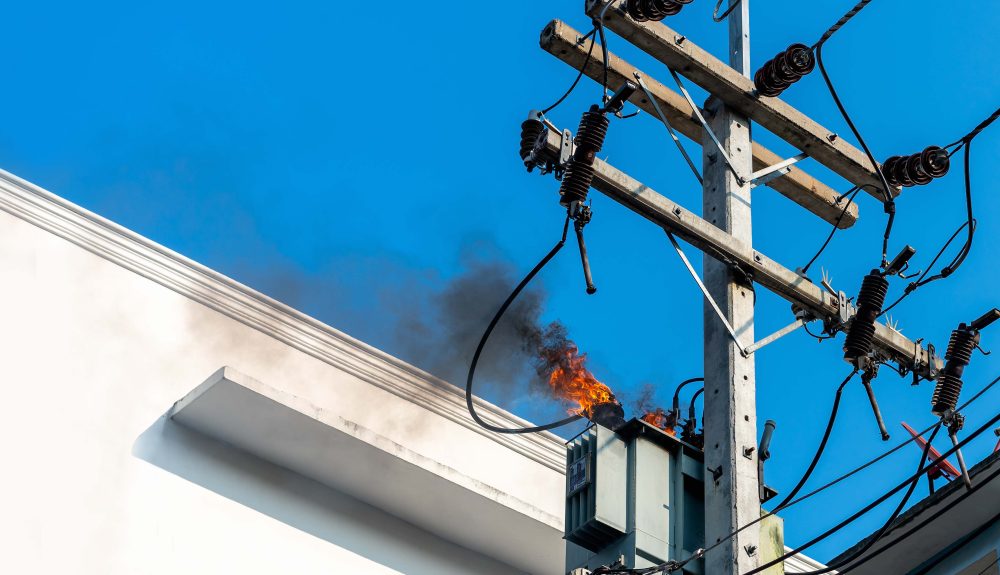
The federal government estimates that overhead lines cause 128 work-related electrocutions every year. This figure is only one slice of the whole risk landscape.
Today’s power transmission line work goes beyond high-voltage hardware. You’re navigating longer seasons, aging infrastructure, subcontractor exposure, and increasingly unpredictable environmental conditions. At the same time, there’s more scrutiny from regulatory bodies and the general public.
When all these risk triggers stack up, even the most experienced utilities can find themselves exposed.
In this blog, we’ll explore why the danger curve for transmission work is trending up and which operational realities are now shaping contractor liability across the field.
How Climate Extremes Reshape Transmission Line Risks
For power transmission line crews, climate volatility has become a year-round operational challenge.
The range of natural events disrupting grid reliability is growing, and so is the financial and operational liability tied to them.
- In 2019, Pacific Gas and Electric Company filed for bankruptcy after incurring ~$30 billion in liabilities tied to wildfire claims, including the deadly Camp Fire
- Today, utilities across the country report growing fear of lawsuits and payouts that could destabilize operations or spike customer rates
- Increasingly erratic weather patterns, from hurricanes in the Southeast to ice storms in the Midwest, are forcing preemptive power shutoffs. This, in turn, puts pressure on both transmission project timelines and outage management protocols
For field teams working along high-risk corridors, this means new compliance burdens and, often, more limited weather windows to get work done. And that calls for revisiting everything from inspection cycles to contractor coverage strategy.
Aging Infrastructure and Overgrowth Weaken Grid Reliability
Transmission lines are aging faster than many utilities can modernize them.
Some are running on decades-old components (insulators, crossarms, switches, etc.) long past their intended life. And when repairs lag, the reliability of the grid becomes fragile.
Now add vegetation.
In many areas, brush growth is outpacing routine trimming. This means more clearance issues due to blocked access and a higher risk of discharge or arc events.
At the same time, operational standards are rising. As noted in the Yale Journal of Regulation, transmission operators are expected to:
- Use cybersecurity-resilient software to reduce risk of targeted attacks
- Train teams to coordinate outages with multiple grid actors in advance
- Monitor generation and demand fluctuations for real-time responsiveness
- Weatherproof power plants to withstand more extreme conditions
- Maintain regular vegetation control across hard-to-reach corridors
There’s no single failure point anymore. Power transmission line work now overlaps with wear and tear, overgrowth, and regulatory pressure, making today’s risk environment harder to control.
The Growing Risks of Peak Load Management
For utilities managing power transmission line infrastructure, the real threat is demand. When temperatures spike or plunge, load surges follow. That’s when the system feels the most stress, and reliability gets tested in real-time.
During these peak periods:
- Transmission power lines operate close to or above capacity, increasing the risk of conductor sag or overheating
- Delayed or inaccurate load forecasting can trigger cascading failures across the grid
- Old infrastructure becomes especially vulnerable, as components are pushed to their limit
- Even planned maintenance or switching can cause unexpected outages if not coordinated properly
More utilities are now investing in grid reliability solutions like dynamic load modeling, real-time monitoring, and distributed energy resource (DER) integration to stay ahead of demand volatility.
Human Factors That Compound Power Line Transmission Risk
Even the best-engineered power transmission line can be brought down by one rushed decision. As systems grow more complex, human factors are emerging as a quiet accelerant in incident reports.
Common risk escalators include:
- Understaffed teams during peak demand, leading to rushed maintenance or skipped safety checks
- Miscommunication during switching and shutdowns, especially without standardized cross-team training
- Reliance on digital tools without proper fallback plans, where overtrust in automation causes slow responses to system anomalies
- Workforce attrition and skill gaps, particularly in regions struggling to replace retiring lineworkers
In a climate where every outage draws public and regulatory scrutiny, it’s no longer enough to just have gear that works. The people running it need equal support and structure.
When Your Risk Is Layered, Your Protection Must Be Too
Risks are interconnected, spanning natural disasters, human error, system downtime, and electric grid reliability. That is why you need protection that’s just as layered as your operations.
That’s where UtilityPro comes in. It’s the most comprehensive insurance program of its kind, built specifically for power transmission line contractors like you.
Some of the top coverages are as follows:
- Wildfire Liability Protection (Including California): Designed for high-risk zones where even one spark can trigger million-dollar lawsuits
- Excess Liability (limits up to $25M): When a single claim exceeds your general liability limit, this keeps you from paying out-of-pocket
- Cyber Liability: Critical for real-time monitoring systems and connected grid software
- Contractors Pollution Liability: Because power line projects aren’t immune to site spills or environmental violations
- Workers’ Compensation & Employment Practices Liability: Supports your crew, especially during long outages and emergency callouts
Beyond these core protections, UtilityPro offers valuable enhancements that address the nuanced challenges of your industry.
And much more. Because when reliability is your product, protection is your backbone. So, it’s time to ask your broker to sign you up for UtilityPro. You can also contact us directly to know more.
FAQs
- How long does it take to fix a transmission line for power?
It depends on the severity of the damage. Minor repairs may take a few hours, while major outages from storms or wildfires can take several days to restore power transmission line functionality.Q. What is the difference between a power line and a transmission line?
A power transmission line carries high-voltage electricity across long distances, while a basic power line (distribution line) delivers lower-voltage electricity from substations to homes and businesses.Q. What are the grid reliability standards?
Grid reliability standards are federal guidelines that ensure consistent electric grid reliability. They cover maintenance, emergency response, vegetation control, cyber protection, and infrastructure readiness for all transmission power line operators.Q. Which is the best insurance for a power transmission line business?
UtilityPro is designed specifically for this industry. It combines wildfire protection, grid-specific endorsements, and liability coverages into a single policy built for today’s transmission line realities.