




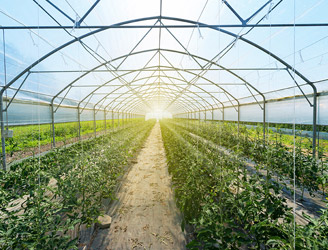




Experts in any field will tell you that “times are changing,” but it’s particularly true when discussing the greenhouse industry. Heading into 2025, the industry and its professionals are facing uncertainty and unknowns, while at the same time integrating new practices and technology into their workflows to create a more efficient and sustainable future.
Greenhouse growing is, in many ways, designed to address concerns regarding food supply, resource scarcity, and sustainability. As we embark on a new year, this represents an opportune time to look closer at trends taking hold in the industry and how they will shape greenhouse growing in the years ahead. Doing so will not only educate clients, but also help brokers better prepare them for potential risks and challenges to their business.
While there’s optimism for greenhouse operations, with some agencies forecasting an industry valuation of $51 billion USD by the end of 2025 (and steady growth through 2030), the latest trends in greenhouse growing are intended to solve pressing problems.
Let’s look at what’s percolating in the industry and how brokers can support clients through these changes.
Uncertainty and optimism coexist with horticulture heading into 2025
Industry-wide motivation to keep innovating and find new ways to grow efficiently and effectively remains high. There are, however, key questions that need answered (or clarified) in the short term – particularly as it relates to the incoming presidential administration led by Donald J. Trump.
Will proposed tariffs impact the cost of goods, including greenhouse-grown crops? Will energy costs be affected by new legislation? Farming technology and smart farming practices are widely viewed to be leading us into the future, but the residual effects must also be considered; commercial insurance costs continue to rise and as greenhouse businesses take on more (with rising demand), clients still must be properly and adequately covered.
When discussing insurance options with greenhouse clients in 2025, brokers should be aware of the latest trends affecting the industry.
3 key trends that will impact greenhouse businesses in 2025
Brokers should be prepared for a decent amount of change in the greenhouse industry, and knowing what lies ahead will help better educate and prepare clients.
What insurance coverages might they need if they’re starting fresh with a new policy? Based on what we know about these new trends, should a client’s current coverages be adjusted?
These questions can be answered confidently by understanding the potential for change in 2025 as it pertains to your clients’ line of work.
The rise of artificial intelligence (AI) in growing
“Automation” is a big word in the greenhouse industry and it is one way experts believe lofty production goals can be achieved. Severe weather events (which we’ll cover in a moment) and a changing climate have placed a high priority on elevated production, and that requires efficiency that artificial intelligence (AI) and automated growing technology can provide.
Clients should have a comprehensive, custom insurance policy that protects emerging technology like automation and farming.
An emphasis on year-round growing
Climate change has had a major impact on the greenhouse industry, and severe weather events are on the rise. The National Oceanic and Atmospheric Administration (NOAA) calls these events “billion dollar events,” and there were 24 in 2024 including severe storms and wildfires. In the five years prior, the U.S. averaged 20.4 events per year.
As a result, year-round growing is a point of emphasis in 2025 and beyond. Greenhouse business must be prepared – from a resourcing and staffing perspective – to support a constant growing cycle in order to meet food supply demands.
Brokers must address client risk with insurance coverages that are tailored to their specific region, the size of their workforce, and equipment that requires routine maintenance to operate year-round.
Vertical farming is the future of greenhouses
Sustainability is among the hottest topics in greenhouse farming, and it’s directly tied to energy efficiency. The big question being: how can a larger volume of crops be grown year-round while also being more sustainable and conscious of energy consumption?
It’s a loaded question, but one that can be (at least partially) addressed by vertical farming. Vertical farming is sustainable farming, optimizing the usage of resources through technology and sustainable growing practices. More crops, less energy.
A significant number of businesses are expected to shift to vertical farming in 2025, but not all businesses have insurance that covers vertical farms. GrowPro is the industry standard that protects a wide range of horticultural operations, including vertical farming, hydroponic farms, greenhouses and nurseries.
GrowPro meets the moment for horticulture and greenhouses
Brokers should regularly assess their clients’ coverages and make sure they’re aligned with current risks. For example, if severe weather events have increased in their area, it may be worth adjusting their business interruption insurance if risk levels have heightened.
GrowPro is the right insurance partner at the right time for clients in the greenhouse industry. GrowPro provides expert guidance on greenhouse insurance coverages and risk control, and conducts a proper valuation of your client’s operations, property, and equipment.
To learn more about GrowPro or speak to a member of our team, please complete the form.

