





“Wet conditions, reduced visibility, and unpredictable temperature swings can increase liability and workers’ comp risks for tree care pros during the fall months. To protect against these risks, tree service businesses should take a two-pronged approach, promoting a risk-smart culture focused on prevention and carrying specialized tree care insurance coverage for the unexpected.”
– Tim Greifenkamp, TreePro Program Manager
Fall cleanups are some of the most popular services for arborists and landscapers. But as the days grow shorter and temperatures start to drop, tree care businesses face a new set of challenges that can increase the risks of injury, property damage, and workers’ compensation claims. Conventional contractor liability insurance is a great starting point for arborists, but it won’t address all autumn tree service insurance risks. However, comprehensive business insurance for tree care companies can extend coverages to protect businesses and workers from risks that span all four seasons. So whether you’re a broker looking to support landscaping clients and prospects with guidance or you own a tree care company, understanding the relevant risks and regulations can help put your business in the best position to succeed.
Key Liability & Workers’ Compensation Risks for Arborists
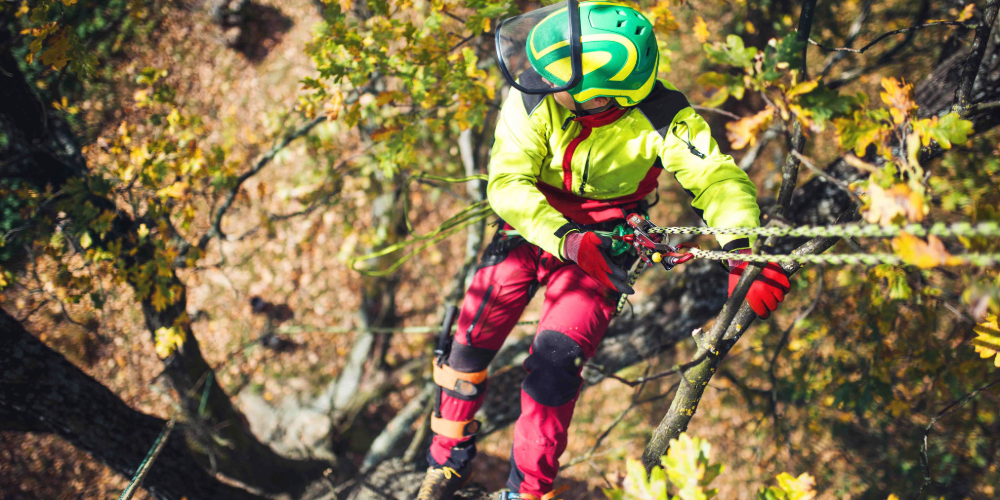
Landscaping and tree care carries significantly higher risks than the all-industry average, with workers regularly facing a variety of hazards. This physically demanding work requires professionals to operate at high elevation and in tight spaces, circumventing utility lines and other obstacles while using dangerous machines. And for landscaping businesses, liability risks run high, too, including property damage, personal injury, and environmental harm. When performing fall cleanups, here are some key liability and workers’ comp risks to look out for.
Workers’ compensation risks
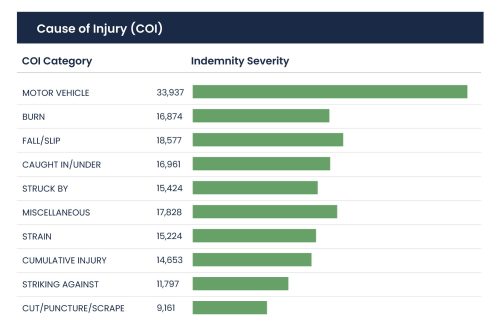
- Slips, trips, and falls: Slips, trips, and falls are among the most common workers’ comp claims not only for tree care professionals but also for workers of other industries. Since arborists often find themselves high in tree canopies, fall rates for tree care workers are significantly higher than those of other industries. In addition, when autumn weather introduces fallen leaves and limited visibility, slips and trips may be more likely to occur during fall cleanups.
- Electrocution: The combination of wet conditions and reduced visibility in autumn can increase the risk of electrocution for arborists. And since fall is typically when large trees or branches are removed, tree care workers might find themselves work around power lines more often during this season.
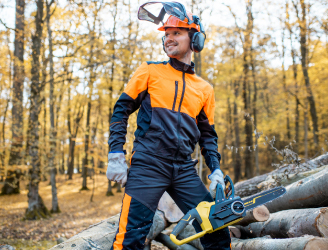
- Contact with equipment: Tree care work regularly requires arborists to operate hazardous equipment such as chainsaws and pole saws, which can increase the risk of lacerations and other serious injuries.
- Auto and traffic accidents: Auto and traffic incidents are sometimes overlooked as a workers’ comp risk, though they pose a serious threat to tree care workers. These include both collisions and struck-by incidents involving passing traffic.
- Overexertion: Overexertion is the most common workers’ comp claim for landscapers and tree care workers. It can result in strains, sprains, and other injuries that can sideline tree care workers for weeks or months.
Liability risks
- Falling trees, branches, and debris: Fall cleanups often include major pruning jobs on larger trees. As a result, there’s an increased risk of falling trees, branches, and debris causing damage to client and third-party property, as well as injury.
- Errors and omissions: Failing to identify hazards, inadvertently removing a healthy tree, improperly pruning, or incorrectly applying pesticides are all potential liabilities to arborists that can be categorized as errors and omissions.
- Damage to utility lines: Tree branches and roots are often enmeshed in utility lines, creating a high-risk challenge for arborists. If an arborist accidentally damages a power or gas line, it could result in costly liability claims and potential fines.
A Hypothetical Case Study: The Value of Preparation and Workers’ Comp
A New Jersey-based tree care company is hired to remove a sick maple tree in a suburban area. Though the company has one of its most seasoned climbers on the job, a light drizzle has created a new risk, and the sun has just started setting, with visibility quickly on the decline. The arborist successfully ties off a piece of the tree and is just about to make a cut when he loses his grip on his chainsaw, dropping the machine and lacerating his arm in the process. The worker is taken the local hospital where he receives stitches, and the claim is covered and quickly resolved by the company’s workers’ comp policy. Fortunately, since the company created a generous landing zone at the site, the chainsaw fell within that space, avoiding injuring any bystanders or damaging any property.
The Role of Arborist Liability Insurance and Arborist Accident Coverage
While taking precautions is the best way to minimize liability and workers’ comp risks, accidents are sometimes unavoidable. That’s why arborists should always protect their businesses with seasonal tree care workers’ comp and liability coverage. As a higher-risk industry with a diverse set of risks to consider, tree care demands a two-pronged approach that focuses both on a risk-smart company culture and a robust risk management program.
To Protect Against the Unexpected, Trust TreePro
When the unexpected occurs, liability and workers’ comp for tree service businesses can help protect arborists from countless risks. NIP Group’s TreePro arborist risk management program offers comprehensive coverages designed to address the risks specific to tree care work, from auto pollution liability to pruning, spraying, and snow removal. For brokers and businesses seeking more flexibility and customization, WorkCompEdge provides monoline workers’ comp coverage, with specialized protection for tree service work and other high-hazard industries.
Visit the TreePro web page today to submit your accounts or speak with an expert.
Safety Preparation Checklist: Workers' Compensation Fall Cleanup Jobs