








“To sustainably scale their operations and capitalize on industry growth opportunities, greenhouse businesses must protect their structures, systems, equipment, and employees — that’s where specialized insurance and advanced risk controls come into play.”
– David Macari, GrowPro Program Manager

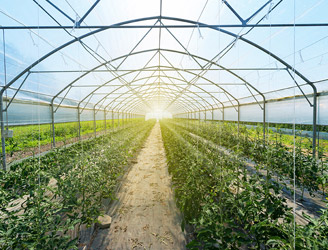
As financial constraints and unpredictable weather continue to complicate traditional farming, more growers are turning to greenhouses and nurseries. The commercial greenhouse market, once considered niche, is now expected to more than double in size to nearly $88 billion annually by 2033. Driven largely by advances in technology, the greenhouse market’s impressive growth trajectory comes with tremendous opportunities for growers. But these opportunities — like most others — are also accompanied by new and increased risks. For brokers aiming to build a portfolio of thriving greenhouse and nursery businesses, there’s no substitute for understanding their unique needs and offering them access to specialized risk management solutions.
Greenhouse Businesses: Unique Risks, Unique Solutions
The modern greenhouse is becoming significantly more energy- and cost-efficient, helping growers better control the environment and increase yields. However, this control comes with a high upfront cost, especially compared with traditional farming. For example, a fully outfitted greenhouse can cost upwards of $40 per square foot, which doesn’t include the cost of leasing or buying land. Farmland, on the other hand, costs an average of $4,080 per acre (43,560 square feet). These costs present growers with a unique set of significant risks that demand specialized insurance and expertise.
In addition to the costs of replacing greenhouse and nursery structures and equipment, indoor farms may be more susceptible to losses related to employee injury, the spread of disease or pests, and cyberattacks. An effective greenhouse risk management plan starts with recognizing the specific perils facing greenhouse and nursery owners, and in offering the guidance and tailored insurance products to successfully manage these risks.
The Value of Risk Control
To sustainably scale, growers should focus at least as much on greenhouse loss prevention as they do opportunities to expand. Unfortunately, 83% of executives focus on business growth, which often comes at the price of proper risk management.
Greenhouse business risk control goes beyond reactive efforts to protect the business. To maximize risk controls, growers should establish rigorous workplace standards and promote a safety-first culture where workers proactively identify and mitigate risks.
Risk Control Practices for Greenhouses and Nurseries
As a broker, you can help protect your clients by serving as a greenhouse safety consulting expert and providing them with customized commercial greenhouse insurance.
1) Improving Workplace Safety
Workplace safety in agriculture is one of the top concerns for greenhouse, nursery, and traditional growers. Though the extent and severity of injuries can vary widely, musculoskeletal injuries, falls, and contact with equipment, pesticides, or hazardous materials can leave employees sidelined and potentially lead to costly workers’ compensation claims. To improve workplace safety, create a safety training program for all new hires, always use protective equipment, label everything clearly, implement strict protocols, maintain a clean workplace, and conduct regular safety audits.
2) Protecting Crops
Risk mitigation in agriculture can take many forms, but for greenhouses and nurseries, it usually means protecting crops from harsh climates, pests, diseases, and contaminated water or nutrients. Risk control techniques to help prevent unnecessary crop losses include monitoring and periodically testing the water supply, regularly cleaning, monitoring crops for signs of disease or infestation, and investing in temperature control equipment and upgrades (e.g., smart thermostats, advanced ventilation systems, lighting, curtains).
3) Strengthening Cybersecurity Controls
Source: https://www.fortra.com/resources/guides/fortra-state-cybersecurity-survey-results
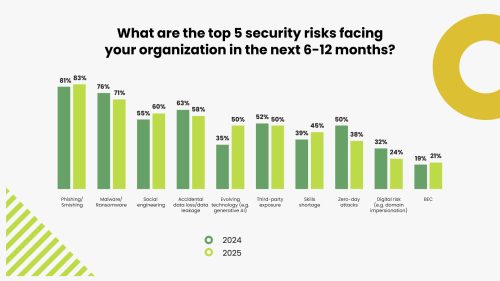
Cybersecurity risk consistently ranks among the top concerns for business owners. One of the best ways businesses can shore up their defenses against cyberattacks is to educate employees and increase awareness. According to Infosecurity Magazine, 95% of data breaches in 2024 were caused by human error, which means that with proper training, greenhouse business owners can significantly reduce the risk of falling victim to a cyberattack. Cybersecurity risk controls include employee training, securing and backing up all data, regularly updating software on all company devices, using strong passwords, and installing anti-virus software.
4) Preventing Property Damage
Greenhouses and nurseries are only as good as the structures and equipment that support them. A greenhouse insurance risk assessment might reveal property risks such as fire, susceptibility to weather-related damage, physical security, and environmental controls. With proper planning, greenhouse and nursery owners can help prevent property damage by regularly inspecting glass panels, frames, and plastic covers; installing perimeter security systems and lights; maintaining proper ventilation; and removing snow and ice.
Risk Controls at Work: A Hypothetical Case Study
A greenhouse owner in Pennsylvania had heard about a winter storm making its way up the coast. To prepare for the snow and ice, the owner activated the company’s winter emergency procedures, which included constantly monitoring the situation, opening the energy curtains to the greenhouse, and turning on the heat pipes. In addition to the preventive protocols, the owner also made some modifications to upgrade the greenhouse’s structural integrity after a safety audit found some weak points. When the storm hit, it caused damage to multiple other greenhouses in the area, but thanks to the owner’s robust risk control strategies, the greenhouse and crops were completely safe.
GrowPro’s Support Beyond the Policy
While risk controls and mitigation techniques are the best way to reduce claims risks, accidents can still occur. When they do, your grower clients and prospects will want to have the tailored coverages and expertise of the greenhouse industry specialists. With better horticultural coverage by design and countless online resources to promote safer greenhouse management, GrowPro empowers you and your clients, so you can comfortably focus on building your businesses.
Ready to take the next step? Submit your accounts online today or speak with an expert to learn more.
Recent OSHA Updates for Greenhouses and Nurseries
Greenhouses and nurseries are generally subject to OSHA standards for agriculture rather than its standards for landscaping. Remember, while OSHA standards are federal law, greenhouses may also have to comply with state and local laws and building code and, if in doubt, should always exercise extra caution. Though OSHA standards may change at any time, here are two important updates that could affect greenhouses and nurseries.
- As of January 1, 2024, businesses that fall under the greenhouse, nursery, and floriculture production industry (and have 100 employees or more) must submit case-specific information on OSHA Forms 300, 301, and 300A (annual summary). Businesses should submit these forms by March 2 of the following year using the Injury Tracking Application.
- In July 2024, OSHA formally released a new proposed standard (29 Code of Federal Regulations 1910.148) that would require employers to develop a heat illness and injury prevention plan and a heat emergency plan. Other provisions of the proposed standard include additional breaks and employee monitoring systems to help workers identify signs of heat illness.

