











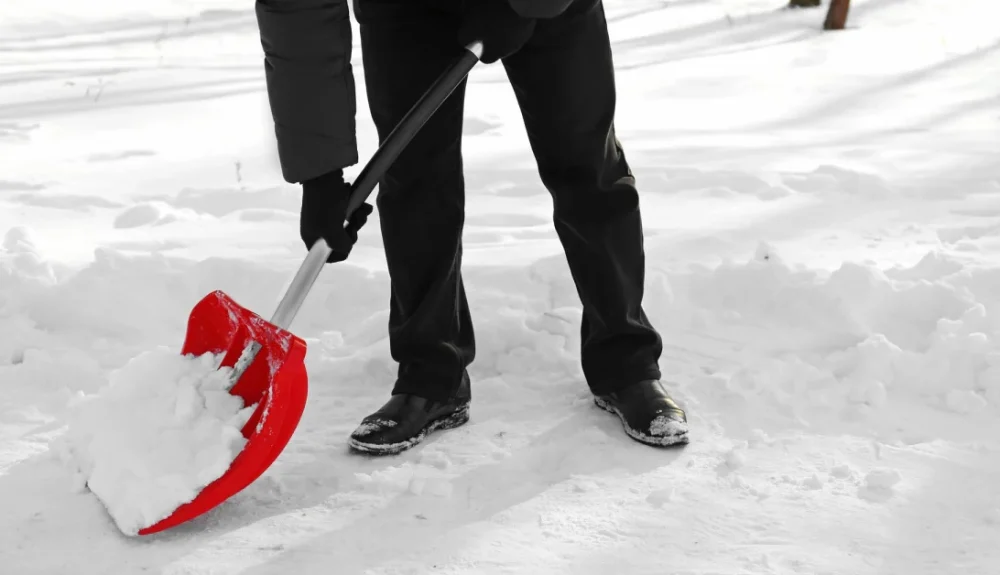
Summary:
- Vague terms in a snow removal contract leave contractors exposed once a storm hits.
- Clear scope and pricing turn a contract into real protection, backed by strong liability language.
- This guide breaks contract prep into six practical steps you can follow in order.
On February 23, 2026, a powerful nor’easter buried the Northeast in snow. Central Park measured 19.7 inches in a single storm, among the heaviest snowfalls in city history. Roads closed, and deliveries stalled across several states. Property managers scrambled to confirm which crews were obligated to respond, and many contracts gave them no clear answer.
That kind of gap has more room to hurt you as the market gets crowded. The U.S. snowplowing industry is valued at $23.0 billion in 2025. More than 114,000 businesses now compete for commercial snow accounts nationwide. With that many providers competing, precise contract terms decide who wins renewals.
A snow removal contract needs trigger depth and response times defined clearly before a storm tests them. This blog walks through six steps to build one that holds up when it matters.
Must Read: Commercial Snow Removal Operations: How to Prepare Your Business for Winter Liability
What Should Every Snow Removal Contract Include?
A generic template will not hold up in a real storm. Every snow removal contract needs sections built around how your crew operates. The six steps below walk through what belongs in each one, and why it matters once a storm hits.
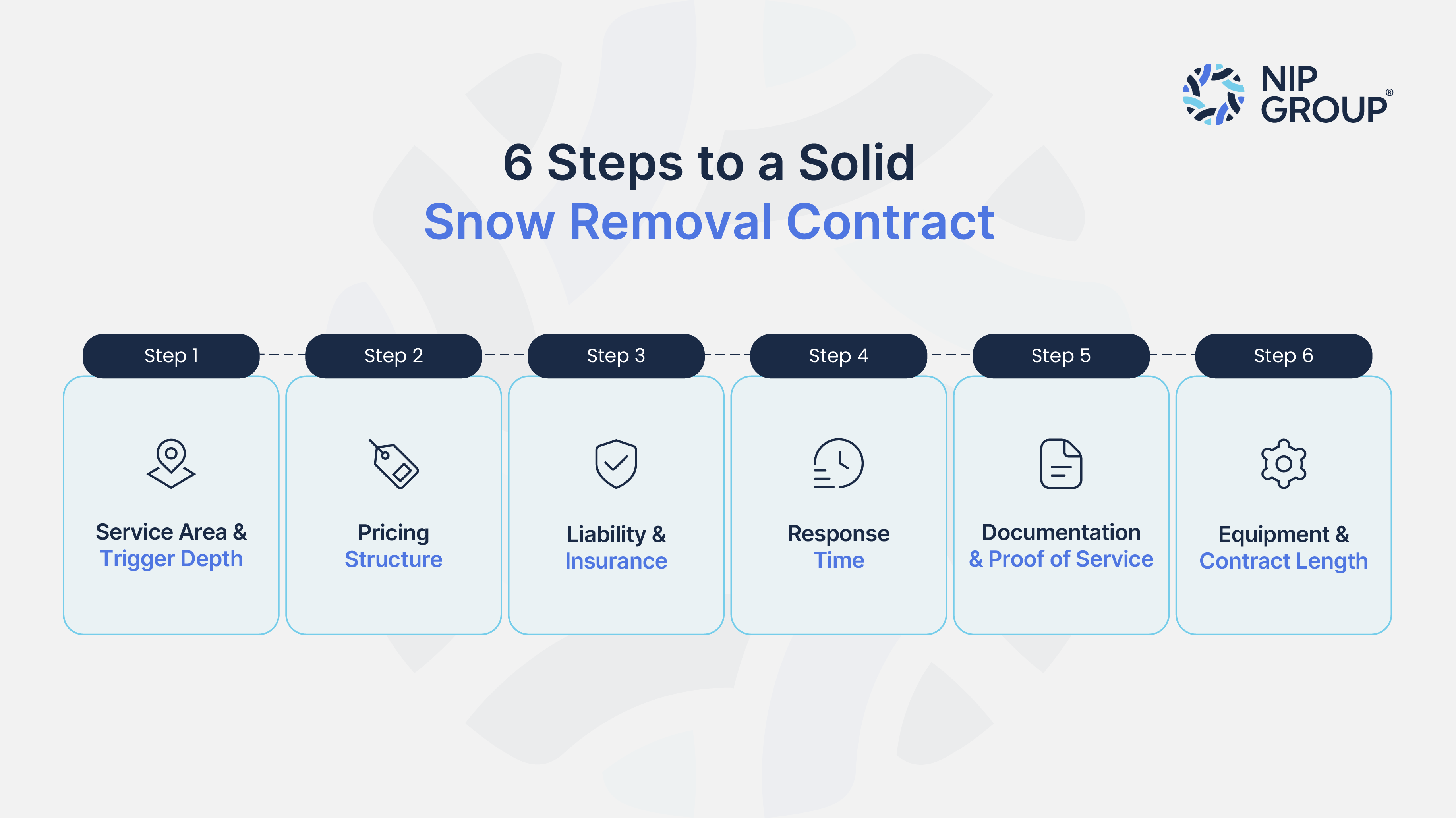
6 Steps to a Solid Snow Removal Contract
Step 1: Define the Service Area and Snow Trigger Depth
Start by mapping out the exact service area your crew will cover. This single detail causes more disputes than any other clause in a snow removal contract. List every lot, sidewalk, or entrance the agreement includes. Note property lines clearly if the site borders another business. Crews often clear beyond the agreed boundary without meaning to.
Trigger depth also works alongside the service area. Most contracts for snow removal services trigger service between one and two inches of accumulation. This number tells your crew exactly when to roll out. It also protects you from clients who expect service after a light dusting that never reaches the trigger point. Spelling out both details keeps everyone working from the same expectations.
Step 2: Choose a Pricing Structure
Pricing shapes nearly every other clause in snow plowing contracts. So the model you choose sets the tone for the rest of the agreement. Two models cover most commercial work.
- Per-push billing: It charges for each visit during a storm, which suits properties with unpredictable foot or vehicle traffic.
- Seasonal snow removal contract: It works differently, setting one flat rate for the entire winter. Clients get a predictable cost regardless of snowfall totals.
Zero tolerance snow removal often gets treated as a third model, but it is really a trigger threshold. Contractors usually pair it with per-push or hourly billing, since even light snowfall calls for a visit under this standard.
Pricing for snow plowing itself comes down to a few factors. Lot size drives the number first, since larger properties take longer to clear. Snowfall frequency in your region and local labor costs shape it further. Whichever model you land on becomes part of the snow removal contract language your client signs. So write it in plain terms that match how you bill.
Step 3: Build In Liability and Insurance Requirements
This step protects your business the moment a storm goes wrong. As the contractor, you carry the insurance behind every promise in the contract. Your snow removal contract should spell out exactly what that coverage includes.
Start with the risk your trucks face during every dispatch. A storm sends your crew onto the same roads it just made dangerous. Snowy and icy conditions cause more than 1,300 deaths each year in the United States. They also cause over 116,800 injuries annually. That risk is exactly why landscaping business insurance needs to cover your fleet.
With that risk covered, your insurance requirements section should spell out the rest clearly:
- General liability limits your business carries, so the client knows what’s protecting their property
- Additional insured status, naming the property owner on your policy
- Indemnification terms, spelling out how third-party claims get handled between you and the client
- Workers’ compensation proof, confirming your crew is covered on every route
- Certificate of insurance, provided to the client before work begins
Each line here does one job. It shows your client that your coverage backs up every other clause in the contract.
Step 4: Set Response Times and Communication Protocols
Response time clauses set expectations before the first snowfall arrives. They tell clients exactly how fast your crew responds once a storm starts. Set a maximum response time tied directly to the trigger depth being reached.
Add after-hours or emergency contact steps for storms outside business hours. Include the notification process you will follow if weather delays service. Put these response and communication details directly into the snow removal contract. A documented response window protects you if a client disputes timing later.
Step 5: Add Documentation and Proof-of-Service Terms
Documentation is your strongest defense if a claim ever surfaces. Timestamped service logs prove exactly when your crew was on-site. Photos of lots and walkways, taken before and after clearing, support that record. GPS or telematics data adds a further layer, showing when equipment arrived and left.
Proof-of-service terms turn that evidence into a contract requirement. State that each visit must be logged and shared with the client within a set window. Attach logs and photos to invoices, so payment and proof travel together. Build these requirements directly into your snow removal contract template. Proof-of-service then becomes routine.
Must Read: Snow Hauling Services vs Snow Removal: What Contractors Should Know
Step 6: Cover Equipment, Subcontractors, and Contract Length
Contracts for commercial snow removal often run longer than residential agreements. Equipment and staffing details belong in the contract just as much as pricing does. State clearly whether your equipment is owned or subcontracted for the season.
Add a backup equipment plan in case a plow or spreader breaks down mid-storm. If you use subcontractors, match their insurance requirements to your own limits. State contract length and renewal terms as well, so both sides know when the season ends. Clear terms here prevent coverage gaps mid-storm and simplify renewal each fall.
What Happens When Your Contract Outpaces Your Coverage?
A strong snow removal contract only works if your policy backs it up. Clients now ask for proof of coverage before they sign. A gap between your contract terms and your actual limits creates real risk. One uncovered claim can undo a full season of careful snow removal contract work.
LandPro closes that gap step by step.
- General liability covers the third-party injury and property claims your liability clause promises to handle.
- Commercial auto coverage protects the trucks and plows your response time depends on.
- Inland marine coverage protects equipment moving between job sites through the season.
- Workers’ compensation covers crew injuries on the same winter routes your contract lays out.
LandPro is also backed by A+-rated carriers. It means strong financial ability to pay claims when it counts. So, talk to your broker about LandPro or contact us today to walk through the coverage.
FAQs
1. What are common snow removal mistakes?
These mistakes turn into real snow removal risks once a storm hits:
- Vague trigger depth language: Leaves crews unsure when to plow and clients unsure when to expect service
- Missing documentation: Leaves no proof a visit happened if a claim comes in
- Underpriced contracts: Gives no room to cover labor and fuel once demand spikes
- No backup equipment plan: Stalls service the moment a plow breaks down mid-storm
2. What are some common challenges in snow removal?
Some common challenges that you might face include unpredictable weather and limited staffing once the first storm hits. Equipment breakdowns might also happen at the worst possible time. On top of that, client expectations around response speed often outpace what a small crew can deliver during back-to-back storms.
3. What is the difference between snow plowing and snow removal?
Snow plowing pushes snow aside to clear a surface. Snow removal goes further.
- It includes hauling snow off-site
- It covers de-icing and salting
- It often includes sidewalk and entrance clearing
Most commercial contracts cover both under one agreement.
4. What are the best snow removal strategies?
The best strategy starts before the storm even hits. Pre-treating lots ahead of time cuts down on ice buildup later. Once snow starts falling, plowing early and often also keeps snow from getting harder to clear.
You should also focus on entrances and walkways first, since that’s where slips and falls happen most. Smart route planning matters too. Tighter routes get your crew to every property faster. It counts most when multiple sites hit trigger depth at the same time.