










Summary
- Missed steps during a pool inspection are what quietly turn into liability claims later.
- A consistent, component-based checklist catches problems long before a client ever calls.
- This blog breaks down what to check, when to check it, and why it counts.
Florida already raised the stakes on every pool sale in the state. Senate Bill 244 took effect July 1, 2026. Any pool sold or transferred after October 1, 2026 must carry an approved safety feature. A compliant barrier or a pool alarm both qualify. Home inspectors must now report violations to local code enforcement.
For pool contractors, that means more calls before closings. Sellers want their pool checked before a home inspector ever sees it. A pool that fails at closing becomes a liability problem. That liability problem traces straight back to whoever serviced the pool last. That is where your own pool inspection habits come in.
So, this blog walks through the pool inspection checklist every contractor should be running. It also covers when to run each check and what happens when one of them gets missed.
Must Read: Pros and Cons of Swimming Pool Maintenance Service Business
What Is A Pool Inspection?
A state or local code inspector checks a pool against safety and health regulations. That happens once, tied to a permit, a remodel, or a property sale. As a contractor, you check pools on a different schedule. Code inspectors check a pool once. You check it every time you show up.
What you look for shifts with the job you’re doing. On a cleaning route, water chemistry and equipment performance need a close read, since both change with every visit. On a pool repair call, the focus narrows to whatever brought you there and whatever sits near it. A new build works differently. That inspection happens before the client ever swims in the pool.
None of this makes you a code enforcer. It makes you the person a client and an insurer both rely on to catch small things early. A loose drain cover will not fail the day you spot it. Left alone, it can fail weeks later, after other contractors have been on site. When that happens, the first question is who serviced the pool last. Your swimming pool inspection records answer it.
What Does a Complete Pool Inspection Checklist for Contractors Include
A dependable pool inspection checklist follows the same order every time, so nothing gets skipped on a busy route. However, a checklist can’t stop every failure and that is where the right pool business insurance matters most. Coverage built for pool contractors covers the gaps a checklist cannot close. That holds no matter what kind of pool work you do.
So, here is what a complete checklist should cover, and why each item matters.
Structural and Surface Condition
Check the pool shell for cracks or discoloration. A small crack rarely causes trouble right away, but it can turn into a leak or a costly repair. Look at the coping and decking too. Movement or gaps there often mean the ground underneath is shifting.
Circulation and Filtration Equipment
Test the pump for odd noise or weak flow. A pump that runs louder than normal is often the first sign a part is wearing out. Check the filters and valves for buildup. Catch it early with a cleaning, or risk a failed pump next month.
Electrical and Bonding
Confirm GFCI protection on every outlet near the pool. This check matters most, since a shock hazard often hides with no visible sign. Check the bonding wires and grounding connections too. These are easy to miss on a quick pass. A failed connection here is one of the most dangerous items on the list.
Water Chemistry and Disinfection
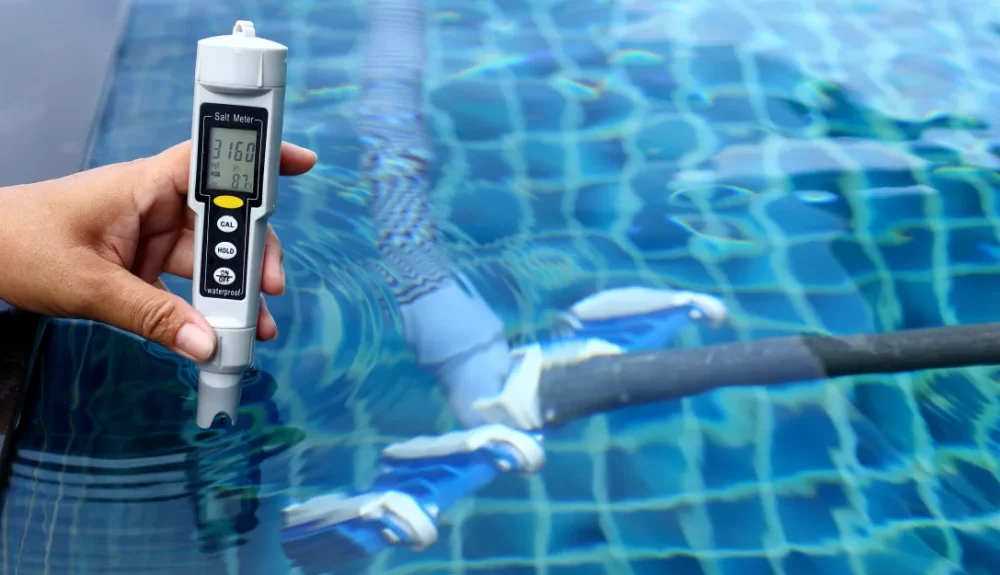
Test the chlorine, pH, and alkalinity levels. A sudden change usually points to equipment trouble, not the water itself. Compare the readings to your last visit. A slow drift over time often means the dosing needs adjusting.
Ladders, Rails, and Safety Signage
Check that ladders and rails are secure and free of rust. A loose handrail can turn into a liability claim before anyone reaches the water. Confirm required signage is posted and easy to read. A missing or faded warning sign carries no weight once a dispute starts.
Barriers, Covers, and Drain Compliance
Walk the fence line for loose posts or broken latches. A gap under four inches is a code violation waiting to be flagged. Confirm the drain covers meet current code. This step matters most, since entrapment risk causes some of the most serious pool claims on record.
Barrier checks deserve extra care on this list. A 2025 CPSC report found that 85% of pool and spa drownings among young children happen at home. That is far more than at public pools. Many of those cases trace back to a barrier or gate that failed to do its job. A missed latch or a propped-open gate is easy to overlook and hard to explain later.
Must Read: Shotcrete vs Gunite Pools: What Contractors Need to Know Before Choosing a Method
How Often Should Contractors Run the Pool Inspection Checklist
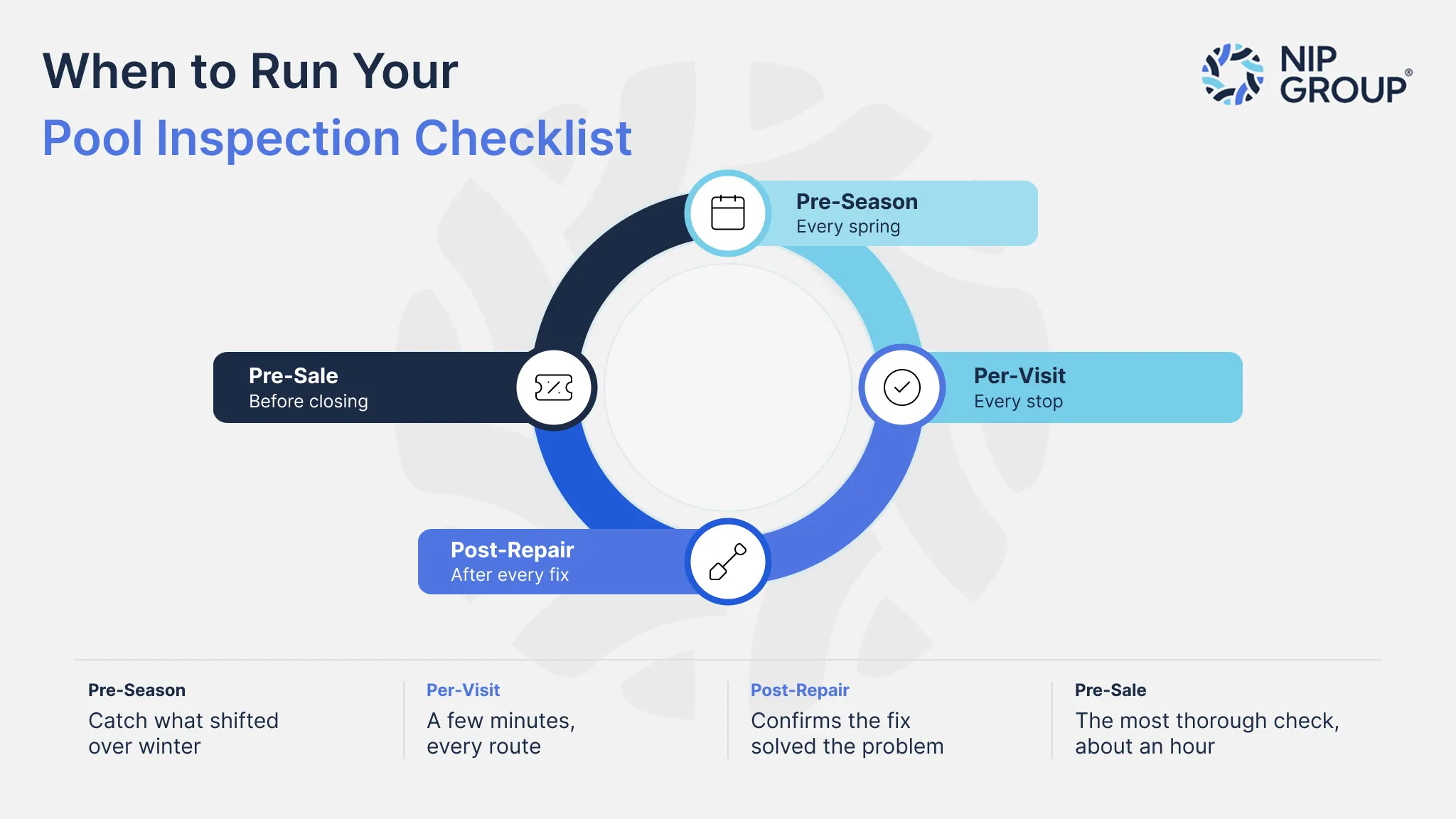
An inspection checklist works only if you run it at the right moments in the service year. Four points call for it.
When to Run Your Pool Inspection Checklist
- Pre-season inspection: Run a full inspection every spring, before your first service call. This is where you catch anything that shifted over the off-season.
- Per-visit check: A shorter version belongs on every route stop and takes only a few minutes. It catches a loose latch or a fading chemical balance early.
- Post-repair check: Run the checklist again right after any repair. This confirms the fix worked instead of covering up the issue.
- Pre-sale inspection: This is the most thorough version, and it takes closer to an hour. It matters most where transfer laws apply, like Florida’s SB 244, requiring a certified safety feature before sale.
So, how long does a pool inspection take? It ranges from a few minutes to about an hour, depending on which of these four you are running.
It’s worth noting that the demand for this kind of routine oversight is growing fast. The pool cleaning and maintenance services market grew from $26.77 billion in 2025 to $28.79 billion in 2026. That is a jump of 7.6%. That kind of growth means more clients relying on swimming pool inspection services to stay compliant. That brings SB 244 back into the picture for pre-sale work in Florida. Similar pool safety rules are spreading to other states too, which makes a consistent checklist worth building now.
What Happens When a Pool Inspection Step Gets Missed?
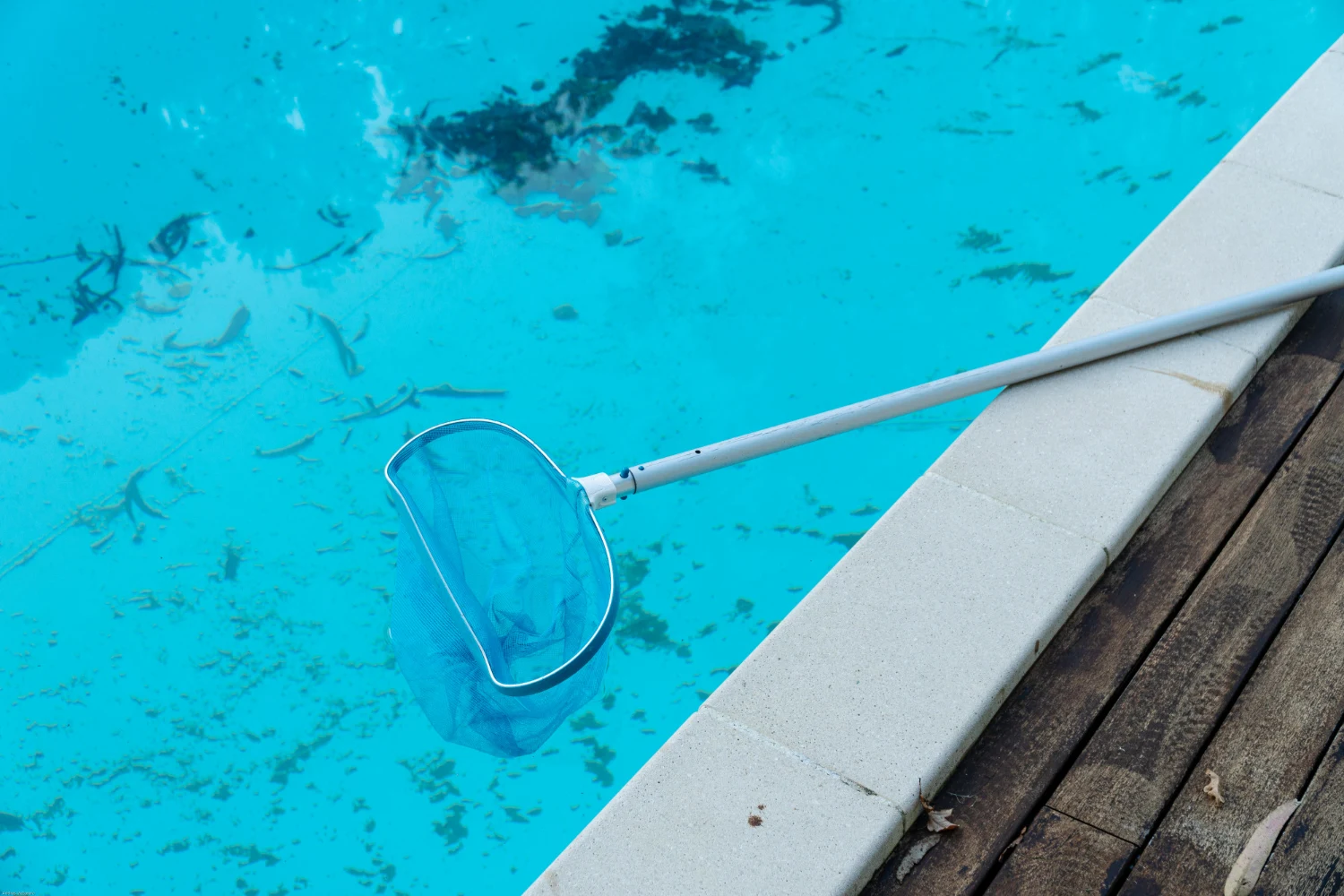
A skipped step on a checklist doesn’t cause trouble right away. Weeks later, a client calls about a chemical burn or a flooded electrical panel. The claim traces back to whoever serviced the pool last.
If your pool inspection notes are thin or missing, that conversation gets harder to win. A dated, itemized checklist changes that. It shows exactly what you checked and when you flagged a problem. That is often the difference between a defensible claim and a costly one.
Pool contractors carry exposures a generic policy was never built to handle. Chemical handling and completed operations claims often sit outside standard coverage. A pump replacement done today can surface as a leak claim next spring, long after the invoice is paid.
That gap is exactly where PoolPro fits. It is built for contractors running repair, and construction work. PoolPro covers general liability, workers’ compensation, contractors pollution liability and the equipment exposures specific to pool contractors. It is backed by A+ rating by A.M. Best. That means carriers with a superior financial ability to pay claims when they come in. Ask your broker to sign you up for PoolPro. Or, contact us directly to get your coverage sorted.
FAQs
1. What are the three C’s of pool maintenance?
The three C’s of pool maintenance are circulation, cleaning, and chemistry. Circulation keeps water moving through the pump and filter, so nothing settles or stagnates. Cleaning covers skimming and vacuuming, the physical debris removal no chemical can replace. Chemistry means balanced pH, alkalinity, or sanitizer levels, checked on a schedule.
2. What are the 5 rules in a swimming pool?
Most pools follow the same five basic rules, posted right at poolside:
- No running on the deck
- No diving in the shallow end
- Shower before getting into the pool
- No glass near the water
- Never swim without a buddy nearby
These rules exist to prevent injuries, and posting them clearly protects your clients and your business.
3. What are common pool maintenance mistakes?
A few mistakes cause more trouble than equipment failure:
- Estimating chemical levels instead of testing them each visit
- Overusing shock treatment instead of diagnosing a chlorine drop
- Ignoring a slow leak because the pool still looks full
- Running an old test kit without realizing it is off
4. What is a QC checklist?
A QC checklist is short for quality control checklist. It is a standardized list used to catch errors before a job is closed out. In pool service, that means confirming chemical readings and equipment status before you leave a site. It works the same way a pool inspection checklist does.