






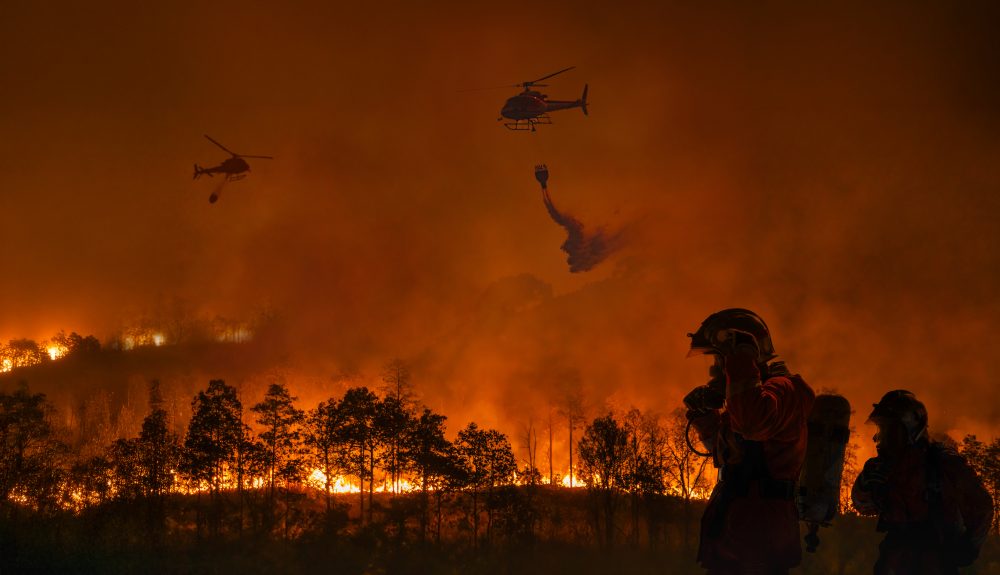
$250 billion. 17,000 structures destroyed. 205,000 evacuated. 28 dead.
The numbers from the 2025 Los Angeles fires are staggering, but here’s the number that matters most to tree service business owners: 72.
That’s how many hours it took for some companies to receive insurance payouts, while others are still waiting. The difference? They understood something critical about protecting their operations in today’s wildfire era. Let us show you what they knew.
The Evolving Landscape of Natural Disaster Risk
Before we dive into specific strategies, let’s understand what we’re up against. As a tree service provider, you’re in a unique position—you’re both the hero and potentially the victim when natural disasters strike.
And if you think that’s an exaggeration, consider this: what used to be manageable seasonal events have transformed into what industry experts are now calling “size by surprise” catastrophe—events that blow past all our previous planning and predictions.
You’re often working in high-risk areas, with expensive equipment (that’s somehow getting more expensive every year), where natural disaster impacts on the environment are the most severe.
Here’s the reality of what’s changed (and why your old playbook might need updating):
- Fires are moving faster than ever
- Remember when you could count on clear fire seasons? Those days are gone, and the impact of natural disasters on the environment is a year-round concern now
- The kicker? Those urban areas where you do most of your work? They’re increasingly becoming fire zones
- Emergency response protocols have completely transformed, meaning your old certifications might not cut it anymore
Insurance Essentials for Tree Service Companies
The insurance game has changed, and if you’re still running with traditional coverage, you might want to sit down for this conversation about tree service insurance after natural disasters.
Here’s what you need:
- Coverage that automatically extends when emergencies hit (because that’s exactly when you need it)
- Clear language about working in evacuation zones
- Specific mention of emergency equipment usage
- Coverage for rental equipment
Disaster Preparedness: Your Real-World Survival Guide
We’ve seen enough disasters to know that theory and practice are different beasts. Here’s what works:
Equipment prep:
- GPS trackers on all major equipment
- Mobile fuel storage (48-hour minimum)
- Satellite phones for each crew (because regular cells will fail you)
- Emergency PPE rated for wildfire conditions
Staff training:
- Annual hands-on wildfire behavior training
- Quarterly emergency response drills
- Cross-training for emergency equipment operation (because someone will be sick or unavailable)
- Regular updates on evacuation zone protocols
Mastering the Natural Disaster Claim Process
The moment disaster strikes, the clock starts ticking. Your actions in the first 72 hours can make or break your recovery. Here’s your action plan:
Immediate actions (First 24 hours):
- Photograph everything before moving or cleaning anything
- Document all emergency work requests and responses
- Track every hour of business interruption
- Keep all evacuation and return authorization notices
- Record all emergency communications with clients and authorities
Keep these documents ready:
- Weather reports from multiple sources for the incident period
- Proof of pre-existing equipment condition
- Employee time logs showing emergency response hours
- Fuel receipts and equipment usage logs during the event
- Client contracts that were impacted by the disaster
Pro tips for maximum recovery:
- Submit initial notice of loss even before you know the full extent of damage
- Use video walkthroughs with timestamps for large equipment
- Keep separate expense tracking for emergency vs. regular operations
- Document any communication with emergency services or authorities
- Track lost revenue opportunities with specific client information
Common mistakes to avoid when filing natural disaster claims
- Not documenting pre-existing conditions: Take weekly photos of all major equipment
- Missing business interruption opportunities: Track every canceled job and potential contract
- Poor expense segregation: Keep disaster-related expenses in separate accounts
- Inadequate proof of loss: Get third-party valuations for major equipment
- Late notification: Report potential natural disaster claims even if you’re unsure of the damage extent
Recovery: Beyond the Initial Natural Disaster Claim
Here’s your quick-response toolkit to keep handy:
- Digital damage assessment forms with geo-tagging capabilities—standardize your process by capturing damage type, severity, and GPS coordinates
- Drone tech for rapid surveys
- Pre-written client communications with situation-specific templates—create message templates for different scenarios (evacuation notices, service delays, emergency scheduling)
- Equipment rental agreements
Future-Proofing: Smart Investments for Tomorrow
Let’s talk about turning your business from vulnerable to virtually disaster-proof:
- Lines of credit with tiered activation—set up multiple credit lines that activate at different emergency levels
- Establish relationships with multiple suppliers in different geographic zones for each critical equipment category
- Regional mutual aid agreements
- Develop a clear emergency rate card that accounts for risk levels, equipment stress, and overtime—most companies use a 1.5-3x standard rate scale
- Advanced weather monitoring systems linked to your operational zones
- Staff certification program hierarchy—create a three-tier certification system (Basic, Advanced, Emergency Response) with clear pay incentives
A Partner When Nature Strikes
Running an arborist business is tough enough without having to become a disaster expert too. That’s exactly why we’re here.
We’ve spent 35 years working with tree care businesses, talking with operators like you, and learning firsthand what keeps you up at night. That experience? It’s built into every aspect of our TreePro program.
We’ve processed thousands of claims, seen what works, what doesn’t, and built something different.
What makes TreePro different?
- We actually pick up the phone when fires are approaching—24/7 emergency response isn’t just a buzzword for us
- We offer up to $25 million in protection for wildfire-prone areas because we know that’s where you need to work
- Our claims team knows the difference between a bucket truck and a boom lift—seems basic, but trust me, it matters when you’re filing a natural disaster claim
- We scale with you, whether you’re running one crew or twenty
When other tree service companies are still waiting on adjusters to return their calls, our clients are back out there serving their communities. Because that’s what this is really about—keeping you working when your community needs you most.
Ask your insurance broker to sign you up for TreePro by NIP Group today.
FAQs
Q: Do I qualify for additional relief beyond insurance if I’m a subcontractor?
When learning how to claim natural disaster relief, many subcontractors don’t realize they have multiple options. Document all contracts that were affected by the disaster, including postponed or canceled work. You may be eligible for both FEMA assistance and state-level disaster relief programs, even if you’re also filing an insurance claim. Keep detailed records of both direct losses and lost business opportunities.
Q: Does insurance pay for tree removal after a storm if I’m working as a subcontractor?
It depends on your contract and insurance setup. If you’re a subcontractor, make sure you have your own coverage—don’t rely on the general contractor’s policy. Most storm damage work requires specific endorsements on your policy.
Q: How long do I have to file a natural disaster insurance claim?
While most policies give you 1 year, here’s a pro tip: File within 24-48 hours. The longer you wait, the harder it gets to prove the damage was disaster-related. Plus, quick claims often get processed faster.
Q: I’ve heard getting Tree Service Coverage for Natural Disasters is getting harder. Is that true?
Yes, but here’s the workaround: Build a solid safety record, document your disaster response protocols, and consider higher deductibles in exchange for better coverage. Insurance companies love seeing businesses that take prevention seriously
Q: What’s the biggest impact of natural disasters on the environment that affects my liability?
Soil instability is the silent killer here. After fires or floods, trees that looked stable can become hazardous without obvious signs. Always document soil conditions before starting work in disaster zones—it could save you from a major liability headache