








Summary
- A protective system that does not suit the soil can collapse on your crew.
- Matching each system to soil and depth keeps crews safe and jobs on schedule.
- This blog compares trench shoring methods for utility work and their effect on claims.
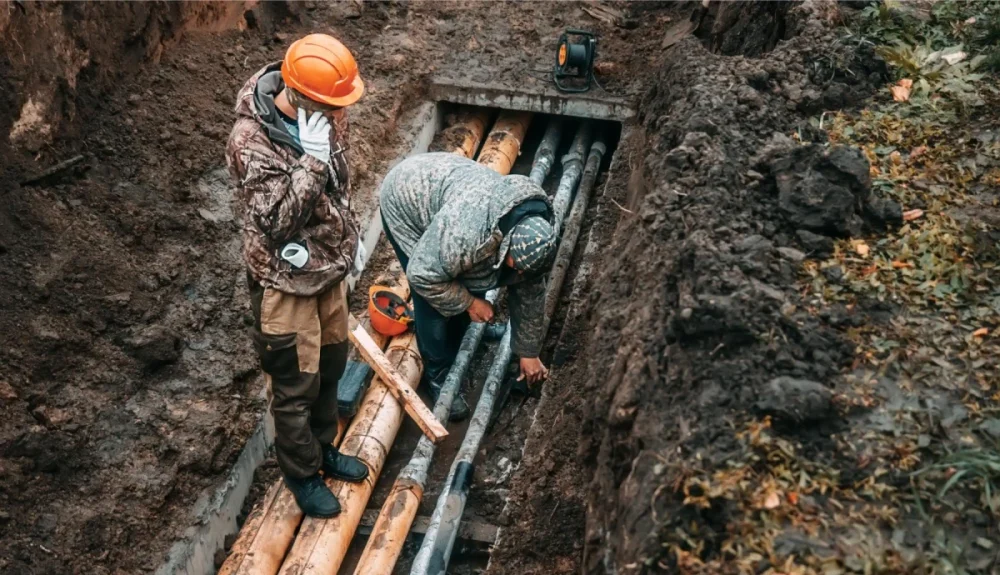
The right trench shoring for a utility job comes down to the soil you dig in and the trench depth. A mismatch can bring the walls down with your crew inside. Regulators take that risk seriously, and recent numbers show why. In a June 15, 2026 release, Cal/OSHA reported about 90 trench safety violations from 2021 through 2025.
The agency tied those violations to worker injuries and fatalities. It is also investigating two fatal collapses in Los Angeles County this year. Because of cases like these, inspectors check whether your system fits the soil and depth of each trench. If it does not, your crew must leave the trench until the problem is fixed.
So, choosing the right system before the first cut lowers the risk of a cave-in and a shutdown. In this blog, we compare the main trench shoring methods for utility jobs and when each one fits. We also cover how that choice affects your claims and coverage if a trench fails.
Must Read: The Essential Lineman Tools and Equipment Every Utility Crew Should Carry
What Does OSHA Need Before Your Crew Enters a Trench?
OSHA expects you to know its depth and the soil around it. Depth sets the first rule. Once a trench reaches 5 feet, it needs a protective system unless it is cut into solid rock. Past 20 feet, a registered professional engineer must design that system.
For shallower trenches, a trained crew member, called the competent person, decides whether the walls need support. They inspect the trench before each shift and again after any rain. If the walls look unstable, they can pull everyone out.
Soil type sets the second rule, and OSHA sorts it into three types, from strongest to weakest:
- Type A: This includes stiff soil, like hard clay that holds its shape. Ground that was dug before or shakes from traffic cannot be rated Type A.
- Type B: Medium-strength soil like silt falls here, along with most ground dug before. That includes many street cuts over old utility lines.
- Type C: This is the weakest soil, such as sand or gravel, and its walls can cave in easily. Any soil with water seeping into it also counts as Type C. Your protective system has to do the most work in this soil.
Which Trench Shoring Systems Work Best for Utility Jobs?
The best system is the one that fits the trench in front of you. Most utility crews work with four trench shoring systems and switch to sloping when the site has spare room. Insurance companies care about this choice when they review your utility contractor insurance. It shows them how you protect crews below grade.
1. Trench Shielding
Trench shielding suits long, straight pipe runs where the crew keeps moving down the line. The shield is usually called a trench box. It’s a steel or aluminum frame that guards the workers standing inside it. What it won’t do is hold the trench walls up. Soil can still slide in around the outside.
On a typical main run, your excavator pulls the box forward after each pipe length goes in. The crew moves up with it. Before the box is lifted or dragged, everyone has to be out of it.
2. Hydraulic Shoring
For narrow trenches, like a gas service or water line, hydraulic shoring is usually the fastest setup. Each shore is an aluminum cylinder that pushes out against both walls. Your crew places and pulls them from the top, so no one climbs into an unprotected cut.
Must Read: Hydro-Jetting Mishaps and Broken Lines: The Specific Risks Sewer Cleaning Crews Face
3. Slide Rail Systems
Slide rail systems are built for cuts that are too big for a box or hydraulic shores. As your utility crew digs, steel panels slide down between vertical rails. The walls are supported the whole way down. These systems earn their setup in three types of jobs:
- Deep, wide cuts: Panels can be stacked to support trenches that a standard box can’t handle.
- Work near roads and buildings: Support goes in as the soil comes out, which keeps nearby pavement and foundations from shifting.
- Utility crossings: The open frame leaves room around existing pipes and cables.
4. Timber Shoring
Timber shoring fits odd shapes that standard equipment cannot, like the dig around a manhole. Your crew builds it by hand from lumber, following OSHA’s sizing tables. That takes time, so most crews save it for short jobs.
5. Sloping and Benching
Sloping and benching protect a trench without shoring when there is open land around it. Your crew cuts the walls back at an angle or in steps, so they are less likely to cave in.
The weaker the soil, the gentler that angle has to be. In loose Type C soil, for example, each wall reaches back 1.5 feet for every foot of depth. So on a 6-foot trench, each wall ends about 9 feet back from the bottom edge. Rural rights-of-way usually have that room, but city streets rarely do.
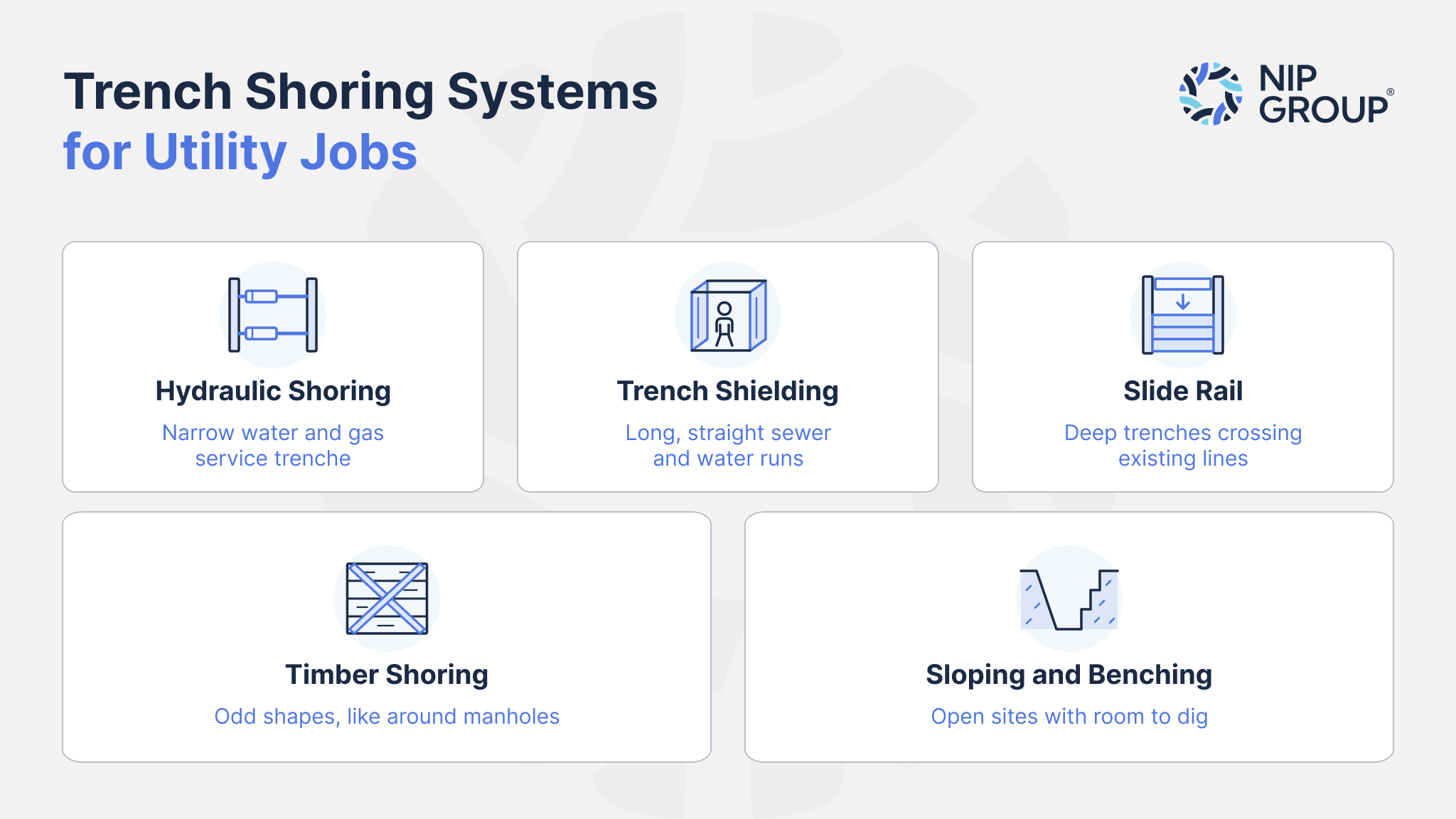
Trench Shoring Systems for Utility Jobs
How Do You Choose the Right Trench Shoring for Each Job?
Choose your trench shoring in two steps. First, match the system to the soil and depth, then check that it suits the site. The table below covers the first step.
| System | Best fit for utility work | Watch-outs |
| Hydraulic shoring | Narrow service cuts and valve repairs | Needs sheeting in loose soil |
| Trench shielding | Long water and sewer main runs | Walls can still cave around the box |
| Slide rail | Deep cuts and crossing utilities | Higher setup cost and heavier equipment |
| Timber shoring | Odd shapes around manholes and vaults | Slow, labor-heavy installation |
| Sloping and benching | Open rights-of-way with spare room | Needs a wide dig in weak soil |
With your options narrowed, these site details settle the choice:
- Crossing lines: Live power or fiber lines running across the trench leave less room for shores. Slide rail or timber usually fits around them more easily.
- Groundwater: Water seeping into a trench weakens even firm soil, and OSHA treats that soil as Type C. You’ll need pumps and a system rated for wet ground.
- Crew training: Choose a system your crew has set up before because people work faster with fewer mistakes with equipment they know.
- Traffic and spoil: Heavy trucks rolling past can shake trench walls loose. Spoil piles add weight at the edge too, so keep them and your equipment at least 2 feet back.
- Rent or own: If your crews use a system every week, owning it pays off. For a one-off deep job, however, renting the right system is safer.
How Does Your Trench Shoring Choice Affect Claims and Coverage?
Your trench shoring choice affects how likely a cave-in is and how well you can defend a claim afterward. Trench cave-ins fall under the BLS category of collapse and engulfment, which claimed 80 lives in 2024, up from 73.
When a trench wall gives way, the damage rarely stays in one place. Each type of loss is picked up by a different coverage:
- Contract requirements: Utility owners write minimum insurance limits into their bids. Carrying the right limits keeps you eligible for that work.
- Crew injuries: Workers’ compensation covers medical bills and lost wages while your employee recovers.
- Equipment: Inland marine covers trench boxes and shores while they travel between job sites.
- Damage to nearby property: A shifting trench can crack a foundation or break a neighbor’s water line, and general liability handles that claim.
Carrying these coverages under one program keeps your renewals and claims in one place.
UtilityPro is set up this way for contractors on water, sewer, gas, power, and communication lines. It also adds commercial auto and property coverage, plus risk control support for safer digs. The insurance company behind the program is also rated A+ (Superior) by A.M. Best, so it is financially strong enough to pay your claims. Ask your broker to sign you up for UtilityPro. Or, contact us to learn how UtilityPro can protect your crews and your next utility job.
FAQs
1. What is the 5-4-3-2-1 trenching rule?
The 5-4-3-2-1 trenching rule is an easy way to remember key trench safety requirements:
- 5: Trenches 5 feet or deeper need a protective system.
- 4: Trenches 4 feet or deeper need a ladder or ramp for exit.
- 3: That ladder must extend 3 feet above the trench edge.
- 2: Spoil piles stay at least 2 feet back from the edge.
- 1: One competent person oversees the trench.
2. What can you use to protect a 5-foot trench?
You can protect a 5-foot trench with any approved system that suits its soil. Common choices include:
- Hydraulic shores for narrow service cuts
- A trench box for longer pipe runs
- Sloped walls when the site has room
Check the manufacturer’s data to confirm the system is rated for that depth.
3. What should be done if a trench is deeper than 20 feet?
If a trench is deeper than 20 feet, a registered professional engineer must design its protective system. That design has to be in writing, with a copy kept on the jobsite during the work.
4. What is the difference between trench shoring and shielding?
The difference between trench shoring and shielding is what each one protects. Shoring pushes against the trench walls to keep the soil in place. Shielding leaves the walls alone and protects the workers inside a box. If nearby lines or foundations must not shift, shoring is the safer choice.