










Summary
- A single utility strike can stall your project and pull in costly liability claims fast.
- Simple prevention habits, like confirmed locate tickets, help keep crews and schedules protected underground.
- This blog walks you through what causes a utility strike and how to stay covered against it.
If you work underground, you know the ground doesn’t forgive hunches. Most crews underestimate how much sits beneath a job site. Yahoo Finance reports that the United States runs on roughly 50 million miles of buried pipes, including cables and wires. That network runs beneath almost every site you work on, marked or not.
Moreover, damage incidents involving that network are not slowing down. The Common Ground Alliance data in the same report shows its national damage index reached 102 in 2025. It’s the highest score since the index began in 2022. That number came from 221,717 confirmed damage reports filed across the country last year. Each report traces back to one crew that broke ground before confirming what sat underneath.
Every utility strike on record started the same way. A crew started with a shortcut that felt harmless at the time. Skipping a locate call or trusting an old map are common examples. So, knowing what a strike costs you is the first step toward stopping one.
What Is a Utility Strike, and What It Costs You Afterward
A utility strike happens when your equipment contacts a buried line during excavation or grading work. Gas, electric, water, and fiber lines all sit in that path.
The line repair usually comes with a small bill. But everything that follows the strike can put these costs on your plate:
- Emergency repair fees billed straight to your company
- Service outages that cut off homes and hospitals or entire city blocks
- OSHA fines when gas or electric lines are involved
- A delayed schedule, since later tasks wait on the fix
- Injury claims if a worker was standing nearby
Each item on that list can show up on its own. Most times, they show up together. A single strike can pull your schedule and budget, including your safety record, in the same mess at once.
Must Read: Utility Arborist Fall Safety: Working at Heights
Where Most Utility Strikes Start
A utility strike usually traces back to a rushed or skipped step earlier in the job. The common breakdowns look like this:
- Skipping the 811 call because the dig seemed too small
- Breaking ground before locate marks are confirmed
- Relying on old utility maps instead of current tickets
- Poor communication between subcontractors on the same site
- Assuming a previous crew already cleared the area
These choices do not feel risky alone. However, when put together, they explain why utility strike numbers keep climbing.
Utility Strike Prevention Steps Worth Building Into Every Job
Good utility strike prevention comes down to a process your crew follows every time. So, these are the steps that the process should include:
Before You Break Ground
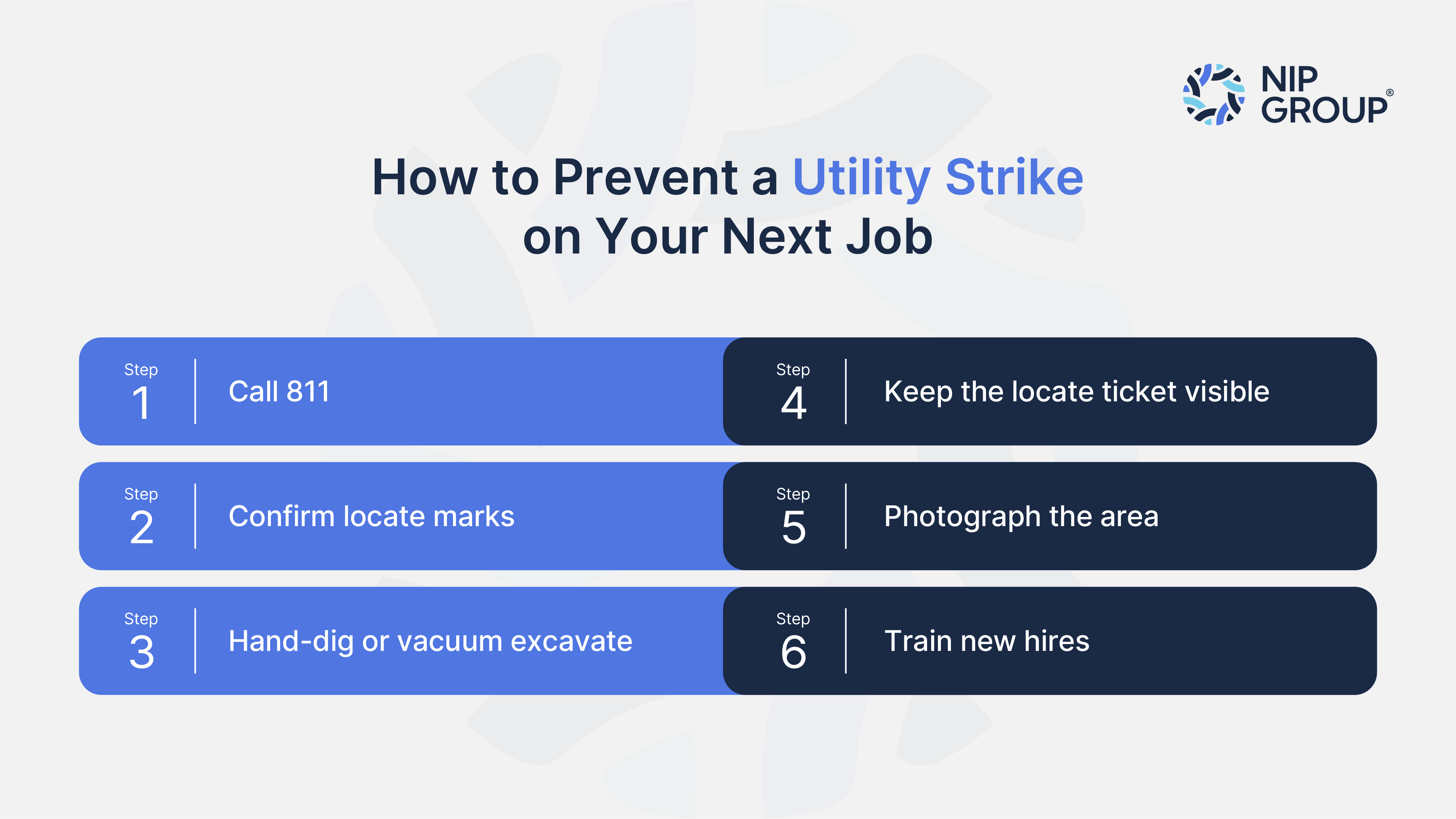
Every dig starts with the 811 call, even for a quick trench that looks harmless. Lines sit at different depths across a property, and shallow digs can still hit something buried close to the surface. Once the ticket is filed, wait for locate marks to be confirmed before any equipment moves. Starting early because the crew is ready puts everyone at risk, since marks fade more often than you’d expect.
Keep that ticket on-site and visible, so every crew member can check it without asking around. Before the first shovel moves, photograph the area near the marked lines. That photo becomes your record of what the site looked like before anything changed.
While You’re Digging Near Marked Lines
Heavy equipment moves fast, even close to a marked line. Switching to hand tools or a vacuum excavator within that zone slows the work down on purpose. That slower pace gives your crew a clear look at what’s underground before they hit it.
After The Dig is Done
Photograph the same area again once work near the marked lines wraps up. Paired with your earlier photo, this shows what your crew found and how they left the site. If a claim surfaces weeks later, that pair of timestamped images does most of the talking for you.
Build it Into How You Train
None of this holds up if new hires learn it differently from everyone else on the crew. Walk every new hire through your one-call process on day one, before they touch a job site. A new hire often picks up habits from whoever happens to train them, and without a set process, those habits vary crew to crew. Making the walkthrough standard keeps that gap from opening up in the first place.
How to Prevent a Utility Strike on Your Next Job
Training issues like this are common across the industry. One study on Michigan excavators published through ISEC found that only 54.6% of firms offered general damage prevention training. Fewer than 27% trained crews on what to do once a strike happens. That second shortfall matters as much as the first one. A strike calls for a fast, practiced response within minutes. Without that training, crews lose time figuring out basic next steps.
That delay often shows up later in how a claim gets handled. A solid process lowers your risk on-site. But it works best paired with utility contractor insurance. It’s built for what happens when a strike still gets through. If you run a smaller crew and want the best utility strike prevention solution, start with these habits.
Must Read: 3 Insurance Coverage Strategies for Utility Contractors
Cover the Risk You Can’t Train Away
A strong prevention process protects your crew and keeps your schedule on track. The right coverage steps in when prevention still isn’t enough. A contractor working underground needs both pieces in place before the next job starts.
UtilityPro is built around that exact need. It covers contractors working on power lines, water, sewer, and gas line construction. Right-of-way clearing and vegetation management crews are covered too. Subcontracted work is also included, so your coverage doesn’t stop at your own crew.
UtilityPro provides:
- Excess liability up to $25 million, plus umbrella liability for larger exposures
- Employment practices liability and cyber liability for risks beyond the job site
- Workmanship error coverage, so an honest mistake doesn’t turn into an uncovered claim
- Workers’ compensation for crews doing physically demanding underground work
The program is backed by A+ rated carriers. That rating means the carrier has a superior financial ability to pay out claims when you need them. Ask your broker to sign you up for UtilityPro or contact us today to see how it fits your operation.
FAQs
1. What are the 5 P’s of excavation?
The 5 P’s stand for Plan, Prepare, Protect, Proceed, and Professional. It is a simple field checklist crews use before breaking ground. Following it in order gives your team a real shot at avoiding a utility strike before the first shovel moves.
2. What is the 5 4 3 2 1 rule for excavation?
It is an OSHA-based safety guideline tied to trench depth. The exact breakdown varies slightly by source, but the core points stay consistent:
- 5 feet: Trenches this deep or more need a protective system like shoring or sloping
- 4 feet: Safe access and egress, such as a ladder, must be within reach
- 3 feet: The ladder must extend at least 3 feet above the trench opening for a safe exit
- 2 feet: Spoil piles and equipment must be kept at least 2 feet back from the trench edge
- 1 competent person: A trained, authorized individual must be on-site at all times to inspect conditions and address hazards
Field crews often use it as a quick mental checklist. It helps prevent both cave-ins and a utility strike during the same dig.
3. Can you hand-dig around utility lines?
Yes, and most locate services recommend it. Hand digging or vacuum excavation inside the marked tolerance zone lowers your risk significantly. Mechanized equipment moves too fast to stop safely if it contacts a line. That’s how a routine dig turns into a utility strike.
4. Why doesn’t America bury power lines?
Cost is the main reason because burying power lines is more expensive than stringing them overhead. Underground repairs also take longer and require more specialized crews. It’s part of why utility contractor insurance matters so much on this type of work.