










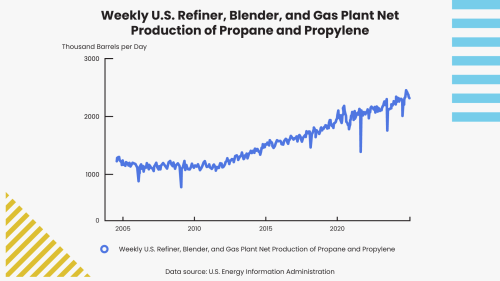
The growth of propane production in the United States highlights the popularity of this versatile gas. Since 2014, propane production has more than doubled, with additional growth expected as new propane technologies and uses hit the market. While propane offers countless benefits for everyday applications, recognizing the risks of residential propane consumption can help keep propane usage in households efficient and safe.
As residential propane continues its upward trajectory, liquid petroleum gas (LPG) distributors have an opportunity to expand their businesses. But, like propane itself, these opportunities are accompanied by risks, which is why propane distributors need an insurance program like PropanePro that specializes in covering everything from initial sale through delivery.
Benefits of Propane for Residential Use
Residential propane systems come with many benefits and advantages over other home fuel sources such as electricity and natural gas.
Easy to store
Propane is easy to liquefy and store. Once in its liquid state, propane stored in a tank has an indefinite shelf life. This makes it convenient for use in remote areas during all four seasons and for everyday and emergency use.
Versatile
Propane is one of the most versatile energy sources for residential uses. Propane applications in homes include cooking, space heating, water heating, clothes drying, and even refrigeration.
Affordable
Compared to electricity, propane tends to be significantly more affordable for heating homes. Though propane can have higher upfront costs than natural gas, the cost-efficiency of propane can save users in the long run because propane burns more slowly than natural gas.
Safe
Propane is one of the safest residential energy sources, in part because it’s heavily regulated on the federal and state levels. It’s also non-toxic, won’t contaminate soil and water, and has an ignition temperature in air between 920 and 1020 degrees Fahrenheit.
Efficient and environmentally friendly
When it comes to efficiency, propane energy efficiency typically tops traditional electricity or natural gas. It produces more British Thermal Units (BTUs) than natural gas, it burns at a slower rate, and, unlike electricity, it has a high source-site ratio.
Propane is also one of the most environmentally friendly fuel sources. One of the key environmental advantages of propane is that it generates fewer carbon dioxide emissions than other popular residential energy sources, such as electricity and natural gas. According to the National Propane Gas Association, homes with eco-friendly propane solutions generate 43% fewer greenhouse gas emissions than homes using an equivalent amount of grid-supplied electricity.
“Propane’s versatility makes it a unique residential fuel source, but it also increases the complexity of insuring the companies who sell and deliver it. PropanePro combines the industry expertise and the expansive insurance coverage propane dealers and distributors need to protect and grow their businesses.”
– Michael Finati, PropanePro Program Manager
Propane Risk Mitigation: Tips to Promote Safety and Minimize Claims
Though propane is generally very safe, it can still present health hazards in certain situations. To minimize safety risks and claims, it’s important to follow these propane best practices:
- Recognize the smell: Propane is naturally odorless and colorless. To help people quickly identify a leak, propane companies add mercaptan, a harmless chemical that smells like rotten eggs or cabbage.
- Install a propane leak detector and a carbon monoxide detector on each floor of a home.
- Never store propane tanks indoors: Propane is heavier than air and natural gas, which means if there’s a leak, it can concentrate and pool on the ground.
- Always ensure valves are closed completely and securely when tanks aren’t in use.
- Regularly inspect propane tanks and lines for signs of damage.
- Store propane tanks outdoors, in well-ventilated, shaded areas.
The Importance of Specialized Propane Coverage
While every propane distributor should have robust protections and emergency procedures in place, no one is completely immune to accidents and errors. That’s when it’s more important than ever to have comprehensive insurance coverage tailored to the everyday challenges of gas distributors and delivery companies.
An insurance policy for liquid petroleum distributors should include more than just liability and workers’ compensation. Endorsements, riders, and other policy customizations can offer crucial coverage that may help save LPGs from costly losses and lawsuits. In addition to more traditional business insurance basics, a comprehensive propane insurance program might include:
- Enhanced limits for certain claim types
- Business interruption insurance
- Inland marine coverage for specialized machinery and equipment
- Crime and cyber liability coverage
- Automatic fill liability
- Broadened pollution liability
- Coverage for misdelivery of products or failure to supply
Case Studies & Real-Life Examples
NJ Propane Supplier Sued When Gas Leak Leads to Explosion
A New Jersey home was destroyed when a propane leak caused an explosion and fire. The owners of the home had an automatic-fill contract, which the fuel company’s deliveryman made a couple of days prior. Since the owners had recently switched to a natural gas stove, they claimed they intentionally closed the valve, and that the deliveryman didn’t notify them of the fill-up. The propane then leaked unnoticed into the basement, where it pooled and ultimately caused the explosion. While the insurance company settled with the family for over $400,000, the insurer is looking to the propane company to cover these costs, which could be covered by specialty errors & omissions coverage.
Propane Explosion Kills Construction Worker; Distributor Settles for $7.5 million
Following a propane explosion and the death of a construction worker in Norfolk, MA, a propane distributor agreed to a settlement of $7.5 million. The lawsuit accused the propane distributor, EnergyUSA, of negligence, claiming the company underfilled the propane tank, which made the odorant (mercaptan) fade. As a result, the leak went undetected until the explosion. The lawsuit also alleged that EnergyUSA “violated clear warnings and safety standards,” and that the explosion could have been avoided with property precautions.
OSHA Regulations on Propane
The Occupational Safety and Health Administration (OSHA) imposes strict regulations on propane containers and safety, including:
- Adding 1 pound of ethyl mercaptan or thiophane, or 1.4 pounds of amyl mercaptan per 10,000 gallons of propane as an odorant
- Including the name and address of the supplier on the container
- Following regulations for piping, fittings, and tubing, in accordance with Section 1910.110(b)(8)
Along with OSHA, the Pipeline and Hazardous Materials Safety Administration (PHMSA), the Department of Energy (DOE), the Federal Motor Carrier Safety Administration (FMCSA), and other federal or state organizations may regulate the storage, transportation, and use of propane and propane tanks.
PropanePro: Better Insurance by Design
The PropanePro insurance program is designed to specifically the unique risk profile of propane dealers and distributors. As the propane industry gains momentum, the companies that sell and deliver propane will look for the specialized coverage they need to expand their operations while minimizing and managing risk. As brokers, you’ll be able to offer them the expertise, endorsements, and expanded coverages they’ll look for by submitting your accounts to NIP Group’s PropanePro.
California
- Adhere to the laws under the California Code of Regulations Title 8, Sections 470 –494 and California Fire Code Article 82
- All gas must be odorized with a warning agent before transportation and delivery
- Propane tanks larger than 125 gallons require a permit to operate
- Filling connections must be capped or plugged when not in use
- Propane tanks must be equipped with permanent gaging devices
- Skid and trap tanks can only be used for a maximum of 180 days, unless special permission is granted by the Division
- Residential propane tanks require a permit renewal inspection every three years
- Keep combustible materials a minimum of 10 feet from propane tanks
New Jersey
- Adhere to all laws under New Jersey Administrative Code Title 5, Chapter 18
- Using or storing propane within five feet of an exterior wall, overhang, or balcony is prohibited
- Businesses servicing propane tanks must obtain a Propane Service Certification
- Employees must complete the Certified Employee Training Program
- Hazardous containers must be removed within five working days of written notification
New York
- Storage of liquid petroleum containers must minimize exposure to excessive temperatures or physical damage
- Liquid petroleum containers must be located 5 – 125 feet (depending on the tank size) from buildings and public ways
- Liquid petroleum must only be used for approved devices and equipment
- Smoking is prohibited within 25 feet of a transfer point during filling operations
- “No smoking” signs must be installed in compliance with Section 310 of the fire code
- Note: New York City has additional laws, such as a limit of two 20-pound propane cylinders outdoors
Texas
- Adhere to the Liquid Petroleum Gas Safety Rules set out by the Railroad Commission of Texas
- Companies working in the alternative fuels industry (including propane) must have a license, and individuals working with alternative fuels must be certified
- Liquid petroleum gas licensees must retain records of pressure and leakage tests for a minimum of five years
- Containers must be inspected for defects before filling; damaged containers shall not be filled
Don’t forget to download our liquid petroleum gas compliance & safety checklist!
Minimizing Propane Accidents & Injuries