







Remember when a “crane job” meant calling in a separate crew with specialized equipment? For most of you, those days are long gone. Cranes have become as essential to our operations as chainsaws and chippers. But here’s the thing—with great power comes…well, you know the rest.
As the tree service industry has evolved, so have the risks and rewards of crane operations. In this guide, we will explore how mastering crane operation safety isn’t just about avoiding accidents (though that’s obviously vital).
You’re tackling bigger jobs, in tighter spaces, with higher client expectations than ever before. That 100-foot oak threatening to topple onto a house? It’s no longer a week-long project—it’s a day’s work. The precision and efficiency the tree service industry has gained is remarkable, but your new abilities come with a new set of challenges. That’s why implementing robust arborist safety guidelines is critical for every tree care operation.
Ready to transform your approach to crane operations? Let’s dig in.
When to Use a Crane (and When Not To)
Before you call in the big guns and begin worrying about safe tree trimming with cranes, take a step back. Ask yourself: Is a crane really necessary for this job? Sometimes, the simplest solution is the safest. Consider these alternatives:
- Aerial lifts: Perfect for heights up to 150 feet. They offer greater maneuverability in tight spaces and can be more cost-effective for smaller jobs.
- Good old-fashioned climbing: When conditions permit, traditional climbing techniques can be both safe and efficient.
- Personnel platforms: These provide a stable work environment while still utilizing crane technology. They’re particularly useful in situations where prolonged aerial work is required.
Prepare Your Team with Training and Certification Requirements
You wouldn’t send a rookie up a 100-foot pine with a chainsaw, would you? The same principle applies to crane operations. Here’s what you need to cultivate when it comes to safe tree trimming with cranes:
- Licensed and certified crane operators
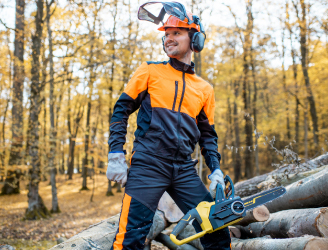
- Arborists skilled in chainsaw technique, rigging, and crane hand signals
- A team fluent in the language of safety protocols
Additionally, implement a systematic approach to safety management:
- Regular equipment inspections and maintenance schedules
- Ongoing tree service safety training and certification tracking
- Incident reporting and investigation procedures
- Performance metrics to track and improve safety outcomes
While training costs may seem substantial upfront, they pale in comparison to the potential financial and reputational damage of a single serious accident. Consider partnering with industry associations or equipment manufacturers for cost-effective training solutions.
Execute On-Site Tree Service Safety Protocols
When the day arrives, and your crane is on site, it’s showtime for safety. Here’s how to ensure your performance is flawless:
- Conduct a pre-job meeting: Get everyone on the same page before the first branch falls
- Keep communication crystal clear: Ensure your crane operator and arborist are always in sync with hands-free radios
- Know your limits: Never exceed 80% of your crane’s capacity—it’s not just a guideline, it’s your lifeline
Navigating the Regulatory Landscape
While tree care has its own set of rules, distinct from construction crane use, it’s important to stay up-to-date on the latest requirements:
- OSHA standards: Familiarize yourself with both the general industry standards and those specific to tree care operations.
- ANSI Z133 Safety Requirements: This industry-specific standard provides detailed safety guidelines for arboricultural operations.
- TCIA Standards: Best practices for crane use in arboriculture.
In conclusion, mastering crane safety in arboriculture is about more than following rules—it’s about cultivating a culture where safety is natural.
Elevate Crane Operation Safety, Secure Your Success with TreePro
It’s not just about how high you can reach—it’s about how safely and confidently you can grow.
You need a partner who can provide tangible protection for your business. Enter TreePro by NIP Group—a comprehensive risk management solution designed specifically for arborists like you.
Why TreePro aligns perfectly with your crane safety goals:
- Specialized Coverage: TreePro offers tailored coverages like Crane Coverages, Arborist Errors & Omissions, and Limited Jobsite Pollution that address the specific risks you face head-on.
- Risk Management Expertise:? TreePro backs you up with world-class risk control services, helping you implement and maintain the safety standards we’ve outlined.
- Financial Stability: TreePro is backed by an A+ rated carrier, providing the financial stability you need to focus on growing your business safely.
- Adaptability: TreePro keeps pace with evolving industry needs, now offering excess capacity up to $25 million and specialized wildfire liability protection nationwide.
Ready to elevate your safety game and secure your success? Ask your broker to sign you up for TreePro by NIP Group. Connect with a TreePro expert today.
FAQs
Q: Why is crane operation safety so critical for tree care businesses?
Crane operation safety is crucial because it directly impacts worker safety, client trust, and your bottom line. Major crane-related accidents can cost an average of $200,000 per occurrence.
Q: How often should I review and update my crane operation safety protocols?
Review your safety protocols at least annually, after any incident (even near-misses), and whenever you acquire new equipment or take on new types of jobs.
Q: How can I reduce my insurance premiums without compromising coverage?
Many insurers offer discounts for companies with exemplary safety records and comprehensive safety management systems. Implement a robust safety program, maintain a good safety record, invest in employee training, and consider higher deductibles.
Q: How do I stay compliant with changing regulations in the tree care industry?
Join industry associations like the Tree Care Industry Association (TCIA), participate in ongoing education, and regularly consult with your insurance provider.
Q: What are the key factors in choosing the right insurance for my tree care business?
Look for insurers with specific experience in the tree care industry, comprehensive coverage options, competitive rates, and excellent customer service. Consider programs like TreePro that offer industry-specific expertise and customized coverages not available through typical products.