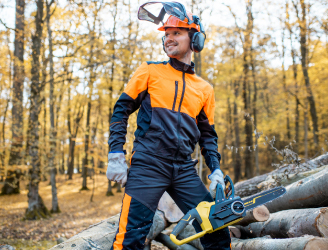
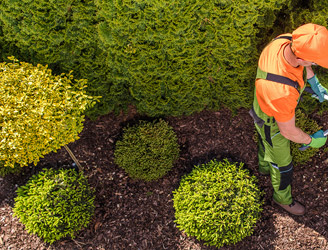







Whether it’s rainy and cold, hot and sunny, or blinding snow, tree care professionals have probably seen and worked in it. Adverse conditions, be it due to weather or worksite hazards, are simply part of the job.
That makes arboriculture workers some of the most in-demand and at-risk contractors in the country. The United States Bureau of Labor Statistics (BLS) estimates there are more than 63,000 arborists as of 2023 (though that number may be underestimated), with both a positive short-term and long-term outlook for industry growth. As population centers grow and commercial construction continues to increase, there’s a constant need for tree care work—which includes removal, trimming, and general maintenance.
Make no mistake: this is difficult and demanding work. Arboriculture clients face numerous risks on the job, and those risks can come in many forms, which raises the potential for accidents. While proper training and safety protocols can reduce the number of incidents, it’s simply a fact that claims will happen.
Let’s talk about the importance of workers’ compensation coverage, common claims your clients may face from work-related injury or illness, and how to prevent an elevated number of claims.
The importance of safety training and risk management in tree care
Getting clients in a safety frame of mind is one of the most important things a broker can do. Like many professional contractors, arboriculturists are laser-focused on their jobs and doing the best work possible—and unfortunately, sometimes they need to be reminded (and reinforced) about proper safety practices.
All employees should be trained on the use of personal protective equipment (PPE), which should be worn in specific situations. They should also be licensed and trained on the use of all heavy equipment and machinery involved in the work, which includes company vehicles for transportation.
And while workers’ risk exposure may not change, risk mitigation measures can help them be more vigilant and proactive. Additionally, workers’ compensation adds a layer of protection that helps employees—and brokers should make sure their clients are up to speed on common instances where this coverage may be needed.
When accidents happen, prepared brokers can help clients navigate claims
Tree care and arboriculture work is high-demand work, but it’s also dangerous work. Tree care experienced 110 fatal incidents per 100,000 workers in 2022, according to BLS, and accounted for 1.4 percent of work-related fatalities across all American industries. Workers’ compensation is required by law for all employers in most U.S. states, providing essential coverage for employees in the event of illness or injury sustained on the job. Workers ‘ compensation is the support they need when accidents occur and workers are forced to miss time.
But can some workers’ compensation claims be prevented? The answer is “yes and no” because while it’s unrealistic to expect total accident prevention, proper training and safety protocols can help reduce risk.
Your clients may notice that workers’ compensation is a fairly expensive coverage to carry, largely due to the nature of the work. Where there’s risk for the worker, there’s risk for the insurance partner. Nonetheless, communicating regularly about safety and having a detailed record of all incidents can help improve processes down the line.
These are some of the most common workers’ compensation claims in the arboriculture industry—and how brokers can educate clients and help prevent them in the future.
Injuries from falling
Because tree care workers are often operating at dangerous heights and operating equipment or other machinery, falls are among the most common workers’ compensation claims in the industry. Workers can help prevent falls by securing ladders and other equipment around the worksite, being educated on proper use of PPE, and wearing arborist footwear.
Electrocution
Utility and other live power lines are prevalent in tree care and are another common workers’ compensation claim that can cause serious injury or even death. Operating at the safest minimum distance from power lines is one way to help prevent injury, along with a general assumption that all lines are live.
Equipment or transportation injury
Accidents are still possible with chippers, ladders, cranes, chainsaws…no matter how familiar or experienced your clients are with this equipment. Training on safety basics is a good way to inform workers before they use specific equipment, and they should also ensure safe distances for others on the ground in the event branches fall.
Environment or weather-related injury and illness
Arboriculturists are no strangers to the elements. Extreme heat and bitter cold are part of the job, but weather isn’t the only concern that can cause injury; exposure to hazardous substances like gasoline or pesticides can result in illness and require workers to miss time. Workers’ compensation can help pay medical costs and recover a portion of lost wages in the event of an environmental or weather-related accident.
TreePro is a best-in-class insurance option for arboriculture professionals
In an ideal world, workers’ compensation is simply on a client’s policy as a “just in case” coverage. But that’s not reality; injuries to tree care workers are among the more common work-related accidents in the United States, and it’s critical to have a plan and an insurance partner who understands the unique risks of the job.
TreePro is a trusted insurance provider that specializes in the tree care industry, backed by 35-plus years of experience and a knowledgeable team that can help navigate the nuanced nature of arboriculture.
To learn more about TreePro and its workers’ compensation coverage for tree care workers, please fill out the form.