




“Green roofs are a growing segment of the landscaping industry but are typically excluded under traditional commercial coverage. For landscapers who want to capitalize on the increased demand for eco-friendly building solutions, NIP Group’s LandPro provides specialized coverage for nearly all landscaping activities — including green roof installation — under a single policy.”
– Michael Finati, LandPro Program Manager
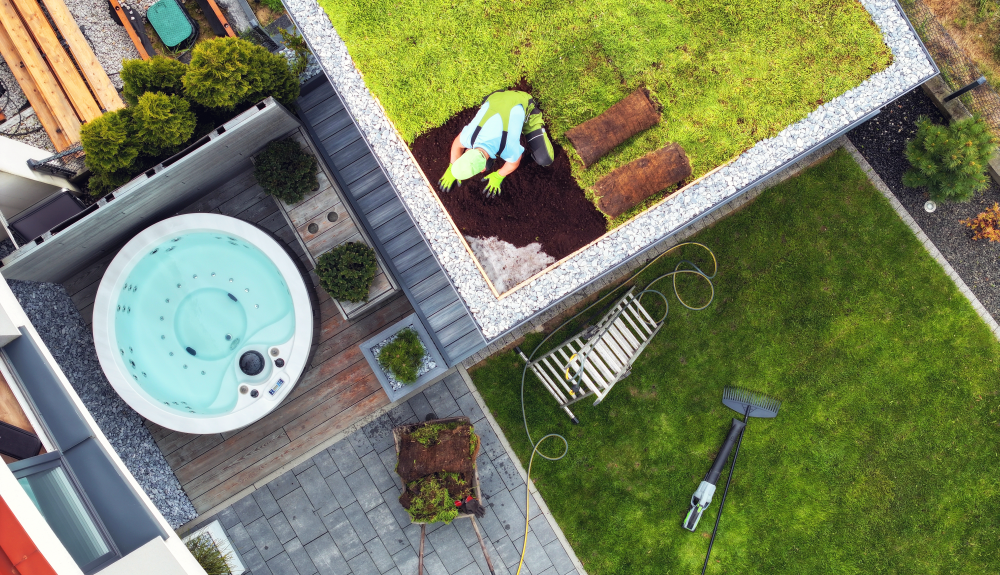
As the demand for eco-friendly landscaping solutions continues to grow, more buildings are being outfitted with green roofs. In addition to boosting a building’s aesthetic, green roofs help manage stormwater, reduce energy use, extend a roof’s lifespan, and improve biodiversity.
Specialized upgrades like living roofs require green building insurance or green roof insurance. But since this type of work isn’t typically covered by a traditional commercial policy, landscapers and other businesses who work on green roofs typically need specialty insurance that covers green roof installation. While the opportunity to capitalize on sustainable construction growth is ripe, landscapers who focus on green roof installation must also consider key risks associated with this type of work, from property damage and plant failure to worker injury.
5 common risks for green roof installers
Leaks, drainage issues, and weather-related risks
Unlike traditional roofing systems that deflect water and transfer absorbed heat into the building, green roofs soak up rain and sun to sustain plant life. However, since green roofs have more than half a dozen layers, improper installation could lead to leaks or drainage issues. Water intrusion from leaks or drainage failures can cause significant property damage, creating potential liabilities for green roofing installers.
Structural and support issues
Structural and support issues — similar to leaks and drainage issues — are common eco-friendly roofing risks. Structural loading is a key concern in every green roofing project, and landscapers must consider not only the weight of the installed substrate and plants, but also how much it will weigh when saturated. A green roof that’s too deep or too porous might retain more water than the structural elements can handle, leading to potential issues with the support system. This, in turn, could lead to substantial property damage and client or third-party injury liability claims if the landscaper is found to be at fault.
Falls and other injuries
Like all roofing jobs, green roof installations carry high fall risks for employees. Falls from roofs are among the most common threats to roofing workers, accounting for 40% of construction deaths. Non-fatal falls from heights are also a persistent concern, as are other injuries such as strains, sprains, chemical exposure, and heat and cold stress.
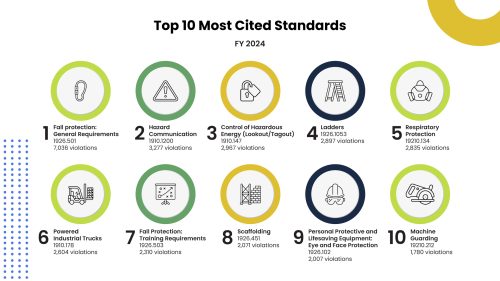
Source: https://www.osha.gov/top10citedstandards
Given the prevalence of fall risks, it’s no surprise the Occupational Safety and Health Administration (OSHA) issues more citations for violations of fall protection requirements than any other standard. Other fall-related OSHA standards among the most cited include sections that cover ladders, fall protection training requirements, and scaffolding.
Plant failure
While plant failure isn’t a life-threatening peril, it still represents a potentially costly green roof installation risk. Landscapers may be held liable for plant failure resulting from any one of several issues, including inappropriate plant selection, failure to establish adequate plant coverage, or a substrate that’s too shallow or composed of the wrong material.
Equipment-related risks
To install eco-friendly roofing systems, landscapers rely on equipment, tools, and machinery that can increase the risk of bodily injury and damage to property belonging to clients or third parties. And, as with any project, landscapers also face the risk of theft and damage to equipment.
Hypothetical case study: Inclement weather results in third-party liability claims
A landscaping company based in Illinois has completed most of a green roof installation when an unexpected storm hits the area, bringing heavy rain and strong winds. During the storm, some of the landscaper’s equipment is blown off the roof, causing damage to a jeweler’s glass storefront, a streetlamp, and a parked car. Since the jeweler has to shut down for several days while it waits for a new storefront window, it sues the landscaper for damage and lost sales. The total cost of all damages and legal fees amounts to $183,700. After the landscaper pays its $2,500 deductible, its insurance policy company covers the remaining $181,200.
Conclusion
Landscapers — particularly those who work on green roof installations — face a number of unique risks, such as damage to client property and employee injury. To minimize these risks, landscaping businesses should always encourage a safety-first mindset, utilize green roof system safety and insurance checklists, and maintain comprehensive insurance to protect against the unexpected. Though traditional landscaping policies often exclude green roof installations, NIP Group’s LandPro program provides tailored coverage for landscaping and lawn care professionals, including green roof installations, snow and ice removal, pollution liability, and more.
Could your landscaping clients benefit from better coverage by design? Learn more or submit your accounts online today.
Download Now: OSHA Compliance Checklist for Green Roof Installations