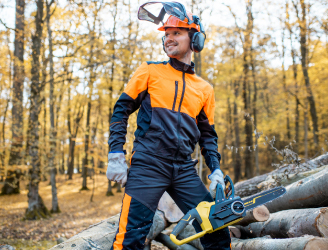








“As tree care risks evolve, arborists can promote a safer workplace by
continuing to adopt AI, learning to navigate complex environments, and protecting themselves
with tailored, industry-specific insurance solutions.”
– Tim Greifenkamp, CPCU, GrowPro Program Manager
Arbor Day 2026 is more than an opportunity to celebrate trees. It’s also a time to reflect on the growth of the arboriculture industry, new trends in tree care, and ways to protect arborists and other tree care workers while they’re on the job. As the industry continues to grow and evolve, here are some key trends to keep an eye on, along with some ways to help brokers and tree care companies lead with safety and risk management.
Source: www.thebusinessresearchcompany.com/report/tree-services-global-market-report
Industry growth creates more complexities, adds exposure
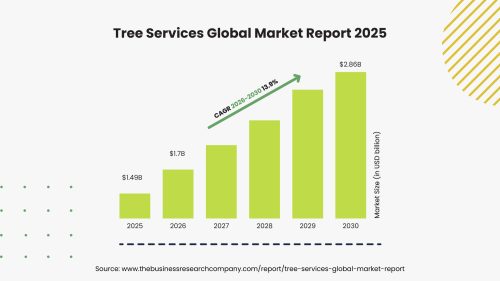
While the explosive growth of the tree service industry has created strong demand for arborists, climate, environmental, and regulatory risks are reshaping the market. As tree care work becomes more complex, companies must do more to protect employees, starting with more comprehensive tree service liability insurance, crane and equipment liability, and specialized commercial auto coverage.
These risks are often compounded with emergency tree work, utility line clearing, urban forestry, and any jobs involving complex equipment. Traditional tree care policies may leave major gaps in coverage, exposing businesses to costly claims related to cranes and other equipment, storms, wildfires, environmental damage, new safety regulations, and more.
Key Tree Care Industry Trends in 2026 and Beyond
With tree care demand at an all-time high, the complexities of vegetation management services — particularly in urban environments — continue to challenge arborists. These changes are likely to be driven by key trends, from large-scale government-sponsored projects to the adoption of artificial intelligence tools.
Continued focus on reforestation and urban canopy projects
Government funding for tree care and vegetation management continues to signal that planting more trees and protecting forests is a priority. For example, the Inflation Reduction Act allocated $1.5 billion toward tree planting and urban forest management. Individual states are also earmarking funds for tree planting and care, including California’s $60 million in grants to support biodiversity projects, Florida’s $6.3 million investment in its forests, and New Jersey’s $4.5 million in grants for tree plantings at schools.
In addition, the REPLANT Act of 2021 continues to support a decade-long effort to reforest more than 4 million acres, including planting a total 1.2 billion trees and creating nearly 50,000 jobs. The Act also removed the $30 million funding cap on wood product tariffs, expanding available funding by an average of around $93 million per year.
A rise in urban forestry demand
Source: www.fs.usda.gov/nrs/pubs/jrnl/2018/nrs_2018_Nowak_003.pdf
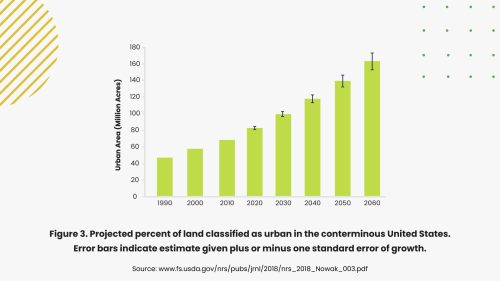
Urban land area continues to increase in the U.S., driving increased demand for urban forestry and specialized arborists who can perform emergency tree work in heavily populated areas. With 80% of Americans living in urban areas, arborists who can successfully navigate these complexities and risks are well positioned to capitalize on this growing segment of the industry.
A shift toward a more comprehensive set of regulatory standards
For decades, arborists have operated under a patchwork of general Occupational Safety and Health Administration (OSHA) guidelines and voluntary safety standards (Z133) under the American National Standards Institute (ANSI). As the arboriculture industry — along with its unique risks and complexities — continues to evolve, ANSI and OSHA tree care compliance is moving toward a new set of clearer, more prescriptive, comprehensive guidelines. If this happens, it could lead to additional financial exposure for arborists and potentially higher workers’ comp premiums.
Increased reliance on artificial intelligence
Artificial intelligence has countless uses in tree care, from improving arborist safety to optimizing vegetation management services and marketing efforts. As investments in AI continue to grow, tree care companies can use these technologies to analyze risk, detect plant diseases, monitor vehicles and workers, support arborist safety training, and more.
How Can Brokers Stand Out from the Competition?
One of the best ways for brokers to stand out from the competition is to differentiate themselves by offering expert guidance and specialty risk management products. Tree care work is notoriously dangerous, making it even more important for companies to create a proactive arboriculture risk management program. The most successful brokers will not only provide access to specialty tree care insurance programs but also position themselves as long-term partners who lead with safety and stay informed about the direction of the industry.
A Partnership Designed to Protect Your Tree Care Clients
Leading with risk management means protecting your clients with the knowledge and specialized insurance solutions designed to protect them from both known and unexpected perils. NIP Group’s TreePro program offers coverage for everyday arboriculture risks like general liability, commercial auto, and workers’ comp, in addition to industry-specific risks like utility line clearance, pesticide application, wildfire liability, and crane and boom exposure. And with more than 35 years of experience covering tree care pros, NIP Group continues to partner with brokers and arborists to help them recognize emerging risks and protect the people who care for our trees.
Conclusion: Stronger Roots, Safer Growth
Arbor Day gives us a chance to celebrate trees and the people who take care of them. As an insurance broker, you can transcend the role of a quote provider and instead act as a forward-thinking advisor to your tree care clients, offering industry insights and tailored risk management solutions to help protect their future. By helping your clients stay ahead of accidents that can turn into costly claims, you’re helping them strengthen their roots while promoting safer, sustainable growth.
Summary checklist
- Industry growth: The global tree care industry is expected to continue expanding, with compounding annual growth rates of nearly 14% through 2030.
- Increase in urban forestry: As urban land area continues to grow in the U.S., demand for arborists and vegetation management specialists who can operate in complex environments is expected to rise.
- Sustained government funding: Billions of dollars in federal and state funding continue to support large-scale reforestation efforts and urban forestry projects.
- Increased adoption of AI: The tree care industry continues to leverage AI to promote safety and find efficiencies in tree diagnostics, marketing, and more.
- Regulatory changes expected: After decades of following general OSHA guidelines and voluntary ANSI standards, a move toward a uniform set of mandatory OSHA rules is expected. This could create new and costly exposures for tree care professionals, potentially leading to increases in workers’ comp premiums.
- The broker advantage: Brokers who understand industry trends and support clients with tailored risk management solutions can stand out from the competition and grow their portfolios.
- NIP Group’s TreePro program: NIP Group’s TreePro program offers specialized insurance tailored to the needs of tree care pros, bridging coverage gaps for industry-specific risks such as crane and boom exposure, pesticide application, wildfire liability, and more.