











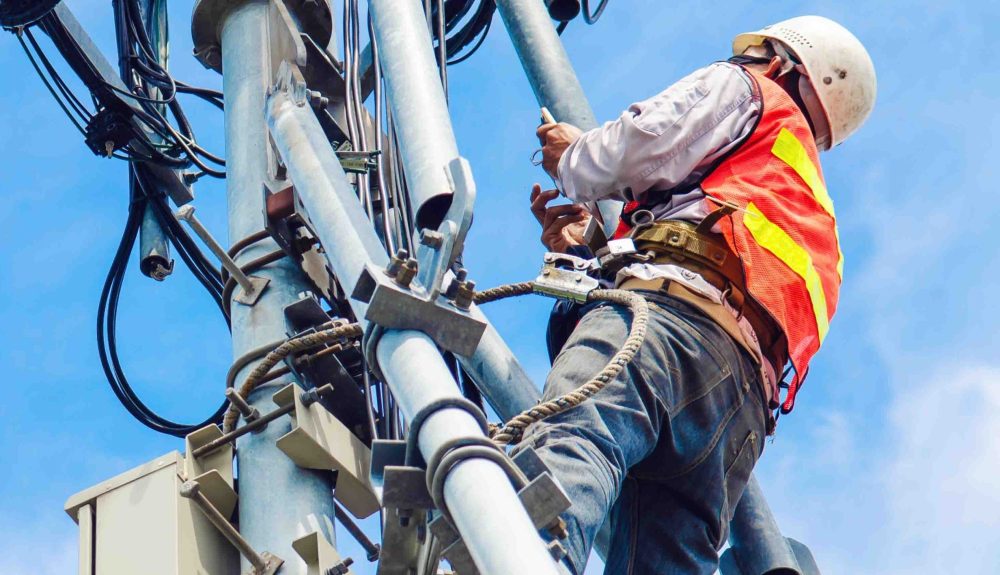
For years, telecom line contractors have been placed the same way general contractors are placed. Same forms, same underwriting questions, same coverage assumptions. That approach may be missing what is actually happening in the field right now.
Broadband construction is entering its busiest stretch in decades. Throughout 2026, the national broadband landscape is shifting from planning and early construction to measurable, visible progress in communities across the country. Much of that activity traces back to the federal Broadband Equity, Access, and Deployment Program, a $42.45 billion grant program funded by the Infrastructure Investment and Jobs Act aimed at connecting every American to high-speed internet.
Why this matters for coverage right now
Construction on the first federally funded broadband projects is expected to begin as early as summer 2026, with timelines now solidifying across all 56 states and territories. Most of this construction activity will run from 2026 through 2030, a period in which providers expand fiber networks, upgrade wireless infrastructure, and activate service in communities that have historically lacked reliable access.
That is not a short project cycle. It is a multi-year buildout that will pull telecom line contractors into more aerial work, more underground fiber installation, more make-ready and pole attachment coordination, and more subcontracted crews moving across state lines than these contractors have handled before.
Here is the disconnect brokers should watch for: a client’s policy may have been written for a smaller, more regional scope of work. If the account has since scaled up to take on federally funded buildout projects, the exposure picture has likely changed with it, even if nobody has flagged it at renewal.
Three shifts reshaping telecom contractor risk
- Workforce mobility and scale. The Department of Commerce estimates the country needs more than 200,000 additional fiber technicians to keep up with expected buildouts. Contractors are responding by scaling crews quickly and taking on multi-state work, which raises questions worth asking at renewal: How many additional crews were added this year? Are they using more subcontracted labor? Has the geographic footprint expanded?
- Underground and aerial complexity. Rural and mountainous regions require specialized construction expertise, particularly when underground fiber builds, pole attachment coordination, and environmental reviews are involved. These are exposures that a generalist contractor policy was never built around.
- Materials and equipment exposure. Copper theft remains a real cost to the industry, with reported incidents numbering in the thousands over just a few months in recent years, cutting communities off from services and damaging existing networks. That is inland marine and equipment exposure worth revisiting, not just a line item to skim past.
What this means for renewal conversations
None of this requires a dramatic pitch. It is a short list of questions worth adding to any telecom line contractor renewal this year:
- Has the client’s project scope grown beyond what the current policy assumes?
- Are they taking on more subcontracted work, and is additional insured language keeping up?
- Has their crew footprint expanded into new states or terrain types?
- Is equipment and materials coverage still sized correctly given theft and supply exposure?
Telecom line contractors are not general contractors with a different job site. They carry a distinct risk profile, and as buildout activity accelerates, the gap between how the account is written and how the account actually operates will only widen for accounts that haven’t been revisited.
Where UtilityPro fits
This is exactly the kind of specialized, evolving risk UtilityPro was built around. With coverage for communication line construction and maintenance alongside power line and water/sewer classes, and with Auto, GL, Property, Inland Marine, Excess up to $25M, E&O, and Workers’ Compensation available as a package or written monoline, UtilityPro gives brokers a way to place telecom line contractor accounts with a carrier that understands the work, not just the industry code.
If you have a telecom contractor client whose scope of work has changed this year, it may be worth a second look at how the account is currently placed.
Ready to submit or have questions about a specific account? Reach out to submissions@nipgroup.com or call 800-446-7647. Submit a new account: nipgroup.com/submissions
Find out how UtilityPro provides better coverage by design or submit your accounts online today.
Download now: Emergency action plan checklist for utility contractors