







Seasonal changes present new challenges to tree care contractors, from shifting risks to renewal considerations. For tree service businesses with January renewals, autumn might be the perfect time to audit coverages in preparation for the busy spring and summer seasons ahead. And with the unpredictable fall weather, it’s also an ideal time for brokers to highlight some of the most common tree service insurance claims and guide prospects and clients on risk-aware strategies that can help them identify these hazards before they turn into losses.
5 Common Tree Care Claims
The arboriculture industry faces a wide range of perils, from worker injuries to tree service property damage risks and negligence claims. And while it’s important to prepare for and safeguard against all potential hazards, some of the most common tree care claims include damage from falling limbs, auto liability, workers’ comp, equipment losses, and negligence claims.
Damage from Falling Tree Limbs
Falling limbs can cause significant damage to houses, vehicles, utilities, gardens, fences, and other structures. These events are often preventable with the right training and planning, yet still represent one of the top commercial tree care liability claims.
Auto Liability Claims
Arborists rely heavily on auto fleets, from light vehicles to heavier chipper and boom trucks, making auto liability one of the most overlooked tree care business risks. Since tree care businesses operate large vehicles in a variety of settings — including dense urban landscapes, highway medians, and rural areas — there’s a persistent risk of accidents, injuries, property damage, and theft.
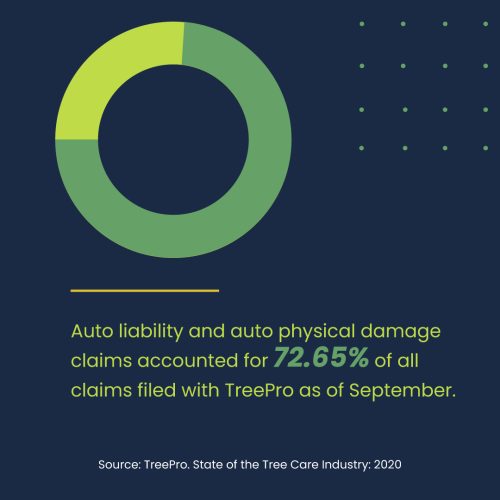
Source: TreePro. State of the Tree Care Industry: 2020
Worker Injuries
Arborist worker injury rates are twice as high as the national average, with tree care professionals facing countless hazards. Some of the most common injuries include falls, contact with falling branches or equipment, slips and trips, and electrocution.
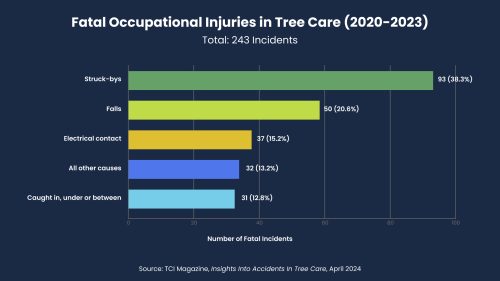
Data source: TCI Magazine, Insights Into Accidents In Tree Care, April 2024
Equipment Theft and Damage
Equipment theft and damage are widely known industry risks, particularly for high-priced heavy equipment. With these pieces of equipment playing a critical role in clearing and hauling — and with recovery rates of less than 20% — preventing theft and carrying the right insurance coverage are even greater priorities for tree service companies.
Errors and Omissions
Though arborists are skilled professionals, they aren’t immune to mistakes or misjudgments. Common negligence claims include removing the wrong tree or misdiagnosing a disease that leads to the incorrect treatment and subsequent loss of a tree.
How Jobsite Decisions and Communication Errors Lead to Claims
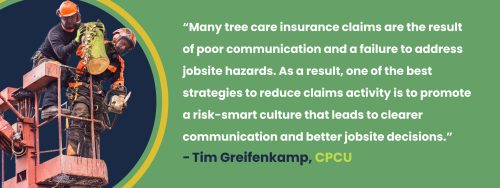
Since most incidents are a result of poor communication or failure to properly address site hazards, clear communication and smart jobsite decisions are often the best defense against incidents. For arborists, start by building a team with great chemistry, then back them up with the right systems, protocols, and a strong safety culture. Before beginning any project, arborists should conduct a site assessment to identify the property boundaries, utilities, and other risks, as well as to confirm exactly what work is being done. Every crew member should also be trained in how to use hand signals or other visual communication methods, how to safely use equipment, and what to do in the event of an emergency.
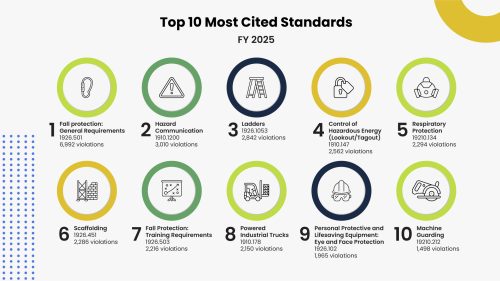
Source: OSHA, Top 10 Most Frequently Cited Standards, April 2026
Real-Life Case Study: The Importance of Training and Jobsite Decisions
In 2019, a New York-based tree service company was ordered to pay nearly $70,000 after the Department of Labor found the company violated multiple OSHA standards, leading to the fatal injury of a new employee on his first day. The citations included failure to train employees on personal protective equipment (PPE) and failing to ensure employees were wearing protective eyewear, helmets and leg protection while working.
The court log stated that the owner of the company, who was also the supervisor of the crew on the day of the incident, also failed to provide any safety or work instructions. Furthermore, the owner failed to delegate supervisory responsibilities to the two experienced workers, later claiming he believed they understood it was their implied responsibility to maintain appropriate work standards. During the course of work, the new employee was feeding brush and limbs into the woodchipper when he was pulled into the infeed hopper, where he suffered fatal injuries.
The owner’s failure to adequately train employees, enforce OSHA safety standards, and communicate on the jobsite led to the tragic and unnecessary loss of life. This unfortunate incident highlights the importance not only of recognizing tree care jobsite safety hazards but also protecting workers through rigorous training, clear communication, and proper supervision.
How Brokers Can Help Tree Care Clients Protect Themselves
Though the responsibility of tree care risk management ultimately falls on arboriculture contractors and their crews, brokers can provide practical guidance and tips to improve risk awareness. NIP Group’s TreePro program empowers brokers with helpful resources, 35 years of tree care insurance industry expertise, and specialized coverages tailor-made for arborists. By partnering with TreePro, brokers can help educate prospects and clients about the range of risks they face in their everyday operations and provide access to better tree care coverage by design.
Ready to place your tree care accounts with the industry specialist? Visit the TreePro web page to submit your accounts online today or learn more about eligible risks and coverages.
15-Point Arborist Safety Checklist