









Summary:
- Tree stump grinding looks routine, but it carries real risks that most policies miss.
- Understanding how the job works helps contractors price and complete it safely.
- This blog walks through what contractors need to know before their next grinding job.
Global Market Insights updated its stump grinder market data this August. North America’s stump grinder market was valued at $132.5 million in 2025. It is projected to reach $189.9 million by 2035. The U.S. alone accounts for nearly 88% of that spending. For tree service contractors, that growth points to more jobs and more equipment on the road. It also means more exposure on every job site.
Tree stump grinding often gets treated as routine cleanup after a removal job. In reality, it involves powerful machinery and hidden utility lines. It also happens on property that isn’t yours. Any one of those factors can turn a routine job into a costly claim.
So, this blog answers the questions contractors ask most about stump grinding. It covers the grinding process and machine choices. It also covers the coverage built to protect your business when a job goes wrong.
Must Read: Stump Grinding Business: Pricing, Equipment, And What Clients Want To Know
How Does a Stump Grinder Work?
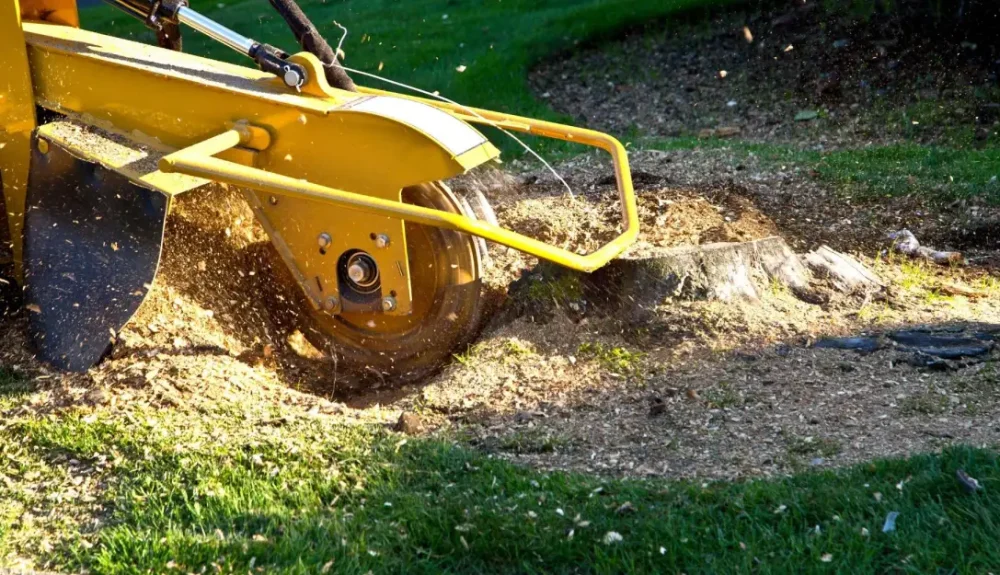
The machine relies on a spinning cutter wheel lined with carbide teeth. That wheel chews through the wood in short, repeated passes. The operator guides it side to side and downward, turning solid wood into mulch. Stump size still shapes the outcome here. Most machines handle stumps several feet across, but depth and diameter limits shift by model.
The right machine depends on the job in front of you. Walk-behind units work best in tight residential yards with limited access. Self-propelled and tracked machines suit larger commercial sites with room to maneuver. Picking the wrong one slows the job down and wears out the equipment faster than it should.
What Does the Tree Stump Grinding Process Involve, Step by Step?
The stump grinding process follows a fixed sequence on every job, no matter the stump’s size. Skipping a step raises the risk of damage, injury, or a callback.
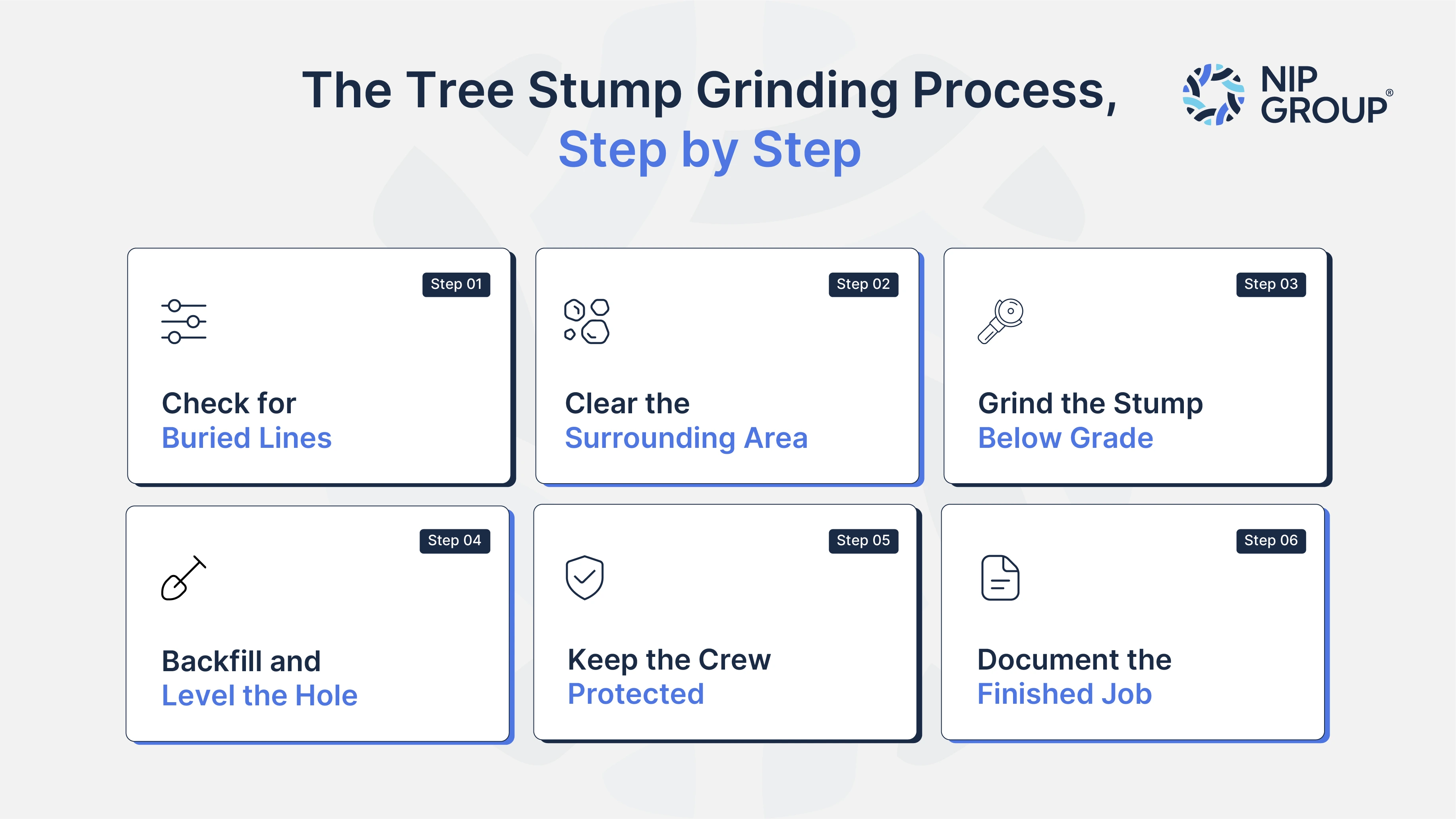
The Tree Stump Grinding Process: Step by Step
Check for Buried Lines and Pipes
The crew scans the site for utility lines and irrigation pipes before the grinder starts. A missed line can turn a routine grind into a costly repair.
Clear the Surrounding Area
The operator removes rocks and loose debris from around the stump. Anything left behind can jam the cutter wheel or fly loose during grinding.
Grind the Stump Below Grade
The machine works the stump down, usually six to twelve inches below the surface. Deeper grinding takes more time but prevents regrowth and future settling.
Backfill and Level the Hole
The crew fills the space with ground wood chips and fresh topsoil. A level yard keeps the client satisfied and removes any trip hazard.
Keep the Crew Protected Throughout
Eye and ear protection stay on once the grinder is running. A cleared work zone also keeps bystanders safe from flying debris.
Document the Finished Job
Before-and-after photos protect you if a client disputes the work later. This step matters as much as the grinding itself.
Following this order on every job keeps the crew safe and the client satisfied. It also gives you a clear record if a dispute comes up after the fact.
What Should Contractors Know About the Risks of Stump Grinding?
Stump grinding puts more at stake than a routine cleanup task. The cutter wheel spins fast and chews through wood and roots in seconds. That speed is where the risk starts.
Underground utility strikes are the biggest threat you’ll face. A gas line or a buried cable can sit just inches below the stump. So can an irrigation pipe. Strike one, and you’re facing repair costs and a stalled job site.
Property damage tends to follow the same pattern. The blade can catch a sidewalk edge or clip a fence post. A paver near the stump is just as vulnerable. A distracted pass is often all it takes.
Airborne wood dust builds up with repeated grinding jobs. Breathing it in over time affects lung health. So respiratory protection deserves the same attention as eye and ear protection.
Each of these risks can turn a routine job into a costly claim. That’s why stump grinding needs a tree service insurance built around these specific exposures. A generic policy doesn’t usually cover them.
Why Should Tree Stump Grinding Be Part of Every Removal Job?
Tree removal and stump grinding often appear as separate line items on an estimate, but clients experience them as one job. A stump left behind makes the site look unfinished, even after a clean felling. That gap sends the client looking for someone else to finish the work, and that someone becomes a competitor.
This gap matters more as the industry grows. The Bureau of Labor Statistics projects employment for tree trimmers and pruners to grow 4% through 2035. More removal jobs are up for bid as a result. Crews that complete the full job capture more of that revenue than crews that stop at felling.
Municipal and HOA contracts raise the stakes further. Many require complete removal, stump included, before a bid even qualifies for review. A fleet without a grinder gets filtered out before price enters the conversation.
Grinding also opens the door to follow-up work like reseeding or hardscaping. A crew that finishes the stump can offer that work directly, instead of watching a landscaper pick it up.
What Should Contractors Know About Pricing Stump Grinding Jobs?
Tree stump grinding costs shift with stump diameter and site access. A wide stump in a tight yard takes longer to grind than one in open ground. Most contractors price by diameter inch, measured across the stump face. That method ties the price to grinding time, so wider stumps cost more.
Equipment adds another layer to the price. A rented grinder brings a daily fee on top of labor. An owned machine carries fuel and upkeep costs instead. Either way, that cost belongs in the quote.
Insurance premiums factor into pricing too. A policy built for stump grinding costs more than a generic liability plan. That difference should show up in your rate. Underpricing a stump-heavy contract cuts into the margin that covers your equipment and your crew. A clear, itemized quote builds more trust than a flat, unexplained number.
Must Read: Tree Cutting Equipment Every Contractor Needs (What Really Works in 2026)
Coverage Built for the Risks of Stump Grinding
Tree stump grinding pays off only when the crew and machine running it are protected. A grinder that hits a gas line can end the profit from that job in seconds. Standard business policies rarely account for risks this specific.
TreePro was built to cover them directly. It includes general liability for property damage, inland marine for the grinder itself, and workers’ compensation for crew injuries. Contractors’ pollution liability responds if a hydraulic hose leaks onto a client’s lawn. TreePro is backed by carriers rated A+ by A.M. Best. The A+ rating means the carrier has the financial strength to pay claims when you need them. Ask your broker to sign you up for TreePro or contact us directly to know how TreePro can fit your business.
FAQs
1. What are common tree stump grinding mistakes?
Common mistakes include skipping the utility check, grinding too shallow, or leaving debris scattered across the yard. A few habits separate a clean job from a callback:
- Rushing the depth and leaving roots close to the surface
- Ignoring wind direction, which sends chips into windows or parked cars
- Forgetting to flag the hole, creating a trip hazard before backfill
2. How long does it take to grind a 30-inch stump?
A 30-inch stump usually takes 45 minutes to an hour with a standard machine. Mid-size or large machines can take longer. However, root spread, wood density, or soil conditions can stretch that time on tougher jobs.
3. Is it cheaper to grind or remove a stump?
Grinding is almost always cheaper than full stump removal. Removal means digging out the entire root ball, which takes more labor and heavier equipment. Tree stump grinding clears the visible stump without that extra cost.
4. What is the hardest stump to grind?
Hardwood stumps like oak and hickory are the toughest to grind. Old, dry stumps with deep taproots also slow the process considerably. Wet or rotted wood, by contrast, grinds faster but clogs the cutter wheel more often during stump grinding work.