







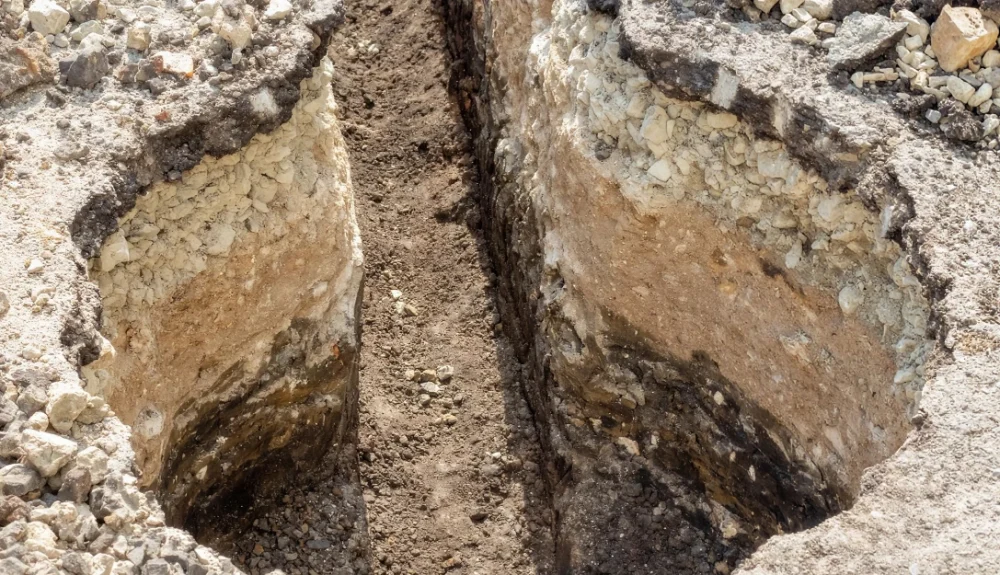
Open-cut excavation is usually cheaper on short, shallow runs, while trenchless excavation protects the surface and finishes faster. The trade-off comes down to how each method reaches the pipe. Open-cut digs a full trench above it, while trenchless works through small pits at each end. So pipe condition and surface type should guide your open-cut vs trenchless excavation decision. In this blog, we compare both methods and their insurance impact.
What Are the Pros and Cons of Open-Cut Excavation?
Open-cut excavation gives you clear access and low costs on short runs, but it causes heavy surface damage.
Where Open-Cut Works Well
Open-cut works best on shallow, short runs where the surface is easy to restore.
- Direct visual access: Your crew sees the whole pipe, so problems are easy to find and fix.
- Lower base cost: Short runs rarely justify the expense of specialized boring gear.
- Standard equipment: A backhoe and an experienced operator can handle most of the work.
Must Read: Heavy Equipment Maintenance Tips for Excavation Businesses
Where Open-Cut Costs You More
Open-cut costs more because the trench damages the surface and keeps your crew exposed for longer.
A trench through a paved driveway or front yard destroys surfaces your client wants to keep. Once the pipe is in, you pay to rebuild every one of them. Time adds to that bill. Larger jobs can run for weeks, and the trench stays open the whole time.
An open trench also means ongoing cave-in risk for everyone working in it. That makes strong excavation and trenching safety practices essential on every open-cut dig. It is also why the right excavation business insurance should be in place before you dig.
What Are the Pros and Cons of Trenchless Excavation?
Trenchless excavation reaches buried pipe through small access pits. In the open-cut vs trenchless excavation comparison, trenchless offers speed and less restoration but costs more to start.
Where Trenchless Works Well
Trenchless works best where the surface above the pipe is expensive to restore. Crews only open small pits, so driveways and lawns stay mostly intact. Less digging also means most jobs finish within one to three days. In cities, those restoration savings often make trenchless cheaper overall.
Where Trenchless Falls Short
Trenchless falls short when upfront costs or job conditions work against it.
- Higher upfront cost: Boring rigs and lining equipment cost far more to buy than a standard backhoe.
- Collapsed pipes: In sewer line repair, a severely collapsed pipe leaves no clear path for lining or bursting.
- Specialized crews: Operators need specific training, and building that skill takes time and money.
Must Read: Excavation Insurance for Contractors: What Changes When Your Business Grows
How Does Your Excavation Method Change Your Insurance Needs?
In open-cut vs trenchless excavation, your method decides where your biggest claims will likely come from.
Open-cut work keeps most of the risk in and around the trench. A cave-in can injure your crew, and heavy digging can damage a client’s driveway. Your liability and workers’ comp limits should match that risk.
Trenchless work leaves fewer torn-up yards, so third-party damage claims drop. Inland marine coverage protects your costly boring gear. If your crew bores into an unmarked sewer main, umbrella liability helps when cleanup outruns your standard limits. That risk is why insuring the complexities of construction starts with knowing what lies underground.
SitePro covers both methods with general liability, workers’ compensation, inland marine, umbrella liability, and contractors’ pollution liability. A.M. Best has also rated SitePro’s carrier “A+,” a sign that the company is financially sound enough to pay claims without delay. So, ask your broker to sign you up for SitePro, or contact us directly to get started.