









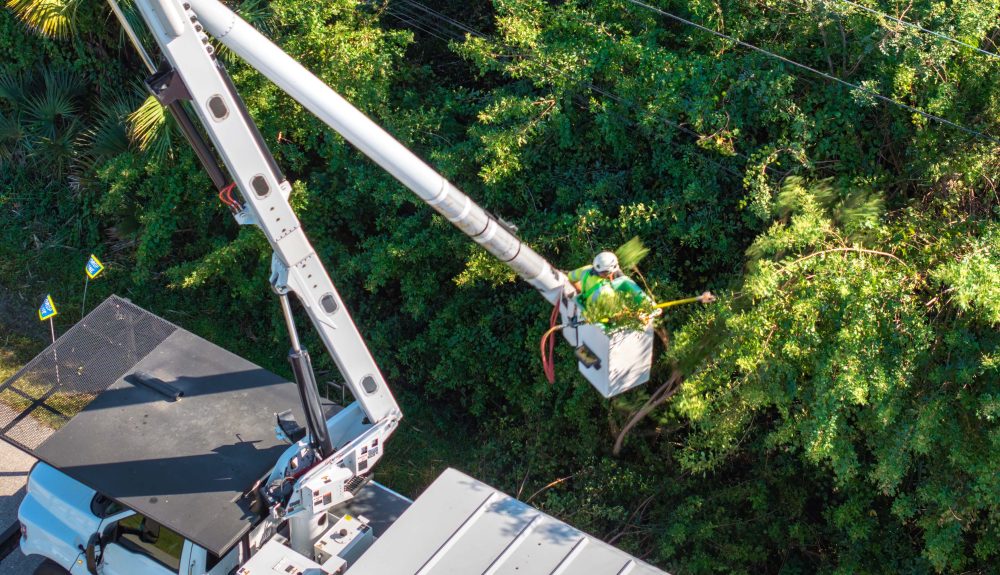
Back in May 2024, an arborist in Georgia was fatally electrocuted while trimming branches just 10 feet from a residential power line.
The stabilizing line he used had a steel core, and the tree trimming company had him working without arc-rated PPE. So, OSHA stepped in.
The incident concluded with four serious violations. Followed by nearly $30,000 in fines, with a worker lost and a company exposed.
And here’s the part that should concern you as an owner: this wasn’t a rogue operator. This was a licensed arborist, hired for a routine job. What they lacked was utility line clearance arborist training, and that gap cost a life.
As someone leading a utility line clearance company, you need to look beyond basic credentials.
This blog will discuss the hidden liabilities that surface when your team works around energized lines. Let’s unpack the real risks, training gaps, and how to ask your team the right questions before operations take place.
Key Risk Areas in Utility Line Clearance Work
Most utility business owners know this work isn’t like general tree care. But not every business makes that distinction, especially when they’re hiring fast to keep up with demand for utility line clearance jobs.
From your side of the desk, here are the operational exposures that should always raise a flag:
- Live wire exposure
Electrocution remains a top cause of death in utility line clearance. And it’s not always direct contact, as tools, ropes, or ladders with conductive cores can just as easily complete a circuit.
- Climbing and rigging failures
One weak anchor, one skipped check, and the system fails. Falls and dropped loads injure workers and can also take out infrastructure or cause wildfires.
- Equipment breakdowns
Older aerial lifts and chainsaws pushed beyond capacity can become instant liabilities. If you’re stretching your fleet by chance, you need to know this.
- Delayed emergency response
Some crews work in remote areas with a limited signal. Do they have a plan if something goes wrong?
You don’t need to memorize OSHA codes, but you do need to be aware to spot the gaps. Utility line clearance arborist training only works when paired with real operational accountability.
Understanding Utility Line Clearance Standards and Gaps
Some business owners might say, “Don’t worry, we’ve done line work before”, but never mention if their crew is qualified to work near energized conductors?
OSHA draws sharp lines here. There’s basic tree work, and then there’s utility line clearance arborist training.
If the team hasn’t received this specialized training, they aren’t allowed within 10 feet of energized lines, period.
The 10-foot rule primarily applies to unqualified employees, but there’s more to it. A utility line clearance company can work within that range only if they’re trained to:
- Identify voltage levels or treat all lines as the highest voltage on site
- Stay beyond minimum approach distances, even when using ladders or aerial lifts
- Use only insulated tools for any branches near energized parts
- Halt work during adverse weather unless specifically trained for storm response
Some utility line clearance companies send unqualified workers or misinterpret their own training records.
Therefore, if a claim hits and the crew didn’t meet OSHA requirements, the fallout will directly land on you.
Are You Asking the Right Questions About Arborist Training?
Training claims are easy to make and hard to verify. That’s where your questioning makes a difference.
Start by asking the right questions, but don’t stop there. Look for proof.
- Who designed the training?
Programs built by qualified arborists with line-clearance credentials carry more weight than generic safety modules. Certification history (along with recertification timelines) and curriculum relevance matter. - How often is it delivered and in what format?
Annual PowerPoints won’t cut it. Effective programs blend hands-on simulations, site-specific walk-throughs, and refreshers tied to seasonal hazards or job types. - What does compliance look like in the field?
The best programs teach as well as monitor. Whether it’s your supervisor’s ride-alongs or anonymous safety reporting, ask how real-world behaviors are tracked. - Are logs and certifications easily retrievable?
It’s about defensibility. Quick access to verifiable records can mean the difference between contesting and conceding a six-figure claim.
The best utility teams will appreciate the nudge, and so will the underwriters.
And remember, training only reduces risk when it’s consistent and rigorously documented. Anything less? It’s just marketing.
Helping Your Business Shield Itself with the Right Protections
Your arborists may know their trade, but they rely on you to know the risks. Especially, in utility line clearance arborist training and operations, where exposures can escalate quickly.
A basic policy rarely keeps up. That’s where a more specialized approach helps.
TreePro is designed to support this.
- Covers the full scope of utility line clearance jobs, including vegetation management, right-of-way clearing, and ongoing line-side maintenance
- Includes high-stakes coverage types such as liability, property, inland marine, workers’ comp, auto, cyber, and contractors’ pollution
- Goes a step further with purpose-built enhancements like arborist E&O, crane & boom protection, and limited jobsite pollution
These are the differences between a covered claim and a major out-of-pocket loss. If you need help navigating risks in this space, give us a ring.
We’ll help you read between the lines and make sure your client’s policy does too.
FAQs
- What is the line clearance checklist?
It starts with voltage identification and includes minimum approach distance (MAD) compliance, insulated tool use, storm protocols, and certified arborist training. If a utility line clearance job skips any of these, it’s a liability waiting to happen. - How often should arborists retrain for utility line clearance safety?
Ideally every year. Risks evolve fast, and retraining helps workers keep pace with updated clearance procedures, equipment protocols, and weather-specific best practices. It’s also a smart move for claim defensibility. - What makes someone an incidental line clearance qualified arborist?
They’re trained to clear trees near power lines only when it’s incidental to their main duties, like utility repair. OSHA still requires full qualifications if they work within the minimum approach distance. - Which insurance best suits utility line clearance clients?
TreePro. It matches the pace and complexity of utility line clearance companies, offering tailored protection across general liability, pollution liability, property liability, and E&O liabilities.