







With over 600,000 landscaping businesses and 1.2 million employees, the landscaping services industry has enjoyed a steady upward trajectory over the past several years. As the population grows, homeowners and businesses are investing more money in landscaping projects, both for functional and aesthetic purposes. Consequently, the landscaping services market is forecast to expand 7.3% annually between 2023–2030.
Landscaping businesses have become more complex, and many landscapers find the scope of their work extends far beyond planting, pruning, mowing, and mulching. The lifecycle of a landscaping job can include everything from pesticide applications to snow removal. To protect themselves, their businesses, and their employees, professional liability insurance for landscapers is critical. NIP Group’s LandPro is the commercial landscapers’ insurance that’s tailor-made to protect landscapers from the many unique risks of the job.
Common Risks and Claims
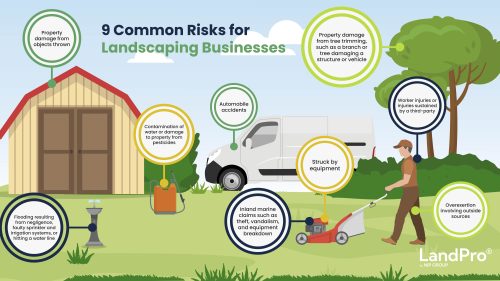
On the surface, landscaping might not seem like a high-risk occupation, but statistics show it’s one of the most dangerous jobs in the U.S. A study examining 18,000+ claims over 17 years identified some of the most common risks for landscaping professionals, with “struck by equipment” and “overexertion involving outside sources” topping the list of exposures. While these risks are, perhaps, the most prevalent, other common exposures for landscaping businesses include:
- Property damage from objects thrown
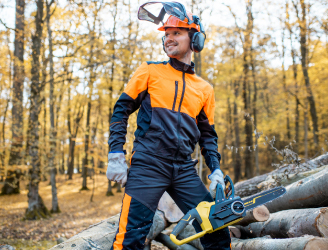
- Property damage from tree trimming, such as a branch or tree damaging a structure or vehicle
- Flooding resulting from negligence, faulty sprinkler and irrigation systems, or hitting a water line
- Inland marine claims such as theft, vandalism, and equipment breakdown
- Worker injuries or injuries sustained by a third-party
- Contamination of water or damage to property from pesticides
- Automobile accidents
Collectively, these risks create innumerable threats to landscape and gardening businesses. Though the number of injuries on the job has decreased in recent years, the severity of injuries has increased. Broader inflation and other cost increases have deepened the need for comprehensive landscaping contractor insurance that covers not only the most common risks but also the most expensive or unexpected ones.
“Finding the right insurance coverages for a landscaping business can be a challenge due to the diverse work of landscaping contractors. LandPro is a specialty insurance program built to protect landscapers and lawn care businesses throughout the full lifecycle of their work and to address their unique risk profiles — including sprinkler and spraying operations, and snow and ice removal. NIP Group’s 35+ years of experience, industry expertise, and customized coverages provide landscaping pros with the tools they need to grow their businesses and keep up with the rapid pace of change.”
– Mike Finati, LandPro Program Manager
Trends and Challenges in Landscaping
Like other industries, landscaping has evolved tremendously and continues to do so as new technologies and trends emerge. Lawn care contractors and other landscaping professionals must stay up to date on the latest changes affecting the industry, both for the benefit of their own business and to stay compliant with new regulations.
A focus on sustainable landscaping services
The shift to sustainable business has pervaded nearly every industry and landscaping is no exception. With more severe weather increasing the risk of flooding, water management, and sustainable landscaping have emerged as common themes.
In a 2021 survey, 60% of respondents reported the environmental sustainability of their lawns was something that was somewhat or very important. In another survey, two-thirds of consumers polled said they would favor landscaping companies whose outdoor equipment is eco-friendly.
Though the upfront expense of sustainable landscaping may discourage some landscaping businesses and consumers, there’s a strong case for the benefits, too. Sustainable landscaping is generally regarded as better for human and plant health. Furthermore, avoiding chemically-treated pesticides and fertilizers can help prevent water, soil, and air pollution. For both practical and ethical reasons, some consumers are now turning to landscapers to help them create landscaping and water management solutions that prevent flooding and encourage eco-friendly plant growth.
Several state governments (such as California, Florida, and New York) have already taken steps to promote more sustainable landscaping that conserves water, benefits local wildlife, uses more sustainable materials, and minimizes overall negative impacts to the environment.
Hiring and employee retention
Another challenge landscaping contractors face is hiring and retaining employees. Younger workers and those who have been on the job for less time suffer on-the-job injuries most frequently, which could make hiring individuals with less experience a greater risk for the business.
Employee retention has grown into one of the most pressing issues for landscaping contractors, with far-reaching implications that can affect every part of the business. LMN’s 2024 State of the Landscaping Labor Market report reveals that the majority of companies do not have an apprenticeship program (88%) or recruitment and retention strategy (63%). Additionally, 46% of landscaping companies do not have any kind of safety training program, exposing them to additional risk and likely contributing to reduced employee retention.
Like making an investment in practicing more sustainable landscaping, the trends of employee retention problems and higher rates of injury among less-experienced employees could be addressed by investing in better training programs.
Conclusion
From blueprint to blossom, landscaping contractors must protect themselves against the countless exposures that can threaten their businesses at every stage of work. LandPro is the comprehensive insurance program designed to cover the diverse risks of landscaping contractors — even the ones you might not think about. As the industry evolves and new opportunities arise, landscapers with the right risk management solutions will be better positioned to expand their operations, capitalize on industry growth, and protect themselves from the unexpected.
Regulatory Highlights
In addition to broader standards set by the U.S. Occupational Safety and Health Administration (OSHA), landscaping contractors should familiarize themselves with state and local laws, particularly those around licensure, insurance coverage, and worker safety.
California
- Landscapers must obtain a C-27 (landscaping contractor) license, which covers many typical landscaping operations.
- Landscapers who work with pesticides must obtain the necessary business licenses with the California Department of Pesticide Regulation.
- Landscape architects must maintain a valid license with the California Architects Board.
- Landscaping businesses must maintain general liability and workers’ compensation insurance.
- Landscape contractors must establish a Heat Illness Prevention Plan and an Injury and Illness Prevention Program.
New Jersey
- General landscaping contractors must register with the state as a business.
- Landscape irrigation work requires certification by the Board of Landscape Irrigation Contractors. You can find the application here.
- If you apply any pesticides or other chemical applications, you must obtain a pesticide license through the New Jersey Department of Environmental Protection.
- Wholesale plant dealers must be licensed by the New Jersey Department of Agriculture.
- Individuals who represent themselves as landscape architects must be licensed.
- Landscapers who apply fertilizers must maintain a state certification.
- Landscapers who engage in work that goes beyond basic lawn maintenance must register as home improvement contractors with the state.
- Workers’ compensation insurance is required by law.
New York
- Landscapers must be registered with New York State.
- Landscape architects must be licensed with the New York State Education Department.
- Landscapers who work with pesticides must have a pesticide applicator/technician certification (issued by New York State).
- New York City may have additional licensing requirements and laws governing landscaping work within city limits.
Texas
- Texas does not have a state license requirement for general landscaping.
- Landscape irrigators, irrigation technicians, and irrigation inspectors must be licensed by the Texas Commission on Environmental Quality (TCEQ).
- Landscapers who apply pesticides to plants, trees, shrubs, or grass must obtain a license through the Texas Department of Agriculture.
- Landscape architects must be licensed through the Texas Board of Architectural Examiners.
- Texas is the only state that does not mandate workers’ compensation insurance for private companies.
I focused on the licensing requirements here since that seems to be a clear issue. Please let me know if you’d like me to cover a different regulatory angle instead (or in addition to).
Don’t forget to download our General Compliance Checklist!
LandPro General Compliance Checklist